Salmon and Asparagus Pasta (Mexican)
Salmon and Asparagus Pasta with a Mexican Twist: A Chef’s Guide
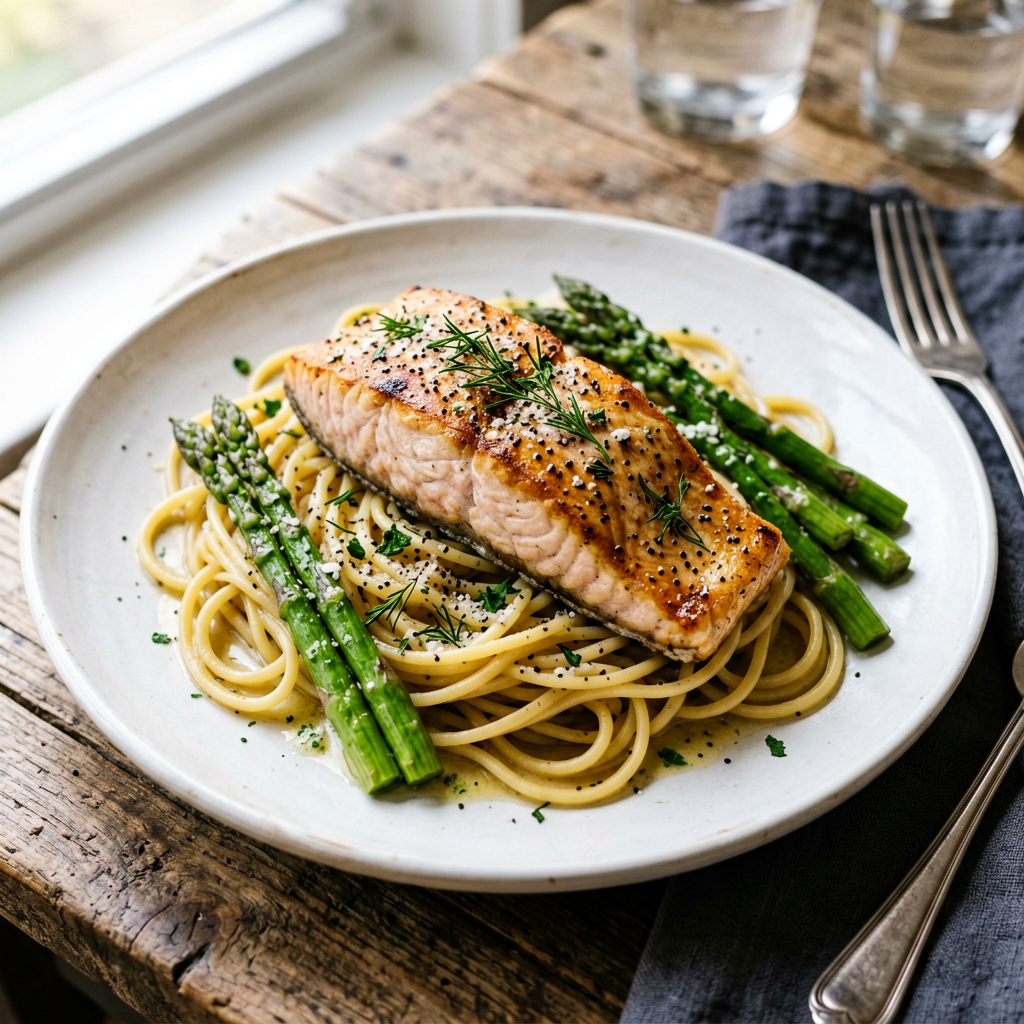
This dish brings together the richness of salmon, the freshness of asparagus, and a vibrant Mexican-inspired profile. It’s a balanced, healthy meal that feels sophisticated but is built on straightforward techniques. The key to success here is proper heat management—achieving a crispy, golden-brown sear on the salmon while keeping the pasta sauce creamy and bright. This recipe is ideal for home cooks comfortable with basic knife skills and pan-searing. We’ll use a couple of simple but impactful tricks: toasting the spices to awaken their flavor and finishing the pasta in the sauce to create a cohesive, restaurant-quality result.
What You’ll Need
Ingredients
- Salmon: 2 skin-on fillets, 6 ounces (170g) each. Choose fillets of even thickness for uniform cooking.
- Pasta: 8 ounces (225g) linguine or spaghetti. Dried pasta works perfectly here.
- Asparagus: 1 bunch (about 1 pound / 450g), tough ends trimmed. Look for firm, bright green stalks with tightly closed tips.
- Avocado Oil: 2 tablespoons. Its high smoke point is ideal for searing salmon.
- Garlic: 4 large cloves, finely minced.
- Jalapeño: 1 medium, seeded and finely diced. Leave some seeds for more heat if desired.
- Cherry Tomatoes: 1 cup (150g), halved.
- Spice Blend: 1 tablespoon ground cumin, 1 teaspoon smoked paprika, 1 teaspoon dried oregano, ½ teaspoon chili powder.
- Chicken or Vegetable Broth: 1 cup (240ml), low-sodium.
- Fresh Lime: 1 for juicing, plus extra wedges for serving.
- Heavy Cream or Half-and-Half: ¼ cup (60ml).
- Fresh Cilantro: ¼ cup chopped, plus more for garnish.
- Cotija or Queso Fresco: ¼ cup crumbled, for garnish.
- Kosher Salt and Black Pepper: To taste.
Equipment
- 12-inch Cast Iron Skillet or Heavy Stainless Steel Pan: Crucial for a proper, even sear on the salmon.
- Large Pot for boiling pasta.
- Instant-Read Thermometer: The most reliable way to check salmon doneness.
- Tongs and a Fish Spatula
Prep Work (Mise en Place)
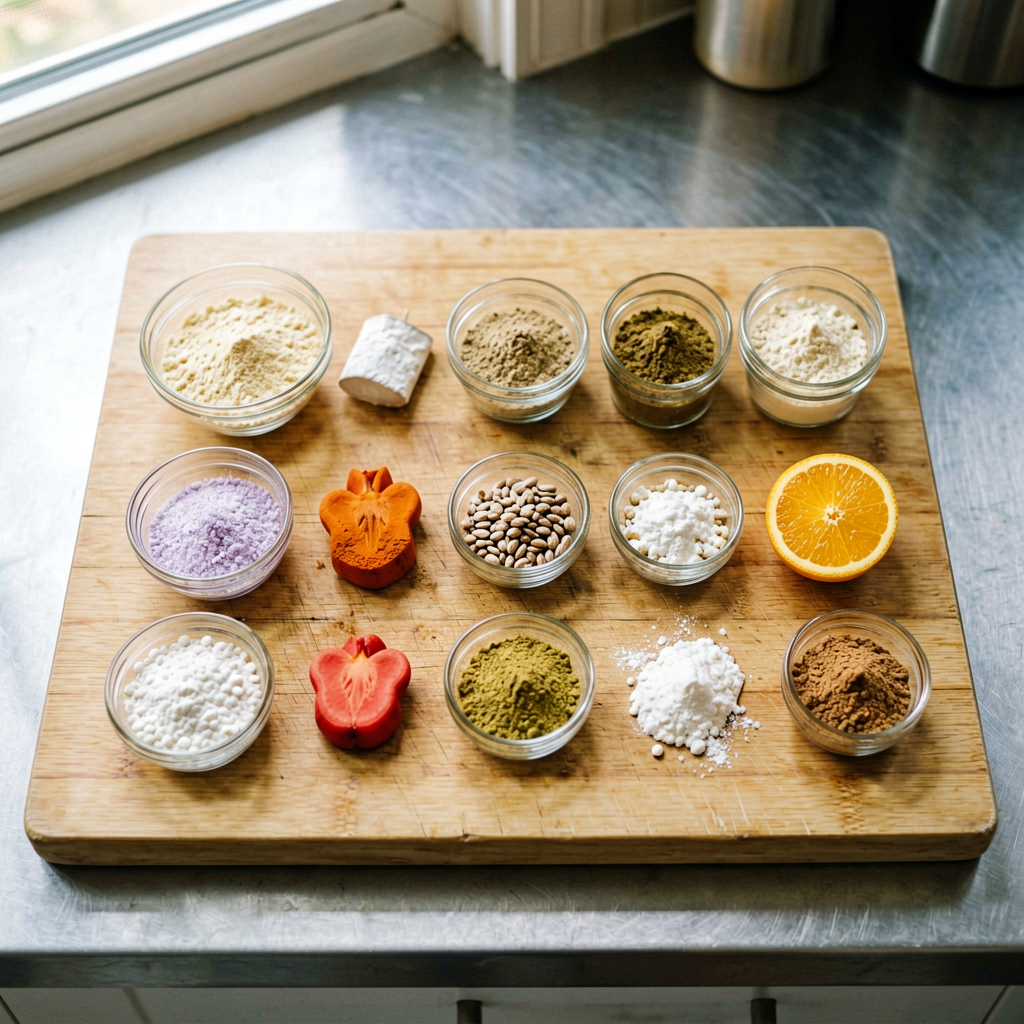
Proper preparation is the most critical step. Complete all prep before you turn on the heat.
- Salmon: Pat fillets completely dry with paper towels. This is non-negotiable for a crispy crust. Season both sides generously with salt and pepper. Let them sit at room temperature for 15 minutes while you prep everything else. Chilled fish will cook unevenly.
- Asparagus: Snap or trim the woody ends. Cut the stalks on a sharp 1-inch bias. This increases surface area for cooking and creates an elegant shape.
- Aromatics: Mince garlic, dice jalapeño, and halve tomatoes. Keep them in separate piles. Chop cilantro.
- Sauce Base: In a small bowl, mix the cumin, smoked paprika, oregano, and chili powder together.
- Pasta Water: Bring a large pot of water to a boil. Salt it aggressively—it should taste like the sea. This is your only chance to season the pasta itself.
Cooking Instructions
We’ll cook the pasta and the sauce simultaneously for efficiency. Read all steps first.
Step 1: Sear the Salmon
- Place your 12-inch cast iron skillet over medium-high heat. Add 1.5 tablespoons of avocado oil. Heat until the oil shimmers and just begins to smoke, about 2 minutes.
- Carefully place the salmon fillets skin-side up in the pan. You should hear an immediate, aggressive sizzle. If not, your pan wasn’t hot enough.
- Sear undisturbed for 3 minutes. Do not touch it. You’re building a deep, golden-brown Maillard crust. The salmon will cook about 75% of the way through from this side.
- Using a fish spatula, flip the fillets. They should release easily. Cook on the second side for just 1 minute. The internal temperature should reach 125°F (52°C) for medium, which will carry over to 135°F (57°C) while resting.
- Transfer salmon to a plate, skin-side up (this keeps the crust crisp). Do not wash the pan.
Step 2: Cook the Pasta & Asparagus
- When you placed the salmon in the pan, drop the pasta into the boiling, salted water. Cook according to package directions until al dente, usually 1-2 minutes less than the recommended time.
- 4 minutes before the pasta is done: Add the asparagus directly to the pasta water. Blanching it with the pasta saves a pot and perfectly coordinates the timing. The asparagus will be bright green and crisp-tender.
- Before draining, reserve 1 cup of the starchy pasta water. This is liquid gold for the sauce.
Step 3: Build the Mexican-Inspired Sauce
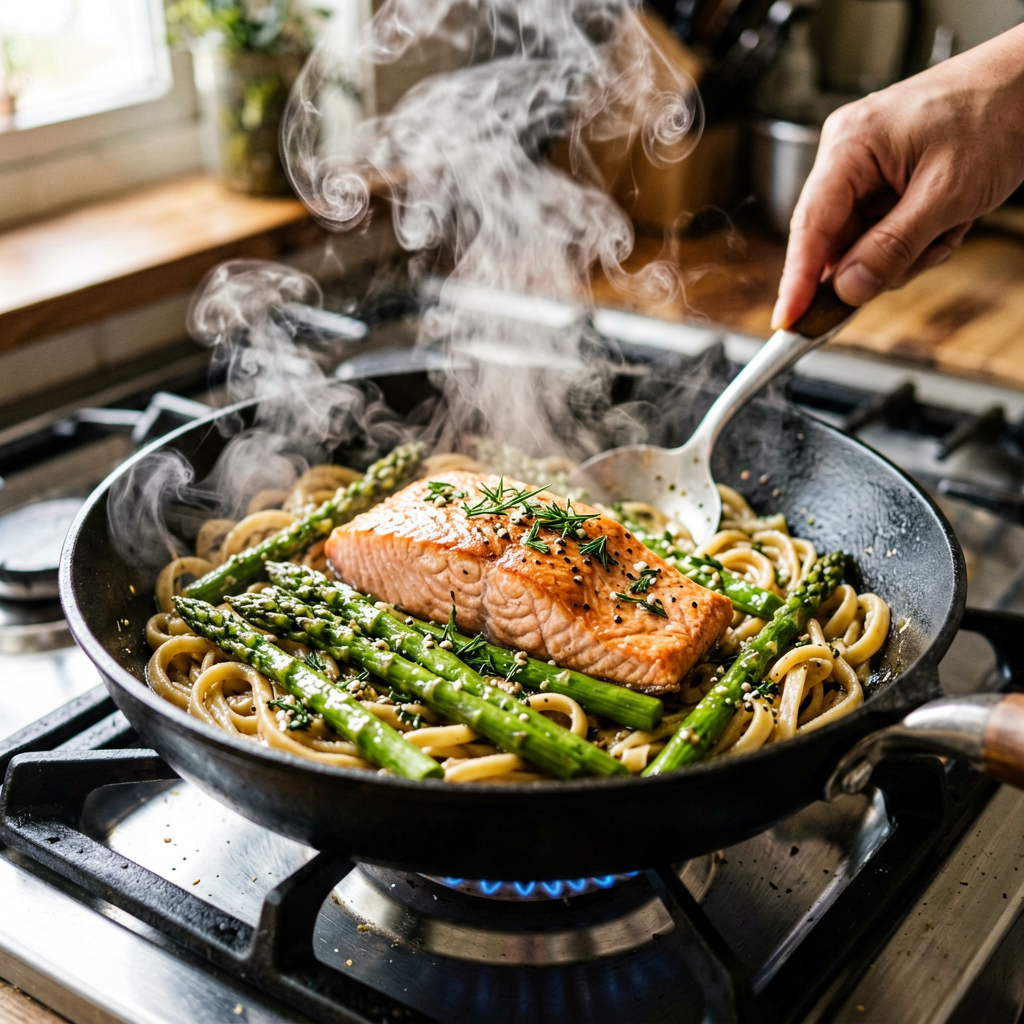
- Reduce the skillet heat to medium. Add the remaining 0.5 tablespoon of oil to the salmon drippings. Add the jalapeño and sauté for 1 minute until fragrant.
- Add the minced garlic and the pre-mixed spice blend. Stir constantly for 30-45 seconds until intensely aromatic. This step toasts the spices, unlocking their full flavor.
- Pour in the 1 cup of broth to deglaze, scraping up any browned bits from the salmon with a wooden spoon. Let it simmer and reduce by about half, 2-3 minutes.
- Add the halved cherry tomatoes and the ¼ cup of cream. Stir and let simmer gently for 2 minutes until the tomatoes just begin to soften.
- Drain the pasta and asparagus and add them directly to the skillet. Add the chopped cilantro and a generous squeeze of lime juice (about 1 tablespoon). Toss everything together vigorously with tongs for 1-2 minutes. The sauce should emulsify and cling to the pasta. If it looks dry or sticky, add ¼ cup of the reserved pasta water at a time until you reach a silky, saucy consistency. Taste and adjust salt, pepper, and lime.
Pro Tips
- The Skin-Side Sear: I always start searing salmon presentation-side down (which is often skinless-side up for restaurant cuts) to develop a beautiful crust for plating. The residual heat from the pan will help crisp the skin gently if you finish it briefly in the oven at 400°F (200°C) for 2 minutes, but for this recipe, it’s not necessary.
- Acid is Your Friend: The final squeeze of lime juice isn’t optional. It cuts through the richness of the cream and salmon, brightening the entire dish. Add it off the heat to preserve its fresh flavor.
- Make-Ahead & Substitutions: The sauce can be made ahead through step 3 and refrigerated for up to 2 days. Reheat gently. You can substitute chicken breast for salmon (pound to ½-inch thickness, sear 4 mins per side) or use green beans instead of asparagus. For a dairy-free version, use full-fat coconut milk instead of cream.
Serving Suggestions
Plate the pasta in warm, shallow bowls. Place a salmon fillet on top or flake it over the pasta. Garnish generously with crumbled cotija cheese and extra cilantro. Serve immediately with additional lime wedges on the side. A simple arugula salad with a lemon vinaigrette makes an excellent, peppery side to balance the richness. This recipe serves 2 large or 3 moderate portions.
FAQ
Can I use frozen salmon for this recipe?
Yes, but thawing is critical. Place frozen fillets in the refrigerator overnight. For a quicker thaw, seal them in a plastic bag and submerge in cold water for 30-60 minutes, changing the water every 15 minutes. Never use warm or hot water. Ensure the fillets are completely thawed and very dry before seasoning and searing.
How do I know when the salmon is perfectly done?
Visual cues are good, but an instant-read thermometer is foolproof. Insert it into the thickest part of the fillet. For a flaky, moist interior, pull the salmon at 125°F (52°C). The temperature will rise another 10 degrees as it rests. The flesh should be opaque and easily flake with a fork but still be slightly translucent in the very center.
Can I prep this ahead for a weeknight meal?
Absolutely. You can do all the chopping (garlic, jalapeño, tomatoes, cilantro) and make the spice blend up to 24 hours in advance. Store them in airtight containers. You can also blanch the asparagus and shock it in ice water, then refrigerate. The actual cooking and assembly will then take only about 15 minutes.
🛒 Recommended Products
*As an Amazon Associate I earn from qualifying purchases.
*As an Amazon Associate I earn from qualifying purchases.*