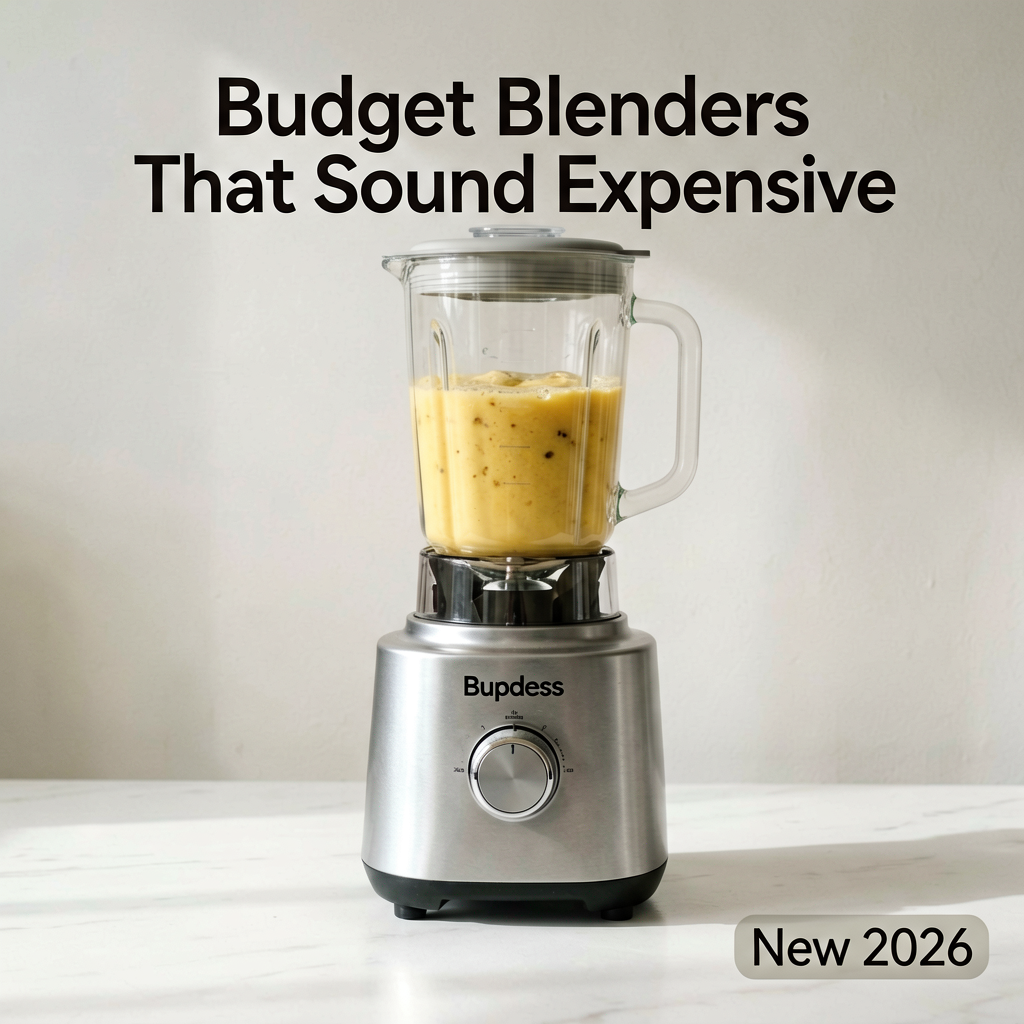
Budget Blenders That Sound Expensive (New 2026)
My Old Blender Died, and I Refused to Spend $300
Look, my trusty old Oster blender from 2014 finally gave up the ghost last month. The motor just stopped mid-smoothie, made a sad whirring noise, and then nothing. A puff of smoke, a faint smell of burning plastic, and that was that. My Saturday morning ritual was ruined.
I went online ready to buy a replacement and was immediately overwhelmed. Suddenly, every blender review site was talking about “professional-grade power” and “restaurant-quality performance” for machines costing $250, $400, even $600. I just want to make a decent smoothie and maybe blend some soup without taking out a loan. Is that too much to ask?
So I did what any frustrated person with $100-$150 to spend would do: I went down a rabbit hole. I read forums, watched way too many YouTube blending tests, and eventually bought three of the most promising-looking budget blenders myself. I’ve been testing them in my kitchen for the past month, making everything from green smoothies (with fibrous kale) to salsa (with chunky tomatoes). Here’s my honest, no-BS take on the budget blenders that sound a lot more expensive than they are. (Yes, that’s a joke about the noise. More on that later.)
Quick Picks: My Top 3 Budget Blenders
Best Overall: NutriBullet 800W Professional Series
It’s not the absolute cheapest, but for $89, it’s the blender I keep reaching for. It handles tough greens without complaining and doesn’t sound like a jet engine taking off. (Well, it’s loud, but not *that* loud.)
Best for Just $45: Hamilton Beach Wave Crusher
If you’re on a tight budget and just need basic smoothie and soup duty, this is your guy. It won’t win any beauty contests, and it’s slower than the others, but it gets the job done for less than a tank of gas.
Best “Budget” Premium: Ninja Professional BL770
At $120, it’s at the top of my “budget” range. It’s a powerhouse with a big 72-oz pitcher, but that plastic feels… less than premium, and the sound is genuinely startling. You’re paying for raw power here, not refinement.
The Detailed Breakdown: What Worked, What Didn’t
1. NutriBullet 800W Professional Series (Model: NBP-0801)
Price: $89 | Time Tested: 4 weeks
I’ll start with the winner. I chose the 800W model because the standard 600W NutriBullets always seemed a little underpowered for ice and frozen fruit. This thing is a step up. The motor feels strong, and it has a simple twist-and-blend action that I appreciate.
What I loved: It pulverizes everything. That fibrous kale I mentioned? Gone. Frozen mango chunks? Smoothie in 45 seconds. The cups are sturdy, and the lids seal well for taking my smoothie on the go. It feels solid and well-made for the price.
The honest gripe: It’s loud. Not “wake-up-the-neighbors” loud, but definitely “can’t-have-a-conversation-next-to-it” loud. Also, you have to babysit it a bit for thicker blends—I have to stop, shake the cup, and blend again more than with pricier models. Still, for $89, this is the blender I’d tell most of my friends to buy.
2. Hamilton Beach Wave Crusher (Model: 54221)
Price: $45 | Time Tested: 3 weeks
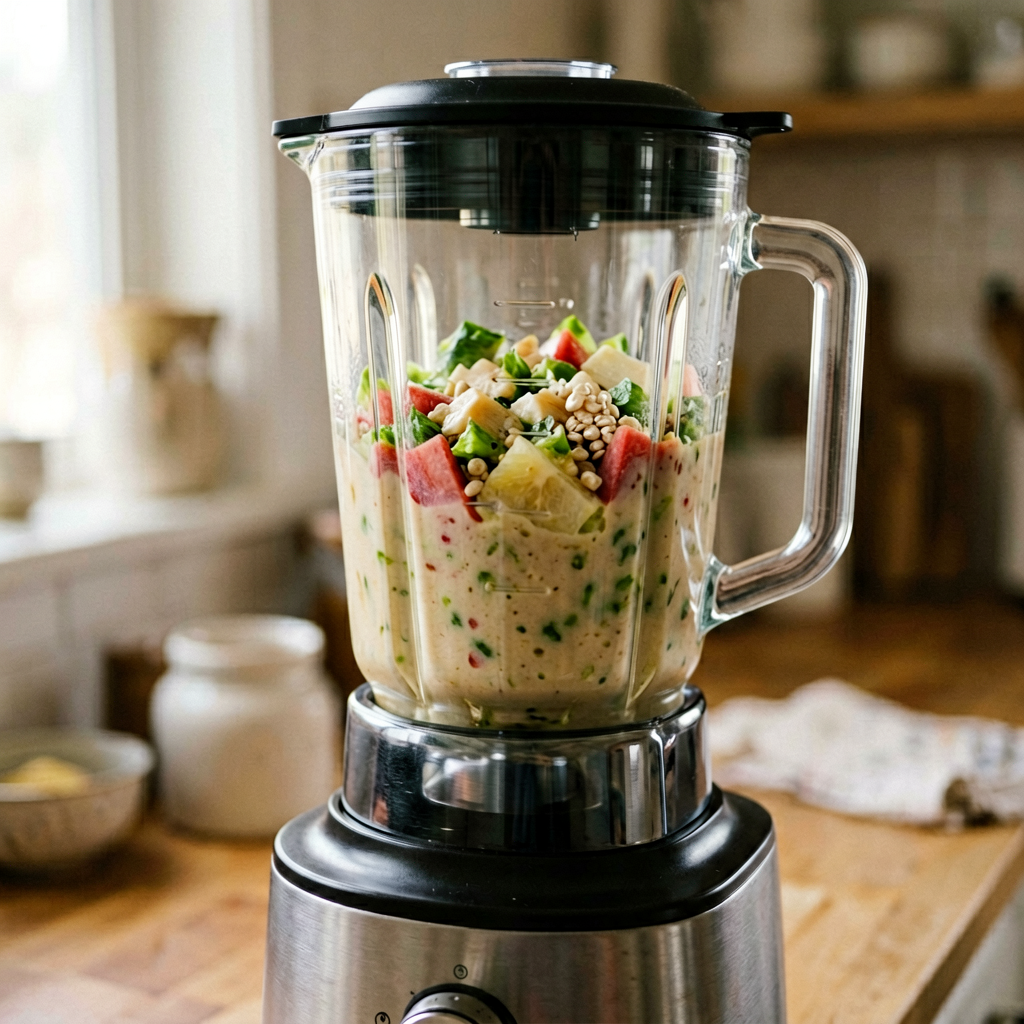
This one was my control. At this price, expectations are low, and it mostly met them. It has 800W of peak power, which sounds good on paper, but the motor doesn’t feel as robust as the NutriBullet’s. It uses a traditional pitcher design with a “wave action” system that pulls food down into the blades.
What I loved: The price. For someone who makes a simple banana-spinach smoothie three times a week and maybe some margaritas in the summer, it’s perfectly adequate. The cord is a decent length (about 3 feet), and cleanup is easy.
The honest gripe: Speed. It took nearly double the time to get a smooth result with frozen fruit compared to the NutriBullet. The resulting smoothie was also slightly frothier and less… velvety. Also, the plastic pitcher feels thin. I wouldn’t be surprised if the handle cracked if I dropped it on a tile floor. For $45, I guess you can’t expect Borosilicate glass.
3. Ninja Professional Blender (Model: BL770)
Price: $120 | Time Tested: 1 month
Ninja has made a name for itself with its stacked blade design, and this model is a classic. It’s a beast. The 72-oz pitcher is huge—I can make soup for four people in one go. It has three speeds plus a pulse, and the power (1000 watts) is undeniable.
What I loved: The raw power. I threw an entire apple, core and all, in there with some almonds and water, and it made a surprisingly smooth “apple milk.” It shreds cheese and makes dough in a flash. If you cook a lot and need a workhorse, this is it.
The honest gripe: Two big ones. First, the sound. It is LOUD. Like, vacuum-cleaner-on-a-hard-floor loud. Second, the build quality. The pitcher is big but feels plasticky and a bit flimsy. The lid doesn’t seal with the same confidence as more expensive brands. It feels like all the money went into the motor, not the user experience. Also, it’s tall—check if it fits under your cabinets.
Side-by-Side: The Honest Comparison
| Feature | NutriBullet 800W ($89) | Hamilton Beach ($45) | Ninja BL770 ($120) |
|---|---|---|---|
| Power | 800W (effective) | 800W (peak) | 1000W |
| Noise Level | Loud | Moderately Loud | Very Loud |
| Build Feel | Solid, premium for price | Plasticky, basic | Big pitcher, but feels cheap |
| Smoothie Texture | Very Smooth | Adequate, a bit frothy | Excellent, but can be over-blended |
| Best For | Single-serve smoothies, daily use | Basic blending, strict budgets | Large batches, tough ingredients, multi-purpose kitchen work |
| My Verdict (out of 5) | ⭐⭐⭐⭐½ | ⭐⭐⭐ | ⭐⭐⭐⭐ |
What to Know Before You Buy a Budget Blender
Wattage isn’t everything. A “1000W peak power” motor that runs at 500W for 10 seconds before overheating is useless. Look for “rated” or “running” watts. Brands like NutriBullet and Ninja are better about being upfront about their actual sustained power.
Noise is the price of power. Cheaper motors are often less insulated and just plain louder. If you have roommates or sleep in, blend during reasonable hours. Seriously. My Ninja test had my cat leave the room.
Pitcher material matters. Glass pitchers are heavy but don’t retain odors or stain. Tritan plastic (like NutriBullet uses) is lighter and shatter-resistant but can hold onto smells from strong ingredients like garlic over time. Basic plastic? It’ll get scratched and stained.
Think about cleanup. Some blenders (looking at you, Hamilton Beach) have blade assemblies that don’t come off the base, making them tricky to clean. The NutriBullet and Ninja cups/pitchers disassemble fully, which is a huge plus.
FAQ: The Questions I Actually Had
Is the Ninja really worth $30 more than the NutriBullet?
It depends. If you primarily make single-serve smoothies, no. Get the NutriBullet. If you host, make big batches of soup, or need to shred/chop food regularly, the Ninja’s capacity and power justify the cost. But be ready for the noise.
Will the $45 Hamilton Beach break after a year?
I can’t say for sure after three weeks, but it feels like a “if you treat it gently” kind of machine. I wouldn’t run it for more than 60 seconds straight or try to blend anything too thick. For light, occasional use, it should last a while.
Can these blend hot soup?
NO! Do not put boiling liquid in any of these budget blenders. The pressure will build up, the lid will blow off, and you will scald yourself. Let soup cool to room temperature first, then blend in short bursts.
Which one is the easiest to clean?
NutriBullet wins here. Just add soap and warm water, blend for 10 seconds, rinse. The Ninja pitcher has more nooks and crannies around the blade tower. The Hamilton Beach is a pain because of its fixed blade design.
Final Take: Where I’m Putting My Money
After a month with all three, I’m keeping the NutriBullet 800W on my counter. It hits the sweet spot of power, price, and user-friendliness. It doesn’t feel like a compromise. It just works well for my daily routine.
The Hamilton Beach is going back. It did its job as a low-cost option, but the performance difference is noticeable enough that I’d rather save up a bit more. The Ninja is impressive, but for my small kitchen and mostly single-serve needs, it’s overkill, and I really can’t stand the racket it makes.
So, if you’re in the market for a new blender in 2026 and your budget is under $150, the NutriBullet 800W is my honest recommendation. It’s not perfect, but it’s the best balance I found. And that’s coming from someone who just wants a good smoothie without a side of buyer’s remorse.
*As an Amazon Associate I earn from qualifying purchases. Prices and availability may vary.*