Salmon and Vegetables Soup (French)
Salmon and Vegetables Soup (French): A Quick & Elegant Homemade Dinner
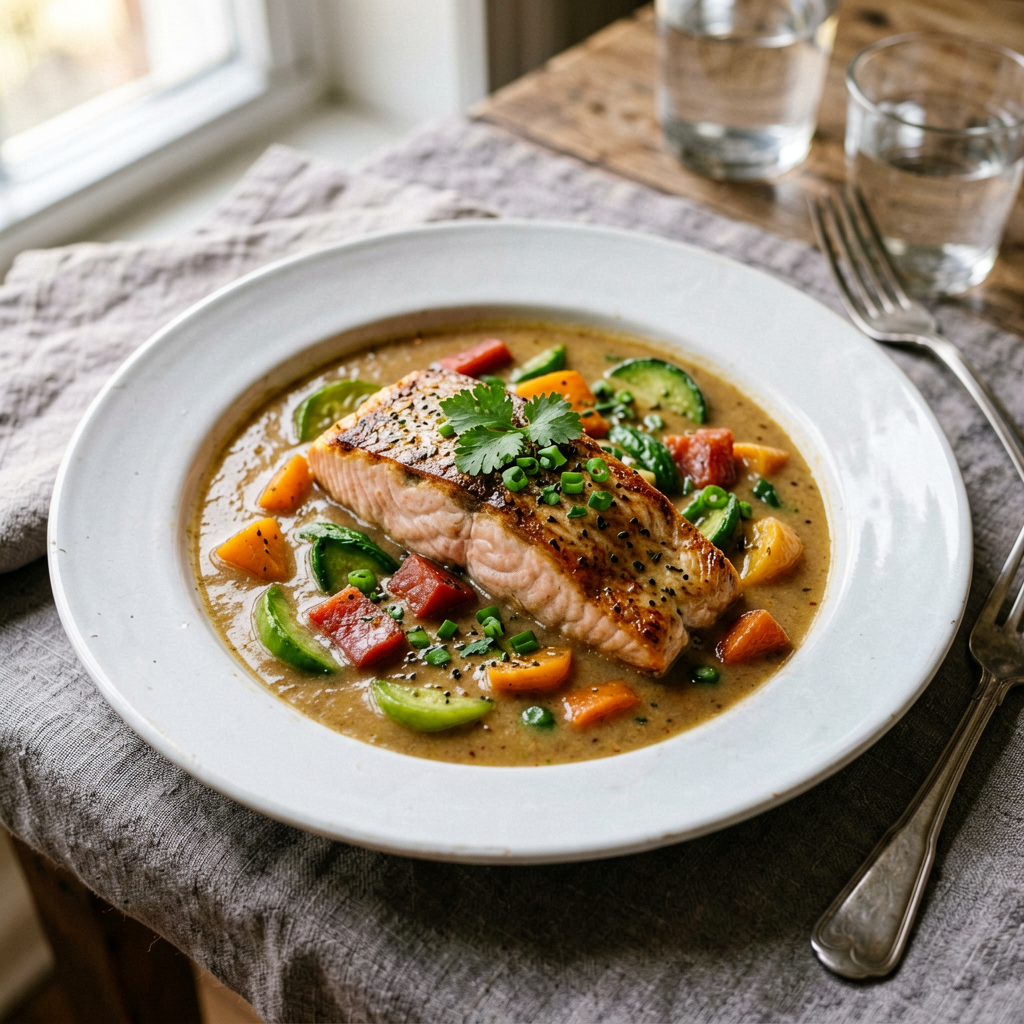
This French-inspired soup transforms simple ingredients into an elegant, nourishing meal. It’s built on a flavorful vegetable broth base, finished with tender salmon and crisp-tender vegetables. The technique is straightforward, focusing on building flavor in stages and cooking the salmon gently to preserve its texture. This recipe is ideal for a quick weeknight dinner (under 30 minutes) but impressive enough for casual entertaining. The key is a properly seasoned poaching liquid and precise timing for the fish.
What You’ll Need
Ingredients (Serves 4):
- Salmon: 4 skinless salmon fillets, 5-6 oz (140-170g) each, about 1-inch thick. Patience is key—choose uniform pieces for even cooking.
- Aromatics: 1 medium yellow onion (about 150g), finely diced; 2 medium carrots (about 200g), peeled and sliced into 1/4-inch rounds; 2 celery stalks, sliced 1/4-inch thick; 3 cloves garlic, minced.
- Broth & Liquid: 4 cups (950ml) high-quality chicken or vegetable broth; 1/2 cup (120ml) dry white wine (like Sauvignon Blanc); 1 cup (240ml) water.
- Herbs & Seasoning: 2 bay leaves; 4 sprigs fresh thyme (or 1 tsp dried); 1 tsp whole black peppercorns; 1 1/2 tsp kosher salt, plus more to taste; 1/2 tsp freshly ground black pepper.
- Vegetables: 2 medium zucchini (about 300g total), halved lengthwise and sliced into 1/2-inch half-moons; 1 cup (150g) frozen peas; 1/2 cup (120ml) heavy cream (optional, for a richer soup).
- Finish: 2 tbsp fresh dill, chopped; 1 tbsp fresh parsley, chopped; 1 lemon, for juice.
Equipment:
- A heavy-bottomed 5-6 quart Dutch oven or stockpot.
- A fine-mesh skimmer or large spoon.
- An instant-read thermometer (highly recommended for perfect salmon).
- Vegetable peeler and sharp chef’s knife.
Prep Work (Critical Details)
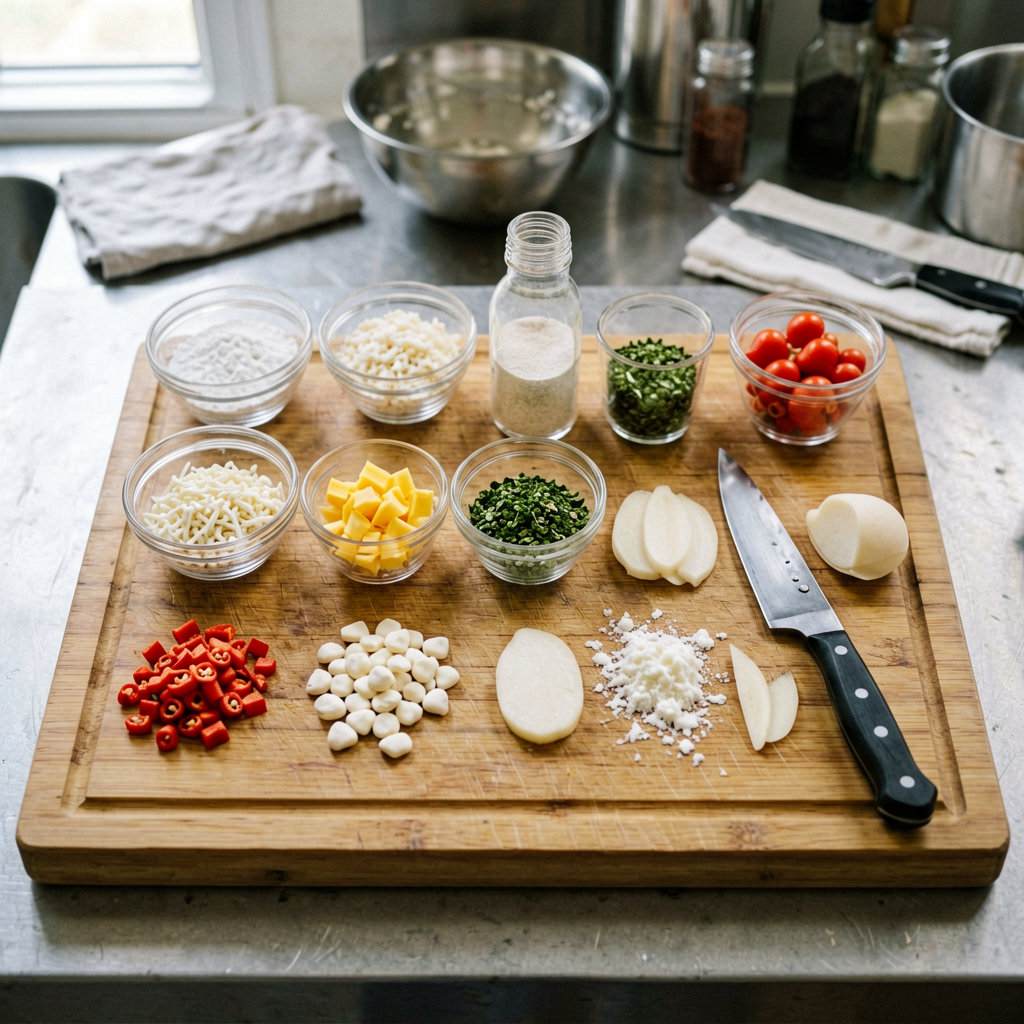
Mise en place is everything for a quick soup. Have all vegetables prepped and measured before you turn on the heat.
- Salmon: Ensure fillets are dry. Season both sides lightly with salt and pepper 10 minutes before cooking. This draws out a bit of moisture and helps the seasoning penetrate. Keep chilled until ready to use.
- Aromatics & Vegetables: Dice the onion, slice the carrots and celery. Mince the garlic. Slice the zucchini. Place each in a separate bowl or section of a tray. This organization is non-negotiable for a fast-paced recipe.
- Herb Bundle: Tie the thyme sprigs, bay leaves, and peppercorns together with kitchen twine. This is your bouquet garni. It infuses flavor and is easily removed later.
Cooking Instructions
Step 1: Build the Broth Base (5-7 minutes)
Heat 1 tablespoon of olive oil or butter in your Dutch oven over medium heat (about 325°F / 165°C) until shimmering. Add the diced onion, sliced carrots, and celery. Sauté for 5-7 minutes, stirring occasionally. You want the onions to become translucent and the vegetables to soften slightly—this is called the mirepoix stage and forms the soup’s flavor foundation. Add the minced garlic and cook for 1 minute more, until fragrant. Listen for a gentle sizzle, not a loud, browning sizzle.
Step 2: Deglaze & Simmer (12-15 minutes)
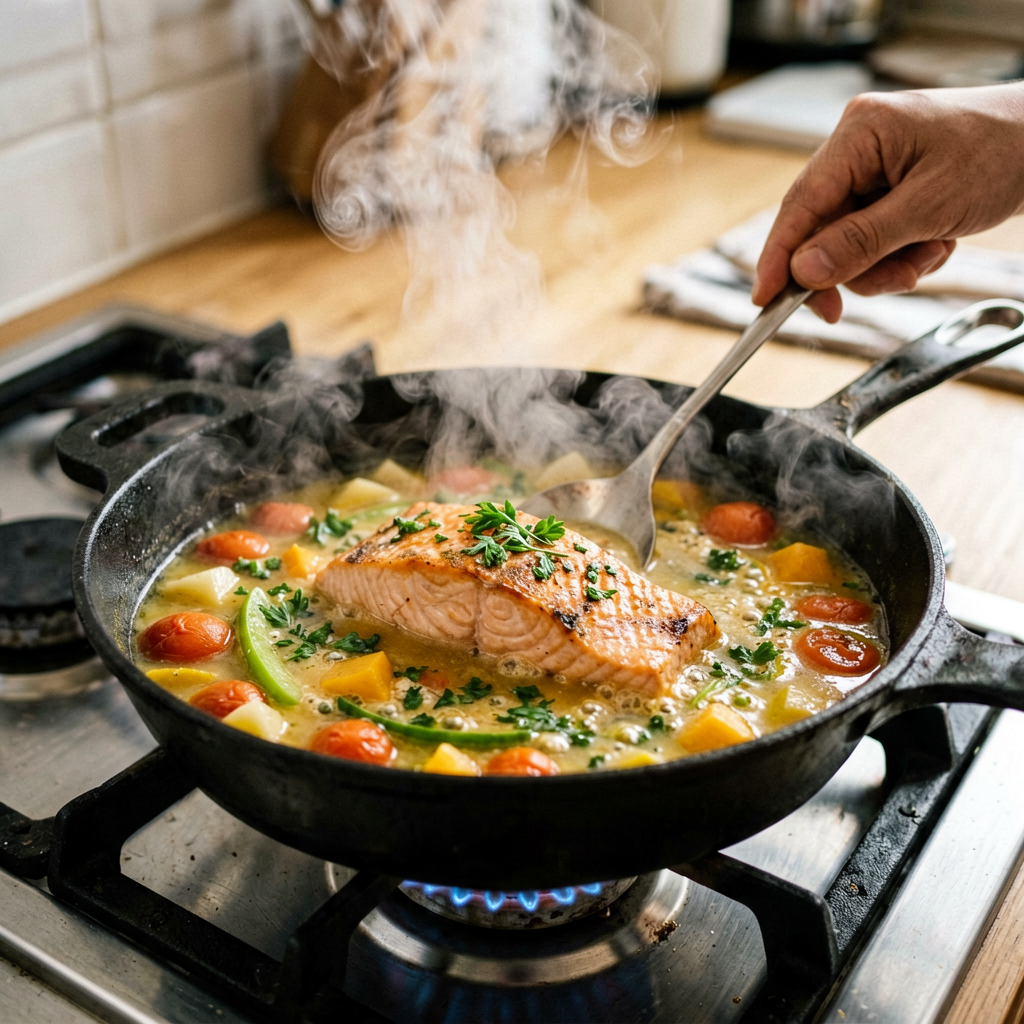
Pour in the white wine. Increase the heat to medium-high and scrape the bottom of the pot with a wooden spoon to release any browned bits (fond). Let the wine bubble and reduce by about half, which takes about 2 minutes. Add the broth, water, and the bouquet garni. Bring to a boil, then immediately reduce the heat to low to maintain a gentle, bare simmer. Cover partially and simmer for 10 minutes. This step marries the flavors and ensures the carrot slices are perfectly tender.
Step 3: Cook Vegetables & Finish Broth (5 minutes)
After simmering, remove and discard the bouquet garni. Add the zucchini slices and frozen peas. Cook for 3-4 minutes, just until the zucchini is crisp-tender. It should still offer slight resistance when pierced. Stir in the heavy cream (if using) and season with the 1.5 tsp kosher salt and 1/2 tsp black pepper. Taste the broth—it should be well-seasoned. Adjust if necessary. Turn the heat to the lowest setting to keep it hot.
Step 4: Poach the Salmon (5-8 minutes)
This is the most critical step. Gently slide the seasoned salmon fillets into the hot broth, submerging them as much as possible. The liquid should be at a bare simmer—tiny bubbles should lazily break the surface, not a rolling boil. This temperature is around 160-170°F (71-77°C). Poach for 5-8 minutes, depending on thickness. Use your instant-read thermometer: the salmon is done when the center reaches 125°F (52°C) for medium-rare and moist, or 145°F (63°C) for the USDA-recommended well-done. In my experience, pulling it at 130°F (54°C) allows for carryover cooking to a perfect medium. The fish should be opaque and flake easily but not look dry.
Step 5: Serve
Using a slotted spoon or fish spatula, carefully transfer one salmon fillet to each shallow soup bowl. Ladle the hot vegetable broth and vegetables over and around the fish. Garnish generously with fresh dill and parsley, and add a final squeeze of lemon juice to each bowl.
Pro Tips
- The Simmer is Key: A rolling boil will make the salmon tough and cause it to break apart. A gentle simmer keeps it succulent. If your pot seems too hot, simply lift it off the burner for a minute.
- Substitutions That Work: No white wine? Replace it with an equal amount of additional broth plus a splash of white wine vinegar. Thyme can be replaced with a pinch of dried herbes de Provence.
- Make-Ahead Option: The vegetable broth base (Steps 1-3) can be made up to 2 days ahead and refrigerated. Reheat it to a bare simmer before proceeding with poaching the salmon (Step 4) just before serving.
Serving Suggestions
This soup is a complete meal on its own, but you can round it out with:
- Bread: A crusty baguette or sourdough for dipping into the rich broth.
- Wine: A crisp, unoaked Chardonnay or a Sauvignon Blanc complements the salmon and broth beautifully.
- Portion: One 5-6 oz fillet with about 1.5 cups of broth and vegetables makes a satisfying main course portion for an adult.
FAQ
1. Can I use frozen salmon?
Yes, but it must be fully thawed in the refrigerator overnight (24 hours). Pat it extremely dry before seasoning. Note that previously frozen salmon may release more albumin (the white protein) during cooking, so a very gentle simmer is even more crucial.
2. How do I know when the salmon is perfectly done?
The most reliable method is an instant-read thermometer inserted into the thickest part. Aim for 125°F (52°C) for a moist, medium-rare center. Visual cues: the salmon should be opaque on the outside but the very center can still look slightly translucent and gel-like; it should flake when pressed gently with a fork, not fall apart.
3. Can I prep the salmon ahead?
You can season it with salt and pepper up to 4 hours ahead and keep it covered in the refrigerator. Do not cut or slice it. The soup base can also be prepped ahead as noted in the Pro Tips.
*As an Amazon Associate I earn from qualifying purchases.*[Check Price on Amazon for an Instant-Read Thermometer]
*As an Amazon Associate I earn from qualifying purchases.*[Check Price on Amazon for a Quality Dutch Oven]
*As an Amazon Associate I earn from qualifying purchases.*