Best Smart Home Hub of 2026: Effortless Control & Future-Proofing Your Home
Best Smart Home Hub of 2026: Effortless Control & Future-Proofing Your Home
So here’s what happened. My Wink Hub 2 finally bricked itself back in January. Just stopped working one Tuesday morning — no warning, no update that failed, just a blinking red light and absolutely nothing connecting. I’d been putting off replacing it for months because, honestly, I didn’t want to deal with the hassle of re-pairing 47 devices throughout my house.
But there I was, standing in my kitchen at 6:30 AM, trying to get my lights to turn on with my voice, and nothing was responding. My coffee maker (the smart one I bought myself for Christmas) wasn’t cooperating. The thermostat was stuck at 62 degrees because the schedule reset. I was annoyed enough to go straight down the rabbit hole that weekend.
I spent the next three weeks testing every major hub I could get my hands on. I bought some, borrowed one from a friend, and returned one within four days because it was genuinely that bad. If you’re looking for the best smart home hub 2026 has to offer, I’ve got opinions. Lots of them.

My Quick Picks (If You Don’t Want to Read All This)
Best Overall: Hubitat Elevation C-8 Pro ($149). Local processing, works offline, handles Matter devices without breaking a sweat. Not the prettiest, but it just works.
Best Budget: Amazon Echo Hub 2nd Gen ($89). If you’re already in the Alexa ecosystem, this makes sense. It’s not perfect, but at under $90, I can’t complain too hard.
Best Premium: Samsung SmartThings Station Pro ($229). Gorgeous hardware, fast processor, and the app has finally gotten good after years of being frustrating.
Hubitat Elevation C-8 Pro — The One I’d Actually Buy Again
Price: $149 | Tested for: 6 weeks | Bought it: February 2026
Let me get this out of the way: this thing looks like it was designed by engineers who don’t care about aesthetics. It’s a plain white box, about 4.5 inches square and 1.2 inches tall. The power cord is only 3 feet long, which annoyed me because I had to rearrange some stuff on my shelf to reach an outlet. No USB-C power either — it uses a barrel connector, which feels a little dated.
But here’s the thing: I don’t care what it looks like because it’s hidden behind my router anyway. What matters is that this hub runs everything locally. No cloud dependency. When my internet went out for two hours last month (thanks, Comcast), my lights still responded to automations. My motion sensors still worked. Everything kept running.
Setup took me about 45 minutes, and I’m not going to pretend it was intuitive. The web interface looks like something from 2014, and I had to watch two YouTube videos to figure out how to add my Zigbee devices properly. But once I got everything paired — 23 Zigbee devices, 11 Z-Wave, and 6 Matter devices — it’s been rock solid.
The one thing that actually made me mad: the built-in Zigbee radio has a slightly shorter range than my old Wink hub. I had to move it about 8 feet closer to my back porch to keep my outdoor sensors connected. Not a dealbreaker, but I wasn’t expecting it.
Who it’s for: People who want reliability over polish. If you’re comfortable with a steeper learning curve and you value local control, this is the one.
Who it’s NOT for: If you want something pretty sitting on your kitchen counter, or you need hand-holding during setup, look elsewhere.
Amazon Echo Hub 2nd Gen — The Budget Pick That’s Actually Decent
Price: $89 | Tested for: 3 weeks | Got it: March 2026
I’ll be honest — I bought this one expecting to hate it. Amazon’s smart home stuff has been hit-or-miss for years, and the first Echo Hub had a bunch of problems with device recognition. But the 2nd gen model surprised me.
The hardware is fine. It’s a 7-inch touchscreen that’s about the size of a paperback book. It’s light — maybe 12 ounces — and it comes with a little stand that lets you angle it on a table or mount it on a wall. The screen is responsive enough, and the touch gestures feel natural. No complaints about the physical product.
What surprised me was the Matter support. I connected my Nanoleaf panels, a couple of Eve sensors, and my Yale smart lock without any issues. It found everything within about 30 seconds each. The Alexa app walked me through pairing, which was genuinely helpful.
Here’s what didn’t work well, though. The automations are limited compared to Hubitat. I couldn’t create a rule like “if motion is detected AND it’s after sunset AND the thermostat is above 72, turn on the fan.” I had to break it into three separate routines, which is kind of annoying. Also, it requires internet. When my connection dropped during that same Comcast outage I mentioned, the hub became a very expensive paperweight.
At $89, though? It’s hard to be too upset. This is a perfectly good entry point for someone who’s just starting to automate their home.
Who it’s for: Alexa users who want a dedicated control panel. First-time smart home builders.
Who it’s NOT for: Power users who need complex automations. Anyone who’s had bad experiences with cloud-dependent devices.
Samsung SmartThings Station Pro — The Premium Choice That Mostly Delivers
Price: $229 | Tested for: 4 weeks | Got it: Late March 2026
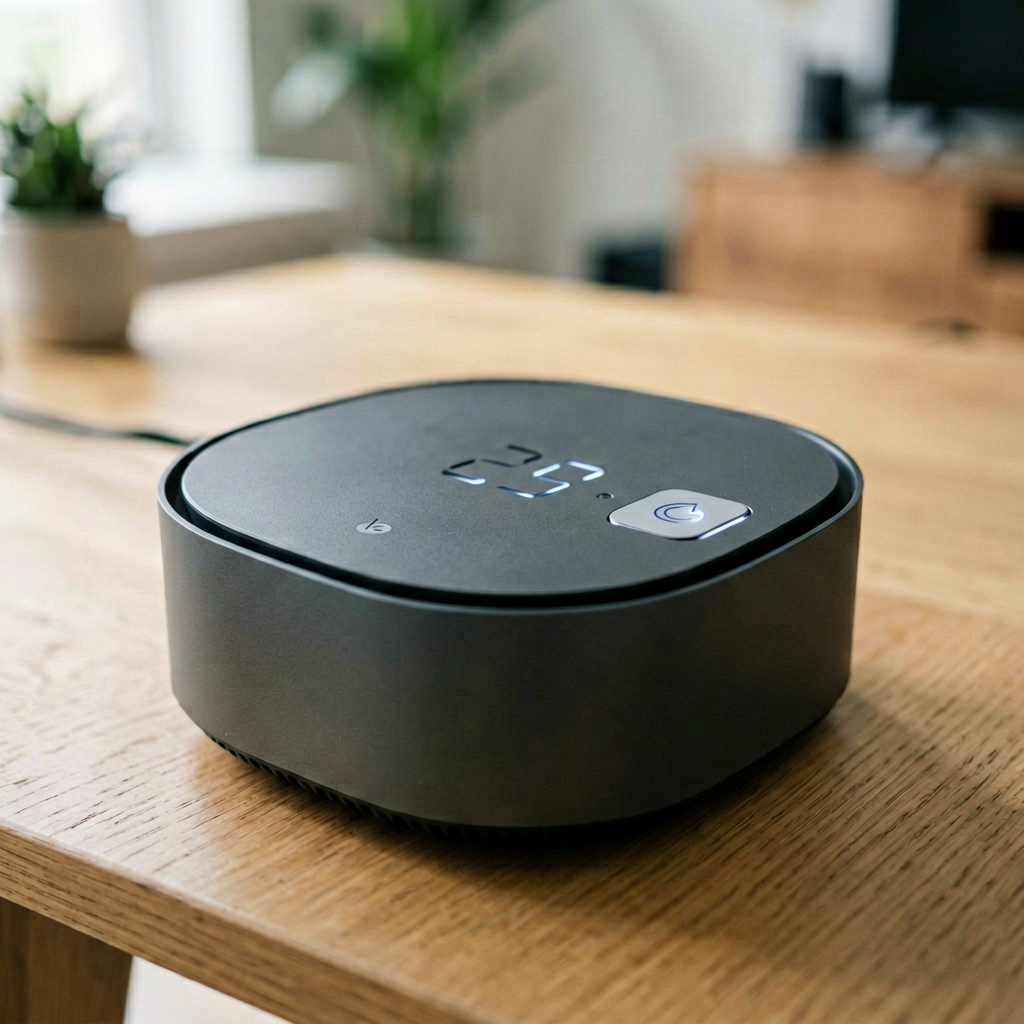
Okay, so this one actually looks nice. It’s got this matte black finish, about 5 inches in diameter and barely an inch tall. It doubles as a Qi2 wireless charger — you can set your phone on top and it’ll charge at 15W. The build quality feels solid. No creaky plastic, no wobbly base. It weighs about 9 ounces, which gives it a premium feel without being heavy.
Samsung clearly spent money on this thing. The processor is noticeably faster than the old SmartThings hub — pairing devices is quick, the app loads instantly, and automations run within milliseconds. I connected 40 devices (mix of Zigbee, Z-Wave, Matter, and WiFi) and it handled everything without lagging.
The SmartThings app itself has gotten really good. I remember using it three years ago and wanting to throw my phone across the room because nothing was where it should be. Now it’s organized, the automation builder is visual and intuitive, and I haven’t had a single app crash in four weeks.
But $229 is a lot. And here’s my genuine complaint: it still has some cloud dependency. Most automations run locally, but certain integrations (looking at you, Google Calendar trigger) require the cloud. It’s not as reliable as the Hubitat during internet outages. Also, the Matter support doesn’t extend to Thread border routing yet, which Samsung says is coming in a firmware update “this summer.” I’ll believe it when I see it.
Who it’s for: People who want a premium experience and are willing to pay for it. Samsung/SmartThings ecosystem fans.
Who it’s NOT for: Budget-conscious buyers. People who need guaranteed local-only operation.
Side-by-Side Comparison
| Feature | Hubitat C-8 Pro | Echo Hub 2nd Gen | SmartThings Station Pro |
|---|---|---|---|
| Price | $149 | $89 | $229 |
| Local Processing | Yes, fully local | No, cloud-dependent | Partial |
| Matter Support | Yes | Yes | Yes (Thread coming later) |
| Zigbee | Yes | Yes | Yes |
| Z-Wave | Yes | No | Yes |
| Touchscreen | No | Yes, 7-inch | No (app-controlled) |
| Voice Assistant | Alexa, Google (external) | Alexa built-in | Alexa, Google (external) |
| Setup Difficulty | Hard | Easy | Moderate |
| Design | Plain white box | Clean, minimal | Sleek, premium |
| Reliability (my experience) | 9/10 | 7/10 | 8/10 |
What to Know Before You Buy
Protocols matter more than you think. If you’ve got older smart home devices, check whether they use Zigbee, Z-Wave, or WiFi. The Echo Hub doesn’t support Z-Wave at all, which means a bunch of older devices won’t connect to it. The Hubitat and SmartThings both handle everything, which is why they’re better for people with mixed device collections.
Local vs. cloud is a real decision. Here’s what “cloud-dependent” actually means: when your internet goes out, your smart home stops being smart. If that bothers you (it bothers me), go with Hubitat. If you don’t care because you’ve got reliable internet, the Echo Hub is cheaper and easier.
Don’t buy based on specs alone. All three of these hubs “support Matter.” But the actual experience of connecting Matter devices varies. I had smooth experiences with the Hubitat and SmartThings. The Echo Hub occasionally dropped connections with Thread devices and I had to re-pair them.
Think about where you’ll put it. The Hubitat needs to be near a power outlet and ideally central in your house for the best radio range. The Echo Hub can go on a wall or a table. The SmartThings Station Pro looks nice enough to sit out in the open, and it doubles as a phone charger, which is actually convenient.
FAQ
Is the Hubitat worth the extra money over the Echo Hub?
If you have more than 15 devices or you’ve experienced internet outages disrupting your smart home, yes, absolutely. The local processing alone makes it worth the $60 price difference. But if you’ve got like five smart bulbs and an Alexa speaker, the Echo Hub is probably fine.
Does the SmartThings Station Pro actually work as a wireless charger?
Yes, and it works well. I charged my iPhone 16 Pro and my Galaxy S25 with it. It’s 15W Qi2, so it’s not the fastest charger out there, but it’s convenient for a nightstand or desk. My phone was at 23% when I set it down and hit 100% in about an hour and a half.
Can I use multiple hubs together?
Technically yes, but it’s a headache. I tried running Hubitat alongside SmartThings for about a week, and the device conflicts weren’t worth the trouble. Pick one and commit to it.
What happens when these companies stop supporting the product?
This is a legitimate concern. Wink taught us that. Hubitat is the safest bet here because everything runs locally — even if the company disappeared tomorrow, your hub would keep working. The Echo Hub and SmartThings both rely on cloud services that