Air Fryer Salmon with Creamy and Rosemary
Air Fryer Salmon with Creamy Rosemary Sauce: A Perfect Weeknight Dinner
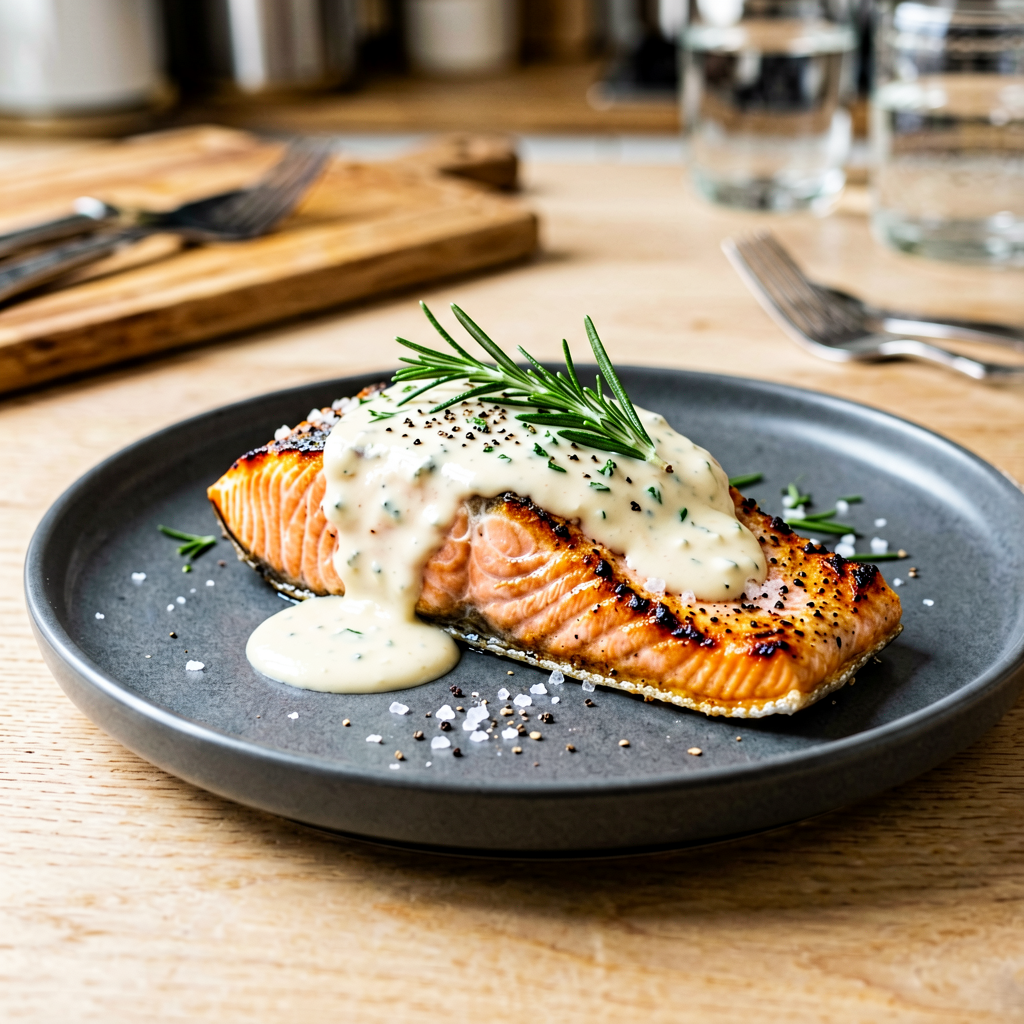
This recipe delivers restaurant-quality salmon in under 20 minutes, leveraging the air fryer for perfectly cooked fish with a crisp top and a velvety, aromatic sauce. The technique focuses on a quick, high-heat cook for the salmon, while the rosemary-infused cream sauce comes together on the stovetop simultaneously. It’s an ideal recipe for beginners and experienced cooks alike who value speed without sacrificing flavor or texture. The air fryer’s consistent circulation ensures even cooking and a delightful texture that’s difficult to achieve with other quick methods.
What You’ll Need
Ingredients
- Salmon Fillets: 2 skin-on fillets, 6 oz (170g) each, about 1-inch thick. Skin-on is crucial for moisture retention and crispiness.
- Olive Oil: 1 tablespoon, extra virgin.
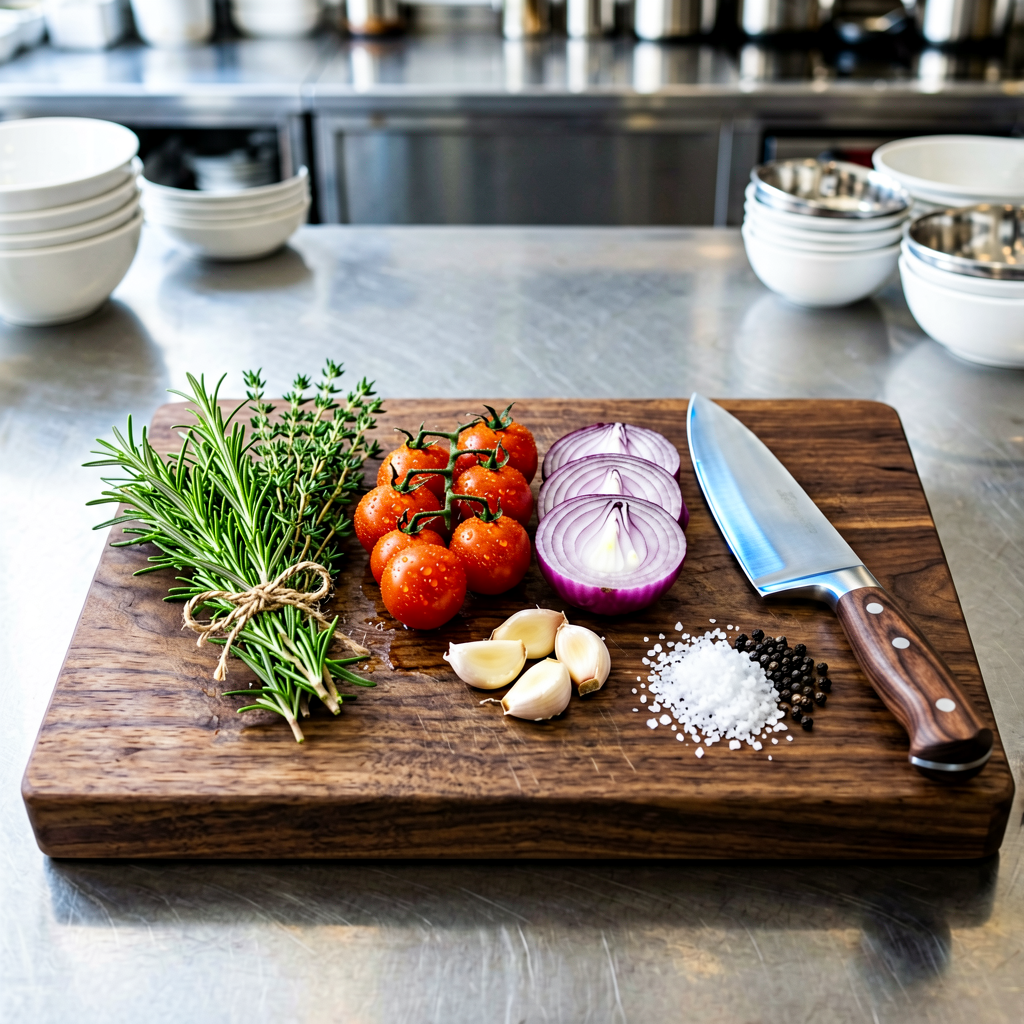
- Fresh Rosemary: 2 teaspoons, finely chopped. Do not use dried rosemary here; its texture and flavor are inferior for the sauce.
- Garlic: 2 medium cloves, minced.
- Heavy Cream: ½ cup (120ml). This is the base of the sauce; do not substitute with milk or half-and-half for this application.
- Chicken or Vegetable Broth: ¼ cup (60ml), low-sodium.
- Lemon: 1 tablespoon fresh juice + 1 teaspoon zest.
- Dijon Mustard: 1 teaspoon.
- Salt and Freshly Ground Black Pepper: To taste, about ½ teaspoon salt and ¼ teaspoon pepper.
Equipment
- Air Fryer (I use a 5-6 quart basket style)
- [Check Price on Amazon] for a reliable basket-style air fryer.
- Small saucepan
- Whisk
- Instant-Read Thermometer — essential for perfect salmon.
- Microplane or fine zester
- Cutting board and knife
Prep Work
Salmon: Remove salmon from the refrigerator 15 minutes before cooking. Pat it *extremely* dry with paper towels on all sides, especially the skin. Moisture is the enemy of crispiness. Season both sides generously with salt and pepper just before cooking. Salting too far ahead will draw out moisture.
Sauce Ingredients: Mince the garlic and finely chop the rosemary. Measure out all liquid ingredients. This dish cooks fast; having everything ready is non-negotiable.
Temperature Note: While the salmon rests to a cool room temperature (it should never be ice-cold), your air fryer needs to be preheating.
Cooking Instructions
- Preheat the Air Fryer: Set your air fryer to 400°F (200°C) and let it run for a full 3-5 minutes. A hot basket is key for an immediate sear.
- Cook the Salmon: Lightly brush both sides of the salmon with olive oil. Place the fillets in the air fryer basket, skin-side down. Do not overcrowd. Cook for 8 minutes. Do not open the basket during the first 6 minutes. The skin will release and become crispy, and the top should develop a light, golden opacity. For a 1-inch thick fillet, the internal temperature should reach 125°F (52°C) at the center for a medium-rare, silky center. It will continue to rise to a safe 145°F (63°C) during rest.
- Rest the Salmon: Immediately transfer the cooked salmon to a plate. Tent loosely with foil and let it rest for 5 minutes. This allows the juices to redistribute.
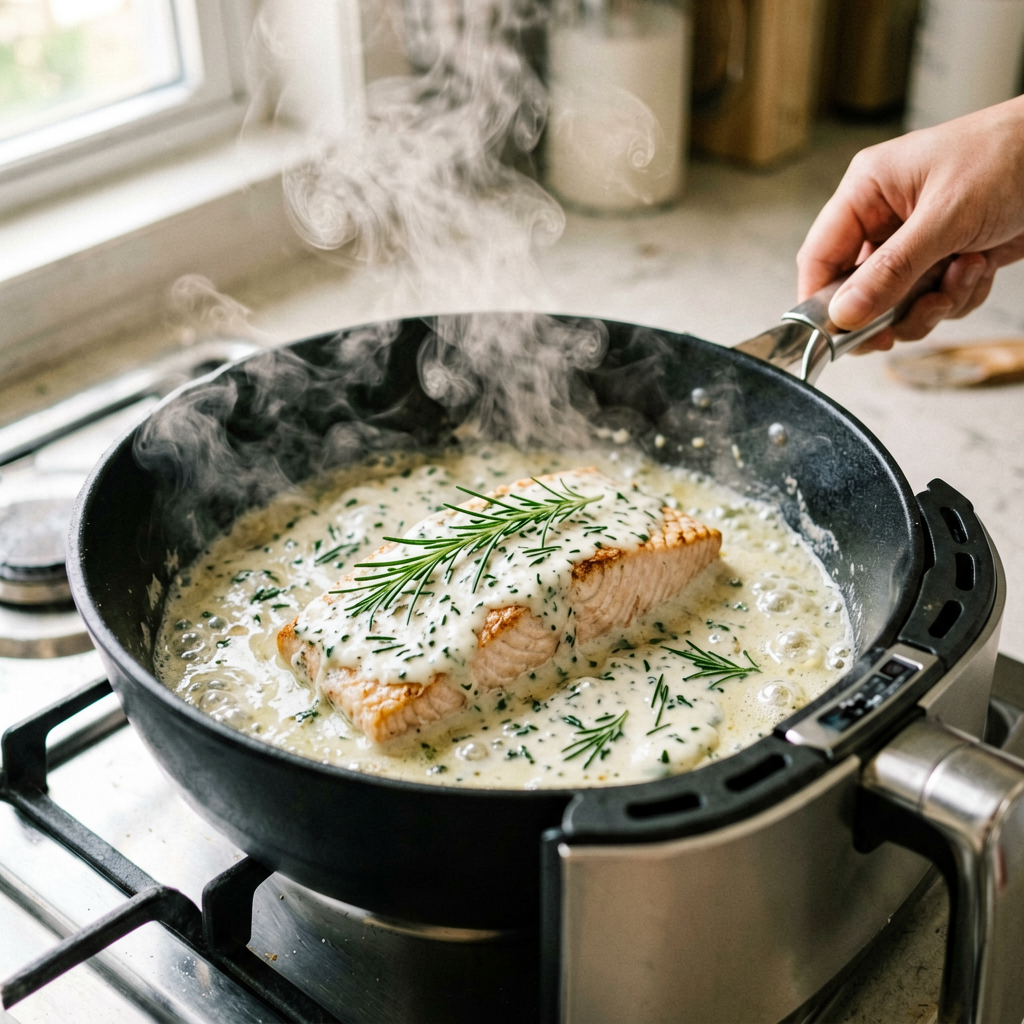
- Make the Creamy Rosemary Sauce (while salmon rests): In a small saucepan over medium heat, add 1 tablespoon of the same olive oil. Add the minced garlic and chopped rosemary. Sauté for 60-90 seconds until fragrant but not browned. You’ll hear a gentle sizzle and smell the aromatics bloom.
- Build the Sauce: Pour in the broth and lemon juice. Bring to a simmer, then reduce heat to medium-low. Let it reduce by about half, approximately 2-3 minutes. You’ll see the liquid become slightly syrupy.
- Cream and Season: Whisk in the heavy cream and Dijon mustard. Simmer gently for another 2 minutes, stirring often, until the sauce thickens enough to coat the back of a spoon. Remove from heat, stir in the lemon zest, and season with salt and pepper to taste.
Pro Tips
- The Dry Brine Technique: For the flakiest, most seasoned fish, I recommend salting the salmon fillets lightly 20-30 minutes before cooking (after patting dry). This initial salting draws out a tiny bit of moisture, which then dissolves the salt and gets reabsorbed, seasoning the fish more deeply. Pat it dry again before oiling and cooking.
- Sauce Consistency Control: If your sauce reduces too much and becomes too thick, simply whisk in a teaspoon of warm broth at a time. If it’s too thin after the simmer, let it reduce a moment longer before adding the cream.
- Substitutions: In a pinch, fresh thyme can replace rosemary. For the sauce, half-and-half can be used but will result in a slightly thinner sauce and a less rich mouthfeel. Never use milk as it may curdle.
- Make-Ahead: The sauce can be made up to 2 days ahead and reheated gently. The salmon is best cooked fresh.
Serving Suggestions
Plate the rested salmon and spoon the warm creamy rosemary sauce generously over the top or alongside. The sauce is rich, so a small pool is sufficient. Pair with:
- Starch: Simple mashed potatoes, buttery couscous, or quinoa to soak up the sauce.
- Vegetable: Steamed or roasted asparagus, green beans, or a crisp arugula salad dressed with lemon juice and olive oil.
Portion Guidance: One 6 oz (170g) fillet per person is a standard main course serving. The recipe makes enough sauce for two servings generously.
Frequently Asked Questions
Can I use frozen salmon fillets?
Yes, but with important adjustments. Thaw them completely in the refrigerator overnight. Never cook from frozen in the air fryer for this recipe, as the exterior will overcook before the center thaws. Pat the thawed fillet extremely dry before proceeding.
How do I know when the salmon is perfectly done?
Visual cues: The salmon will turn from translucent red/pink to an opaque, light pink. The flesh will flake easily when pressed with a fork, but should still be moist in the center. The most reliable method is an instant-read thermometer inserted into the thickest part. Pull it at 125°F (52°C) for medium-rare (my preference) or 135°F (57°C) for medium. It will carryover cook by about 10 degrees during rest.
Can I prep this ahead for a quick dinner?
Yes. The sauce can be made ahead and refrigerated. The salmon can be patted dry, oiled, and seasoned, then covered and refrigerated for up to 4 hours before cooking. Do not let it sit with salt for longer than 30 minutes if you haven’t done the dry brine, as it will draw out too much moisture. Let it sit at room temperature for 10 minutes before cooking if refrigerated.
*As an Amazon Associate I earn from qualifying purchases.*