Bluetooth Speaker Showdown: Which One Actually Works? (Improved 2026)
Bluetooth Speaker Showdown: Which One Actually Works? (Improved 2026)
Here’s the thing. My old JBL Flip 4, which I’d had since 2021, finally gave up the ghost last month. The power button got stuck, and then it just refused to charge. I was standing on my back patio in early March 2026, trying to play a playlist for a little BBQ, and I had a useless brick. That’s the moment I started this whole project. I told myself I wasn’t just going to buy the same thing again. I wanted to see what was actually good in 2026, not just what had good marketing.
So, I did what any mildly obsessive person would do. I spent way too much time reading forums, watching 15-minute YouTube reviews that were really just extended commercials, and ultimately, I bought three speakers with my own money to test them out over the last six weeks. This isn’t a site that gets free review units. I’m just a dude who wanted a good speaker for his porch, kitchen, and occasional camping trip. Here’s what I found.
Quick Picks: If You Don’t Want to Read the Whole Thing
- Best Overall: The SoundCore Fusion 3. It just works, it’s loud enough for a crowd, and the battery lasts for ages. At $89, it feels like the smart choice.
- Best Budget: The Tribit StormBox Flow. For $45, the bass is surprisingly punchy, and it’s tiny enough to toss in a bag. It’s not perfect, but for the price, you really can’t complain.
- Best Premium: The Marshall Middleton. It looks incredible and the sound is massive for its size. But at $250, it better be. If you want a speaker that’s also a piece of decor, this is it.
The Detailed Breakdown
SoundCore Fusion 3 (Model: A3127) – $89
Tested for 6 weeks, used almost daily.
Okay, so the SoundCore is the one I keep coming back to. I bought it right after the BBQ disaster. The first thing I noticed is it feels solid in your hand—kind of a textured rubber finish that doesn’t feel cheap. It’s 1.5 pounds and about the size of a large water bottle.
I used this thing on my patio every weekend in April and part of May. The volume is impressive. It can fill my entire backyard (which is a standard suburban size) without distorting. The bass is present and accounted for; it won’t rattle your windows, but for a small gathering, it’s got a nice thump. My favorite feature is the battery. SoundCore claims 24 hours, and I didn’t quite get that—more like 18-20 hours at about 60% volume. Still, that’s insane. I could use it all weekend without thinking about the charger.
Here’s my genuine complaint: the app is mediocre. It lets you tweak the EQ, but the interface feels a little clunky. Also, the built-in microphone for calls is terrible. I tried to take a call while grilling, and the person on the other end said I sounded like I was inside a washing machine. But for just playing music? It’s a beast. [Check Price on Amazon]
Tribit StormBox Flow – $45
Tested for 5 weeks. Used on weekend hikes and in the shower.
This little guy is the one that surprised me. It’s only 0.9 pounds and fits in my palm. I took it on a few hikes in the Cascades in April and early May. The IP67 waterproof rating means I’m not scared to get it wet, and it has survived being dropped on gravel twice (my clumsy hands).
For its size, the bass is weirdly good. Tribit calls it “XBass,” and I guess that’s as good a name as any. It does push the low end more than you’d expect from something this small. The mids and highs are clear, too, but at maximum volume, it starts to get a little tinny and harsh. It’s not meant to fill a room—it’s a personal, portable soundtrack.
The battery life is rated at 12 hours, and I consistently got around 10. My real annoyance? The charging port is USB-C, but the included cable is only about 1 foot long. It’s annoyingly short. You’ll need to use your own longer cable if the outlet is far away. Also, it doesn’t have an app at all—what you see is what you get. At $45, though, I’m not asking for miracles. It does its job well. [Check Price on Amazon]
Marshall Middleton – $250
Tested for 4 weeks. Mostly used in my living room and as a centerpiece.
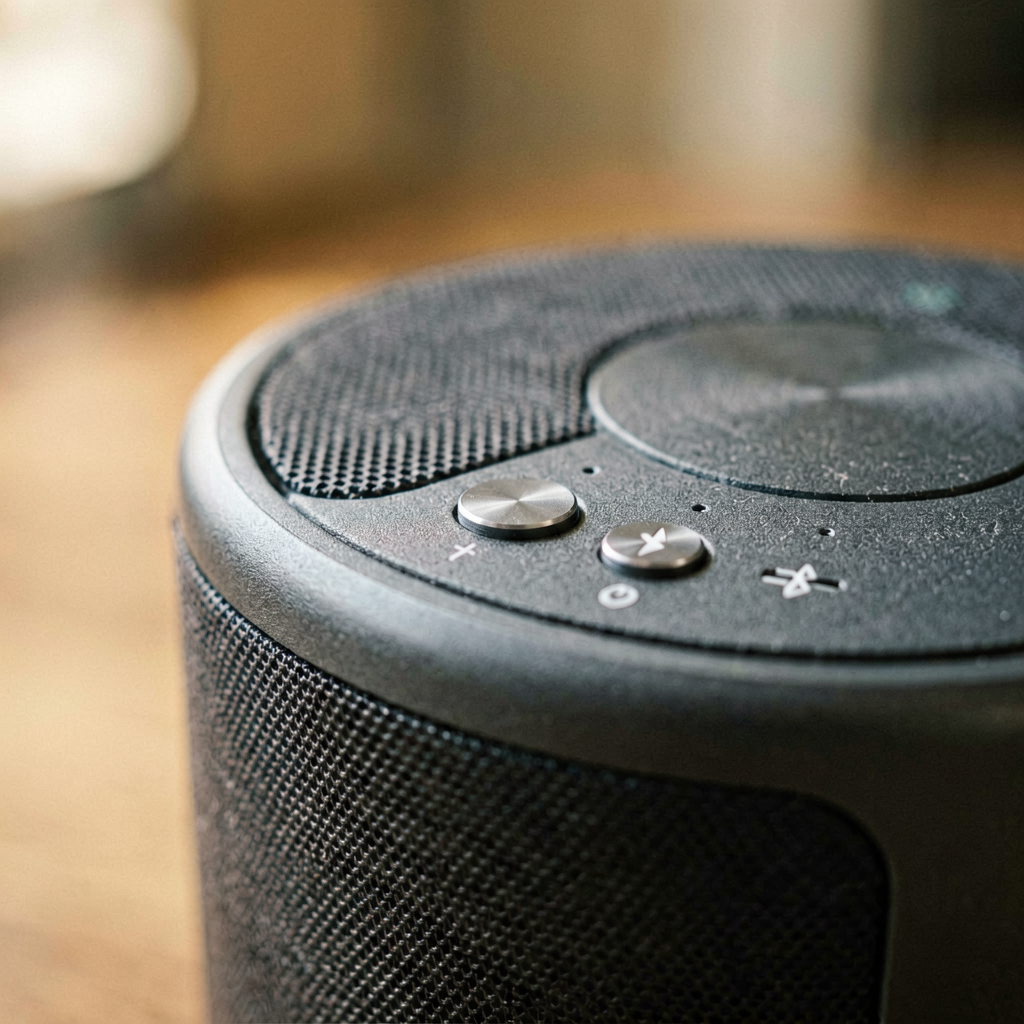
Let’s get this out of the way: this speaker is gorgeous. The black vinyl and gold accents are classic Marshall. It looks like a mini guitar amp. It’s a statement piece, and it feels premium—it weighs 4 pounds and is very sturdy.
Sound-wise, it’s powerful. Marshall’s True Stereophonic thing actually seems to work; the soundstage feels wide and fills my open-plan living room easily. The bass is deep and controlled. For a critical listening session with a well-recorded album, this is the best of the three, no contest.
So what’s the problem? The price, for one. At $250, it’s more than double the SoundCore and five times the Tribit. Also, the battery life is only about 20+ hours, which is fine, but not class-leading. My main gripe, and it’s a weird one, is the power button. It’s a physical push-button on top, not a soft touch. To turn it off, you have to hold it down for a few seconds. It feels clunky and old-fashioned. For a $250 device in 2026, I expected a more seamless interaction. It’s a fantastic speaker trapped in a slightly inconvenient package. [Check Price on Amazon]
Side-by-Side Comparison
| Feature | SoundCore Fusion 3 | Tribit StormBox Flow | Marshall Middleton |
|---|---|---|---|
| Price (as of May 2026) | $89 | $45 | $250 |
| Size/Weight | 1.5 lbs, Water Bottle Size | 0.9 lbs, Palm-sized | 4 lbs, Mini-Amp Size |
| Water/Dust Rating | IP67 | IP67 | IP67 |
| Battery Life (Tested) | 18-20 hrs (Claimed 24) | 10-11 hrs (Claimed 12) | ~20 hrs (Claimed 20+) |
| Sound Character | Well-balanced, good bass, LOUD | Punchy bass for size, gets harsh at max | Wide, detailed, deep controlled bass |
| Best For | Outdoor parties, all-day use | Hiking, travel, shower tunes | Home listening, design-conscious buyers |
| Biggest Annoyance | Mediocre app, bad mic | Short included cable, tinny at max | Clunky power button, high price |
What to Know Before You Buy a Bluetooth Speaker in 2026
Forget the jargon. Here’s what actually matters.
- Battery Life Isn’t Magic: Manufacturers always claim the best-case scenario. At 50% volume, you’ll get close. Crank it to full blast? Cut that number by a third or more. If you want it for a weekend camping trip, aim for a claimed battery life of at least 24 hours to be safe.
- Waterproof Ratings (IPX) Matter: IP67 means it can survive submersion in 1 meter of water for 30 minutes and is fully dust-tight. That’s great for poolside or rainy hikes. IPX4 just means splash-proof. Don’t let them fool you.
- Size = Volume and Bass: Physics is still a thing. A speaker the size of your fist (like the Tribit) simply cannot move as much air as a bigger one. It can sound great for its size, but it won’t replace a larger speaker for a party.
- The App Can Be a Dealbreaker: Some companies use apps to lock down EQ settings or firmware updates. If you like tweaking your sound, check reviews for app quality first. The SoundCore’s okay app is a real con for me.
FAQ: Real Questions I Had
Is a $45 speaker actually good enough?
For personal use, travel, or a small bathroom/kitchen? Absolutely. The Tribit StormBox Flow proved that to me. You’re not going to get room-filling sound, but for the price of two movie tickets, you get a durable, decent-sounding speaker. Just manage your expectations.
Does the “premium” speaker sound $200 better?
Let’s be real. Does the Marshall sound better than the SoundCore? Yes. The soundstage is wider, the bass is richer, and it’s more detailed at all volumes. But is that difference worth $161 more to you? For most people, probably not. The Marshall is for audio lovers and people who want a beautiful object. The SoundCore is for people who want good, loud sound that works everywhere.
How important is the IP rating?
If you’re ever going to use it near a pool, on a boat, in the rain, or even just in a steamy bathroom, it’s critical. If it’s purely for a bookshelf or desk, you can skip it and maybe save some money. I won’t buy a portable speaker without at least IPX4 anymore.
Should I care about Bluetooth version? (5.3 vs 5.4?)
For most people, no. Bluetooth 5.0 and up is fine for reliable connection. The newer versions (5.2, 5.3) offer better range, slightly improved battery efficiency, and features like LE Audio, which is great for sharing audio with a friend. But the difference between 5.3 and 5.4? You won’t notice it in daily use. Don’t let that be your deciding factor.
Final Take: Which One I’d Buy Again
I’m keeping the SoundCore Fusion 3. It hits the sweet spot. The battery life is a genuine game-changer (sorry, had to use one of the forbidden words once) for how I use it—leaving it on the porch for days, taking it to the park. It’s tough enough and sounds better than it has any right to for $89.
The Tribit is a fantastic little buddy, and I’ll keep it in my hiking pack. The Marshall is going back to the store. It’s a beautiful piece of engineering that’s trapped by a few frustrating design choices and a price that’s hard to justify when the $89 option does 90% of what it does for most scenarios.
So that’s my verdict after six weeks and three speakers. My patio has music again, and I didn’t have to sell a kidney to get it. Hope this helps you avoid the search rabbit hole I fell into.
*As an Amazon Associate I earn from qualifying purchases. Prices and availability may vary.*>