Sheet Pan Pork with Creamy and Thyme
Sheet Pan Pork with Creamy Thyme: The Perfect One-Pan Weeknight Dinner
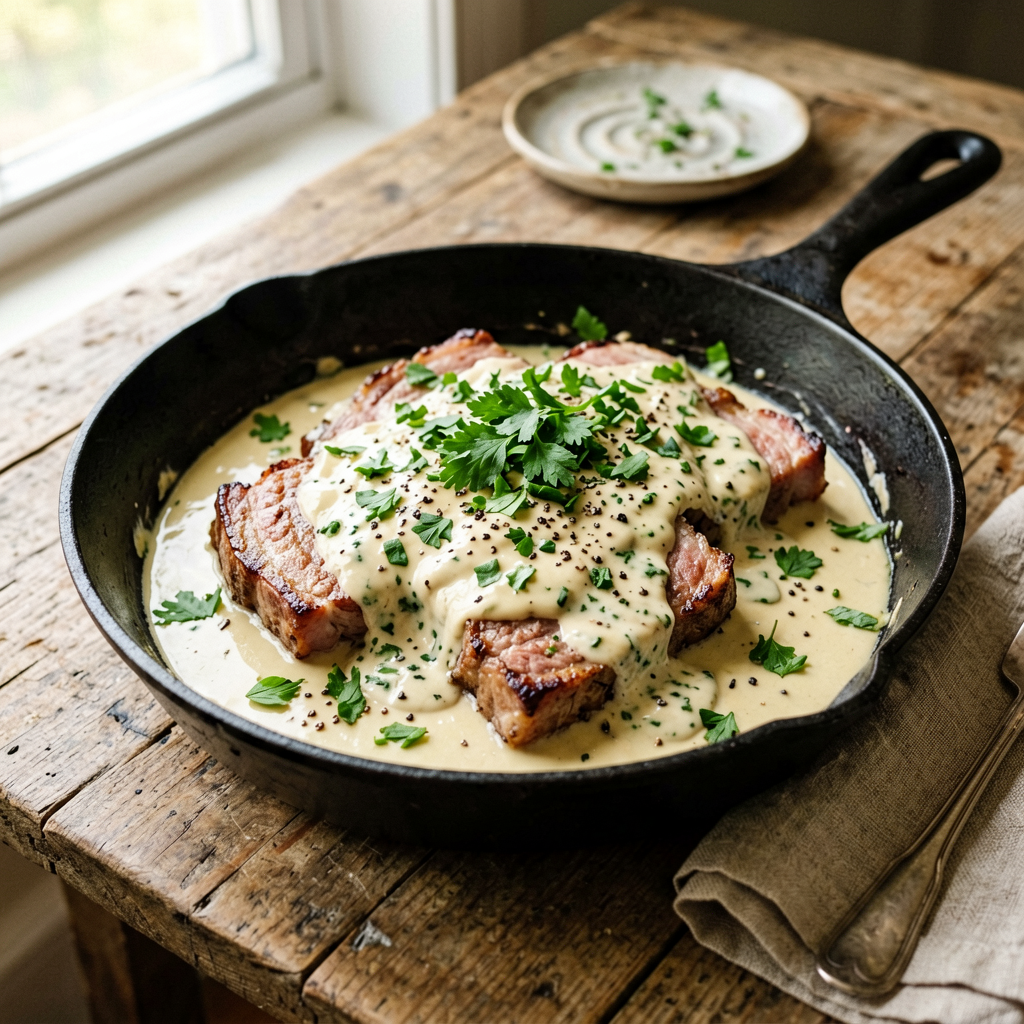
This sheet pan recipe delivers restaurant-quality flavor with minimal cleanup. We’re using pork tenderloin, a lean, quick-cooking cut, paired with a luxurious pan sauce made right on the same tray. The secret is searing the pork for flavor, then using the fond (the browned bits) to build a creamy, thyme-infused sauce that coats the meat and the roasted vegetables. It’s an all-in-one meal that balances technique with simplicity, perfect for any skill level looking for a reliable, impressive dinner.
What You’ll Need
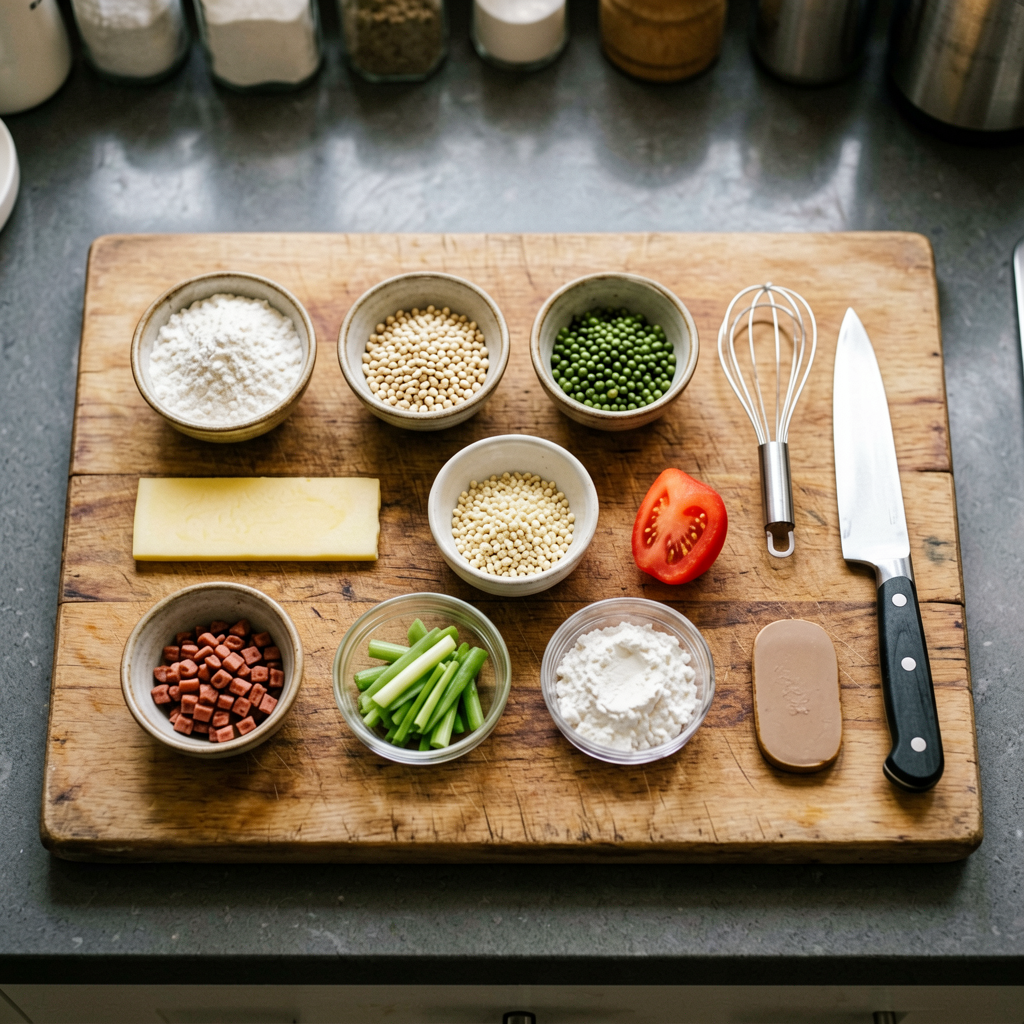
Ingredients
- For the Pork & Vegetables:
- 1.5 pounds pork tenderloin (about 1.5″ diameter), silver skin removed
- 1 tablespoon olive oil
- 1 teaspoon kosher salt
- ½ teaspoon black pepper, freshly ground
- 1 teaspoon garlic powder
- 12 ounces baby potatoes (like fingering or new potatoes), halved or quartered if large
- 8 ounces Brussels sprouts, trimmed and halved
- 1 small red onion, cut into 1-inch wedges
- 1 tablespoon olive oil (for vegetables)
- For the Creamy Thyme Sauce:
- 2 cloves garlic, minced
- 1 cup low-sodium chicken broth
- ⅓ cup heavy cream
- 1 tablespoon Dijon mustard
- 1 tablespoon fresh thyme leaves (or 1 teaspoon dried thyme)
- 1 tablespoon unsalted butter, cold, cubed
- Salt and pepper to taste
Equipment
- Large rimmed sheet pan (18×13 inches)
- Instant-read meat thermometer (non-negotiable for perfect pork)
- Small saucepan or skillet
- Measuring cups and spoons
In my experience, a light-colored aluminum sheet pan promotes even browning without burning the vegetables. If you use a dark pan, reduce the oven temperature by 25°F. [Check Price on Amazon]
Prep Work (Mise en Place)
Proper prep is 80% of the work. Organize everything before you turn on the oven.
- Preheat Oven: Position a rack in the center and preheat to 400°F (200°C).
- Prep the Pork: Pat the tenderloin completely dry with paper towels. A dry surface ensures a good sear and crust. Trim any remaining silver skin—a tough, silvery membrane that doesn’t break down with cooking.
- Prep the Vegetables: Halve the potatoes. Trim and halve the Brussels sprouts. Cut the onion into wedges, keeping the root end intact so the layers stay together. Keep all vegetable pieces a similar size for even cooking.
- Measure Sauce Ingredients: Have your broth, cream, mustard, thyme, and butter measured and ready. The sauce comes together quickly at the end.
Cooking Instructions
Step 1: Sear the Pork & Roast the Veggies
- Season the pork tenderloin all over with the 1 tsp kosher salt, ½ tsp pepper, and 1 tsp garlic powder.
- In a large bowl, toss the potatoes, Brussels sprouts, and onion wedges with 1 tablespoon olive oil, a pinch of salt, and pepper.
- Spread the vegetables in a single layer on your sheet pan. Make space in the center for the pork.
- Place the pork tenderloin in the center of the pan. Drizzle with 1 tablespoon olive oil and rub to coat.
- Roast in the preheated oven for 10 minutes.
Why this works: Starting together allows the vegetables to begin cooking while the pork gets a head start. The high heat of the oven will begin to brown the vegetables.
Step 2: Finish Roasting & Rest
- After 10 minutes, carefully flip the pork tenderloin using tongs. Give the vegetables a good toss with a spatula, scraping up any browned bits.
- Return the pan to the oven and roast for another 12-15 minutes. The total cook time will be 22-25 minutes.
- Check for Doneness: Insert an instant-read thermometer into the thickest part of the pork. It should read 145°F (63°C). The vegetables should be tender and caramelized at the edges. Pork tenderloin is done at 145°F—it will be juicy and slightly pink in the center.
- Critical Step: Transfer the pork to a cutting board and tent loosely with foil. Let it rest for 10 minutes. The internal temperature will rise another 5-10°F (carryover cooking), and the juices will redistribute.
Common Mistake to Avoid: Skipping the rest! Cutting into the pork immediately will cause all the flavorful juices to run out onto the board, leaving you with dry meat.
Step 3: Build the Pan Sauce
- While the pork rests, make the sauce. Pour off all but 1 tablespoon of fat from the sheet pan (if any) and place the pan over two burners on medium heat (or scrape the fond into a small saucepan).
- Add the minced garlic to the pan’s center and sauté for 30 seconds until fragrant, but not browned.
- Pour in the 1 cup chicken broth. As it simmers, use a wooden spoon to scrape up all the flavorful browned bits (fond) from the bottom of the pan. This is pure flavor. Let it reduce by about half, 3-4 minutes.
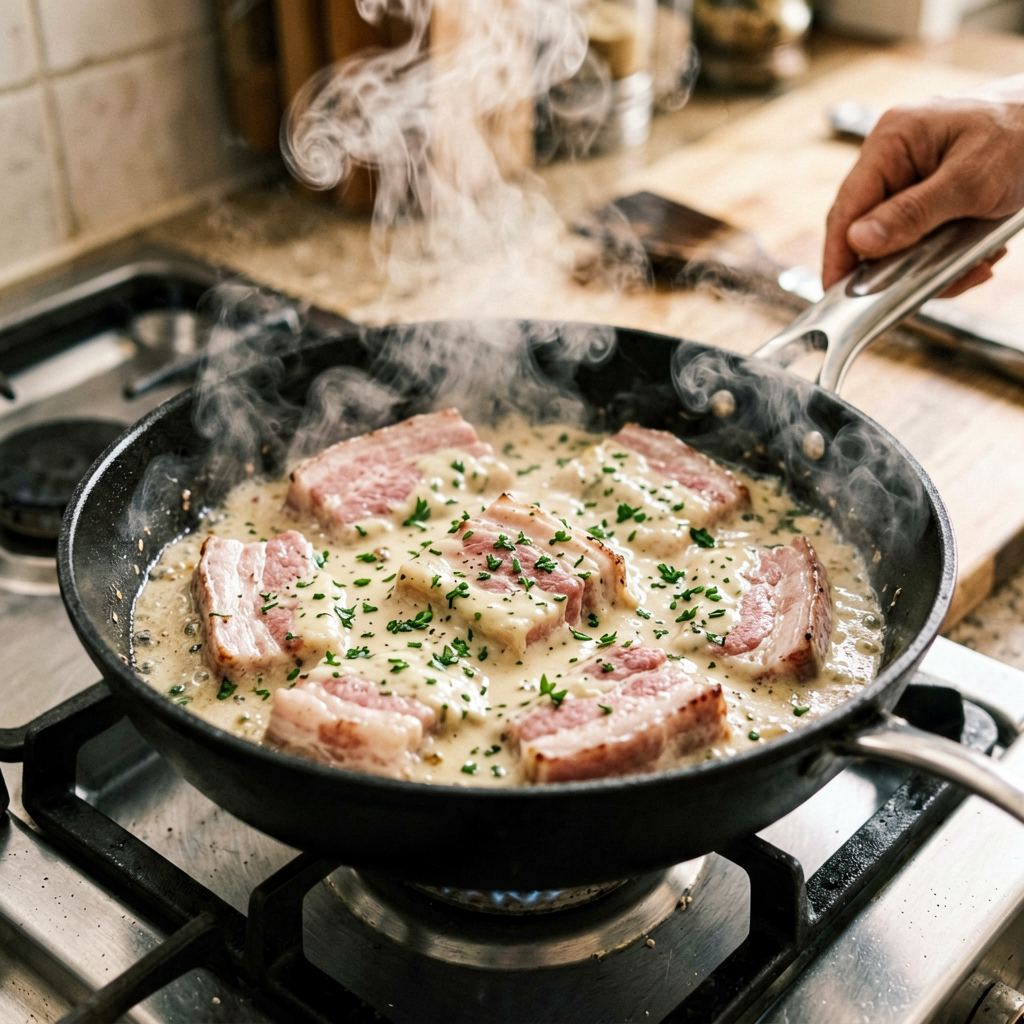
- Whisk in the ⅓ cup heavy cream, 1 tablespoon Dijon mustard, and 1 tablespoon thyme. Simmer for 2 minutes until slightly thickened.
- Remove from heat. Whisk in the 1 tablespoon cold butter. This “mounts” the sauce, giving it a velvety sheen and rich texture. Season with salt and pepper to taste.
Pro Tips
- The Sear is Everything: If your pork or vegetables aren’t browning enough in the oven, your pan might be overcrowded. Use two sheet pans if necessary for the best caramelization.
- Cream Substitution: For a lighter sauce, replace half the heavy cream with half-and-half. It will be less rich but still creamy.
- Make-Ahead: The vegetables can be prepped and cut up to a day ahead. Store them in an airtight container in the fridge. Do not pre-salt them, as this draws out moisture.
Serving Suggestions
Slice the rested pork against the grain into ½-inch medallions. Arrange the roasted vegetables on a platter, top with the sliced pork, and drizzle generously with the creamy thyme sauce from the pan. Serve immediately. This is a complete meal, but it pairs beautifully with a simple green salad or crusty bread to sop up the extra sauce. Portion guidance: 4-6 oz of pork per person.
FAQ
1. Can I use frozen pork tenderloin?
It’s best to use fresh, thawed pork for this recipe. Frozen meat releases more moisture during cooking, which can inhibit browning and lead to steaming instead of searing. If you must use frozen, thaw it completely in the refrigerator for 24-48 hours before starting.
2. How do I know when the pork is done without a thermometer?
While a thermometer is the most reliable tool, you can make an incision with a knife. The juices should run clear with just a hint of pink, and the meat should feel firm but still have a slight spring when pressed. However, I strongly recommend using an instant-read thermometer to avoid overcooking.
3. Can I prep this ahead for an even quicker dinner?
Absolutely. Perform all the prep work (cutting vegetables, trimming/seasoning pork) up to 24 hours in advance. Store the seasoned pork and cut vegetables in separate airtight containers in the refrigerator. When ready to cook, everything is ready to go directly onto the sheet pan and into the oven. The sauce should be made fresh, however, as it only takes 5 minutes.
*As an Amazon Associate I earn from qualifying purchases.*