Air-Fried Miso-Maple Glazed Salmon: 20-Minute Cr
Air-Fried Miso-Maple Glazed Salmon: The 20-Minute Restaurant-Quality Crisp
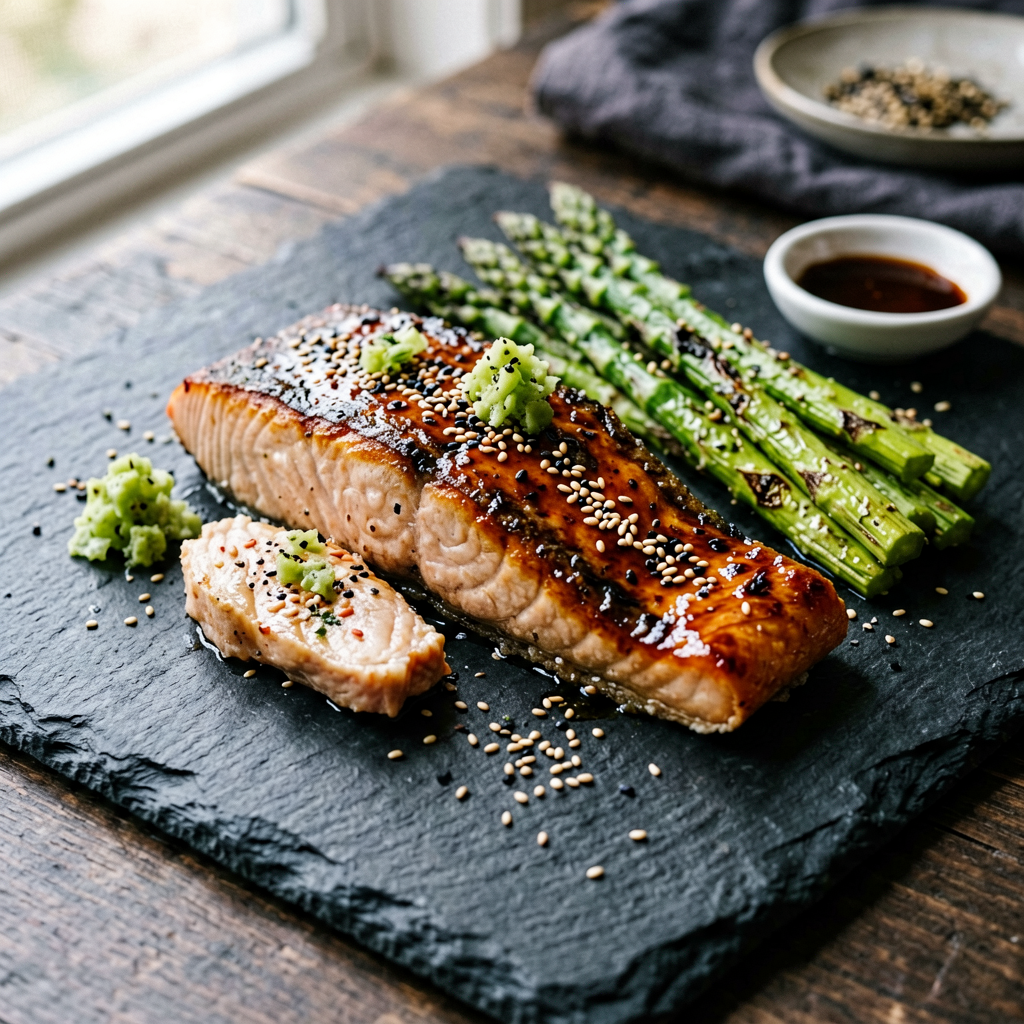
This recipe delivers restaurant-quality salmon in under 20 minutes using an air fryer. The high, circulating heat of the air fryer achieves two critical goals: it renders the salmon skin into a shatteringly crisp layer and caramelizes the miso-maple glaze into a deeply savory, sweet, and umami-rich crust. This method is ideal for busy weeknights or impressive entertaining with minimal cleanup. We will focus on two key techniques: proper glaze application to prevent burning and precise timing to ensure the salmon is just cooked through—moist, flaky, and not dried out.
What You’ll Need
Ingredients
- Salmon Fillets: 2 fillets, 6 oz (170g) each, skin-on, pin bones removed. Skin-on is essential for the crispy texture. Ensure fillets are of even thickness (about 1.5 inches at the thickest part) for uniform cooking.
- For the Miso-Maple Glaze:
- 2 tablespoons white (shiro) miso paste. Use white or yellow miso for its mellow, sweet flavor. Red miso will make the glaze too salty and assertive.
- 1.5 tablespoons pure maple syrup. Grade A Dark/Robust provides deeper flavor.
- 1 tablespoon rice vinegar.
- 1 tablespoon mirin (sweet rice wine). If unavailable, use an extra 1/2 tablespoon of maple syrup and a 1/2 teaspoon of rice vinegar.
- 1 teaspoon toasted sesame oil.
- 1 small cloves garlic, finely minced or grated (about 1/2 teaspoon).
- 1 teaspoon fresh ginger, finely grated.
- For Cooking & Finishing:
- 1 tablespoon neutral oil with a high smoke point (avocado, grapeseed, or canola). This is for coating the air fryer basket.
- Toasted sesame seeds and thinly sliced scallions for garnish.
Equipment
- Air Fryer. Any model will work; adjust timing if yours runs hot. A basket-style is ideal.
- Instant-Read Thermometer. This is the most reliable tool for checking doneness without piercing the fish excessively.
- Small Saucepan for making the glaze.
- Basting Brush (silicone is best for sticky glazes).
- Paper towels for drying the salmon.
Prep Work
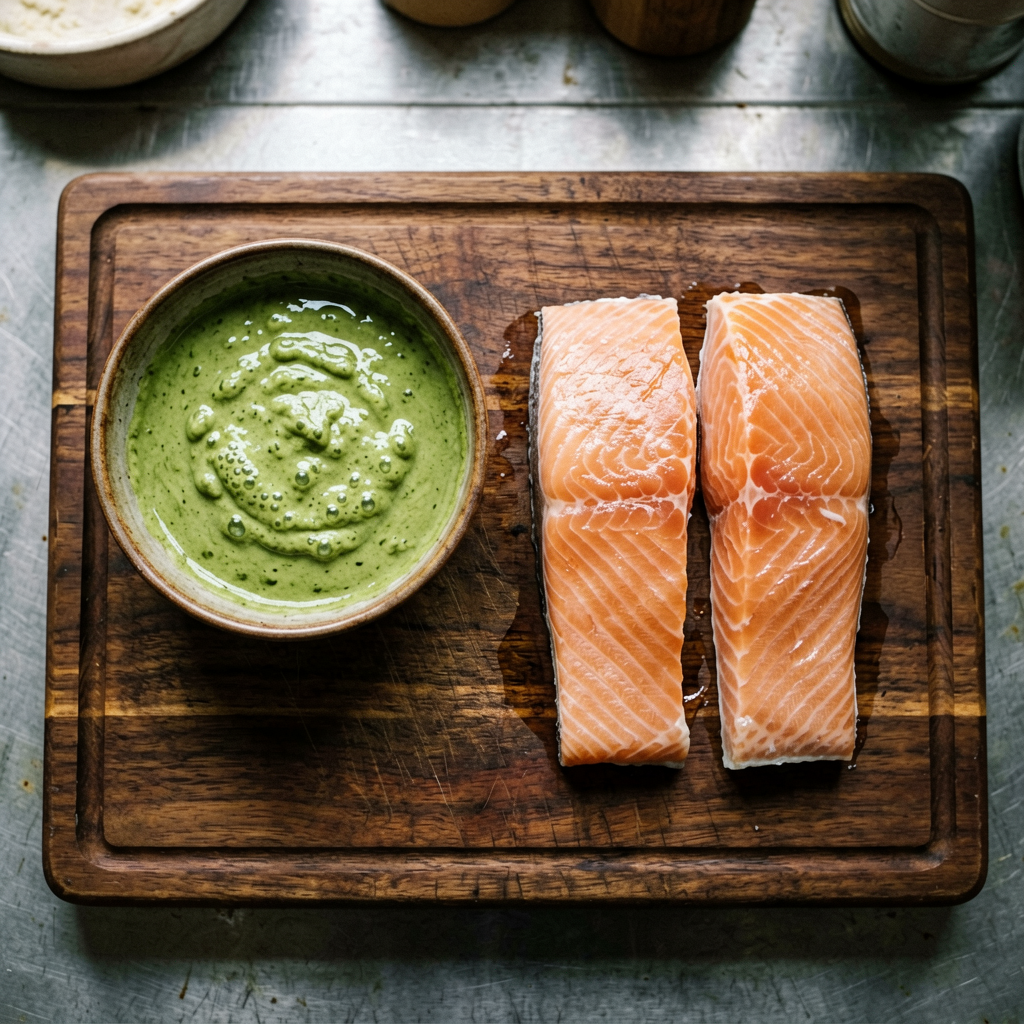
Make the Glaze (5 minutes): In a small saucepan over medium-low heat, combine all glaze ingredients: miso paste, maple syrup, rice vinegar, mirin, sesame oil, minced garlic, and grated ginger. Whisk constantly for 2-3 minutes until the mixture is completely smooth, simmering gently, and slightly thickened. You should see small bubbles breaking the surface. Remove from heat and let it cool slightly. In my experience, warming the glaze first helps it meld together and apply more evenly.
Prep the Salmon (5 minutes): Pat the salmon fillets completely dry with paper towels, focusing especially on the skin side. Moisture is the enemy of crispiness. Lightly season the flesh side (not the skin) with a pinch of salt. If your fillets are thick and cold from the fridge, let them rest at room temperature for 5-10 minutes. This ensures more even cooking.
Cooking Instructions
- Preheat the Air Fryer: Set your air fryer to 400°F (200°C). Preheat for 3-5 minutes. A hot air fryer immediately starts searing the skin.
- Prepare the Basket: Once preheated, carefully remove the basket. Lightly brush or spray the bottom and sides with the neutral oil. This adds a micro-layer of fat to aid crisping.
- Initial Cook (Skin Side): Place the salmon fillets skin-side down in the basket, leaving space between them for air circulation. Lightly brush the exposed flesh with a thin layer of neutral oil. Cook for 4 minutes. This first phase renders the fat under the skin and begins to crisp it.
- Apply the Glaze: After 4 minutes, open the basket. Using a basting brush, generously apply half of the miso-maple glaze to the top and sides of the salmon. Be careful not to let too much drip down the sides onto the basket, as sugars can burn.
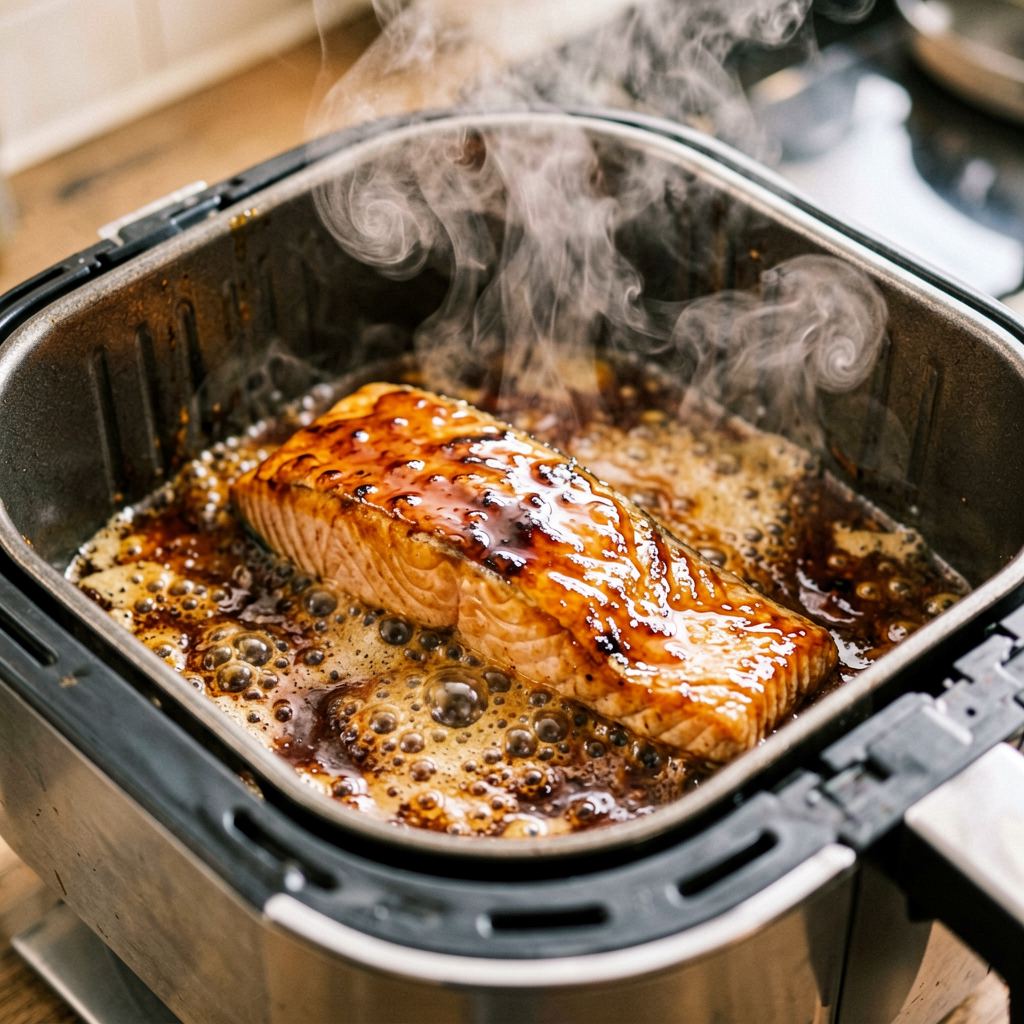
- Final Cook with Glaze: Return the basket and cook for an additional 4-6 minutes. The exact time depends on the thickness of your salmon. The glaze will become bubbly and caramelized. For a 6 oz, 1.5-inch thick fillet, 5 minutes is usually perfect.
- Check for Doneness: This is the most critical step. Insert an instant-read thermometer horizontally into the thickest part of the fillet. It should read 125°F (52°C) for medium, which is moist and slightly translucent in the center. It will carry-over cook to about 130-135°F while resting. Alternatively, the salmon should just flake easily with gentle pressure from a fork. Visual cue: The flesh will have turned from translucent red to opaque pink, but will still have a moist, slightly translucent center.
- Rest and Serve: Immediately transfer the salmon to a plate, skin-side down. Let it rest for 2-3 minutes. During this time, the residual heat will finish cooking the center, and the juices will redistribute. Garnish with toasted sesame seeds and sliced scallions.
Pro Tips
- Skin Crispness Guarantee: The key is the dry skin and the initial oil-free, skin-side-down cook. Do not move the fillets during the first 4 minutes. Let the air fryer do its work.
- Glaze Control: If your glaze is too thick after cooling, whisk in 1 teaspoon of warm water to make it brushable. Apply it in the last 50% of cooking time to prevent the sugars from burning before the salmon is cooked.
- Substitutions that Work: For the salmon, arctic char or steelhead trout are excellent alternatives. For the glaze, if you don’t have miso, you can use 1 tablespoon of soy sauce + 1 tablespoon of tahini for a different but complementary umami base.
- Make-Ahead Option: The glaze can be made up to 3 days ahead and stored in an airtight container in the refrigerator. Bring it to room temperature or gently rewarm before using. Do not glaze the salmon before cooking; it needs to be applied fresh.
Serving Suggestions
Portion Guidance: A 6 oz fillet is a generous main course portion, especially when paired with sides. Serve immediately after resting.
Pairings: The sweet-savory profile pairs beautifully with:
- Grains: Steamed jasmine rice, forbidden black rice, or quick-cooking quinoa to soak up any extra glaze.
- Vegetables: Quickly blanched broccolini, air-fried asparagus (cook at 400°F for 5 minutes), or a crisp cucumber salad with rice vinegar.
- Wine: A dry, off-dry Riesling, a crisp Sauvignon Blanc, or a light Pinot Noir.
FAQ
Can I use frozen salmon fillets?
Yes, but proper thawing is crucial. Thaw fillets overnight in the refrigerator or use the defrost setting on your microwave. Before cooking, you must pat them extremely dry, as they release more moisture. You may need to add 1-2 minutes to the initial skin-side-down cook time to account for the extra moisture and cooler starting temperature.
How do I know when the salmon is done without overcooking it?
An instant-read thermometer is the most accurate tool. Pull the salmon when the internal temperature reaches 125°F (52°C). The flesh will be mostly opaque but with a translucent, moist center. It will continue to cook to a perfect medium (130-135°F) as it rests. If you don’t have a thermometer, gently press the thickest part with a fork—it should flake but still have some resistance.
Can I prep the salmon or glaze ahead of time?
The glaze is perfect for making ahead. The salmon can be patted dry, seasoned lightly with salt, and kept uncovered in the fridge for up to 4 hours before cooking. This actually helps dry the skin further for better crispiness. Do not apply the glaze until you are ready to cook.
🛒 Recommended Products
*As an Amazon Associate I earn from qualifying purchases.
*As an Amazon Associate I earn from qualifying purchases.*