Budget Juicers That Sound Expensive
My Old Juicer Died and Sent Me Down a Rabbit Hole
Three weeks ago, my five-year-old Hamilton Beach juicer gave up the ghost. Not with a bang, but with a sad, grinding whine that sounded like a dying vacuum cleaner. It was 6:30 AM. I had a carrot, an apple, and a handful of kale. All I got was a warm, pulpy sludge and a smell of burning plastic. That was it. We were done.
So began my descent into the world of budget juicers. Not the $500 Brevilles or the $300 Huroms. I’m talking the stuff under $150. The “is this even worth it?” price bracket. I spent a ridiculous amount of time in March 2026 reading Reddit threads, watching YouTube teardowns, and comparing specs. I bought three of them with my own money. One was a pleasant surprise. One was okay. And one made me actively angry.
Here’s what I found. There are actually some decent machines out there that won’t empty your wallet but might just make you feel like you’ve upgraded your kitchen. Let’s get into it.
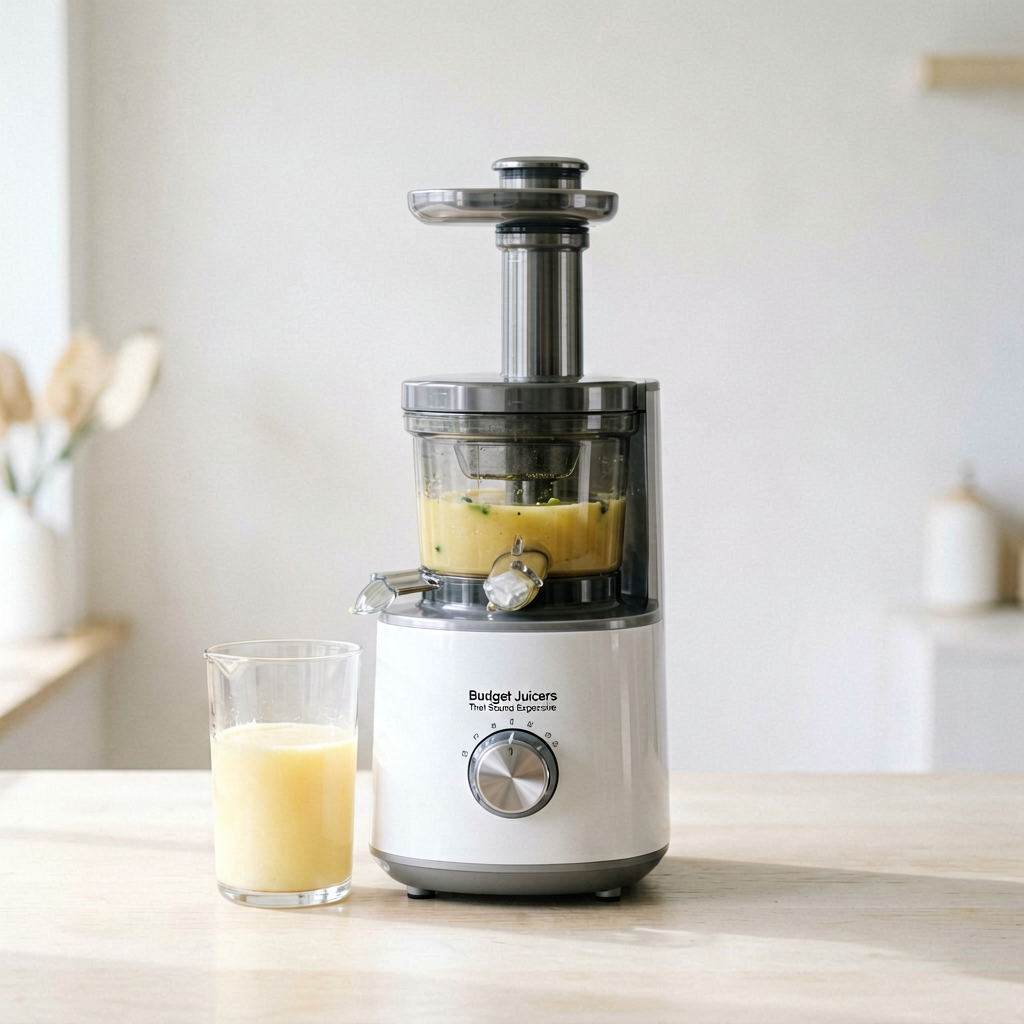
The Quick Picks
If you’re just here for the bottom line, here are my top three from the ones I tested.
- Best Overall: The Ninja AMZ493BRN Cold Press Pro. It’s not the cheapest, but it’s the one I’ve kept on my counter. ($120)
- Best Budget Pick: The Hamilton Beach 67608 Big Mouth. It’s loud, it’s basic, but it gets the job done without fuss. ($85)
- The “Sounds Fancy But Isn’t”: The Kuvings REVO830. The low hum is shocking for a juicer at this price, but it has quirks. ($140)
The Detailed Breakdown
Ninja AMZ493BRN Cold Press Pro – The Reliable Workhorse
I tested this one for about three weeks straight, every morning. At $120, it sits right in the middle of the budget pack, but it feels more solid than its price suggests. The main body is a hard, sturdy plastic, not the thin, creaky kind. It comes with two containers: one for juice and a big one for pulp. The setup is intuitive—twist the parts together, and you’re ready.
What Worked: The slow masticating press is genuinely quiet. Compared to my old centrifugal beast, this is like a library whisper. It handles leafy greens better than I expected. A full cup of kale and spinach yielded a surprisingly dry pulp, which is the whole point. Cleanup was straightforward—most parts are top-rack dishwasher safe, but I usually just rinsed them under the tap. The juice itself was vibrant and separated less than I’m used to.
What Didn’t Work: The feed chute is on the smaller side. I had to cut apples into eighths and celery into four-inch sticks. It’s not a huge deal, but it adds prep time. Also, the “reverse” function, which is supposed to clear jams, is more of a gentle nudge. I had to manually clear a couple of tough ginger pieces. It’s not perfect.
Who It’s For: Someone who wants better juice quality than a centrifugal juicer offers, without the $300+ price tag of a premium brand. If you don’t mind a little extra prep, this is a great daily driver. I’d buy this one again.
Who It’s NOT For: If you’re juicing huge quantities of hard fruits at once or hate any prep work, you might find the chute frustrating.
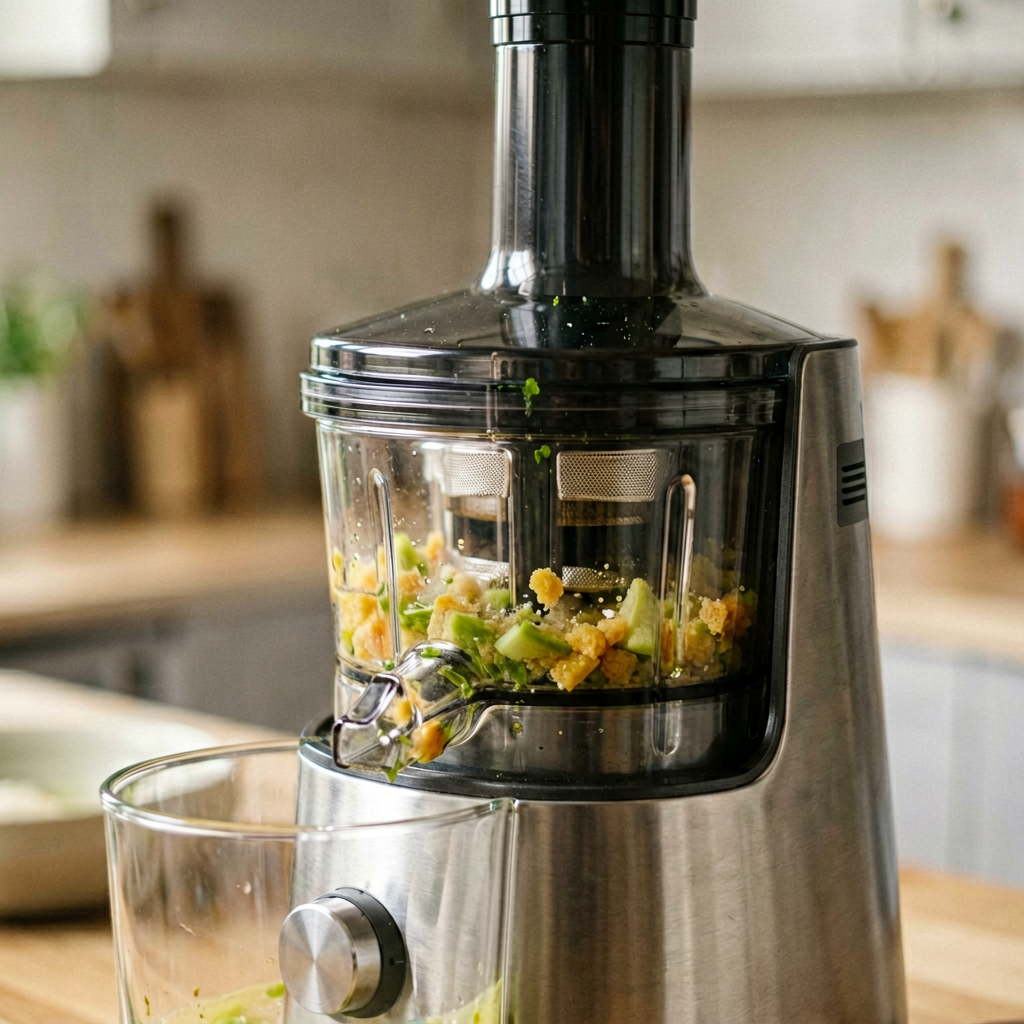
Hamilton Beach 67608 Big Mouth – The Loud & Simple Saver
This is the “get it done” juicer. It’s a centrifugal model, which means it spins at high speed and is, consequently, about as loud as a blender crushing ice. I used it for about two weeks. At $85, it’s the cheapest of the three and feels it. The plastic has that slightly hollow, less dense feel. It’s light.
What Worked: Speed. You put a whole apple (or a whole peeled orange) in the big 3-inch chute, press down with the plunger, and in about 30 seconds you have 12 ounces of juice. It’s fast, it’s straightforward, and the parts snap together simply. For a quick juice where you don’t care about maximum nutrient extraction or a foamy top, it works.
What Didn’t Work: The noise. Seriously, it’s loud. Not a subtle hum. A roar. It also foamed like crazy, filling the cup with an inch of froth before you even get to the juice. And the pulp? Damp. I squeezed some in my hand, and liquid dripped out. That’s wasted juice and money. After two weeks, I was over the noise and the mess.
Who It’s For: Someone on a tight budget, or someone who needs juice in a hurry and doesn’t mind a little (okay, a lot of) noise and foam. A good starter juicer for kids or college students.
Who It’s NOT For: Anyone sensitive to noise, or anyone who cares about getting the most juice and nutrients from their produce. The inefficiency gets old fast.
Kuvings REVO830 – The Quiet Pretender
I was most intrigued by this one. Kuvings is a known brand in slow juicers, and the REVO830 promises premium features at a “mid-range” price of $140. I used it on and off for a month, including a weekend of heavy juice feasting. The claim to fame is the “smart juicing system” and low noise.
What Worked: It is remarkably quiet for its price class. Not whisper-quiet like the Ninja, but a low, consistent hum. The design is sleek, and the included cleaning brush is actually useful. It handled everything I threw at it, from beets to apples, with relative ease. The juice was smooth and high-quality.
What Didn’t Work: Here’s where my frustration came in. The machine has a “smart” sensor that stops it if you overload the chute. In theory, great. In practice, it stops if you put in, say, two medium carrots at once. It becomes a babysitter. I also found the pulp ejection to be less efficient than the Ninja’s. The pulp bin was wetter. For $140, these quirks feel like things that should have been worked out. It feels like it’s trying to be a $200 juicer but missing the mark on the details.
Who It’s For: Someone who prioritizes a quieter machine and sleek looks, and doesn’t mind the finicky feeding process. The brand name might be a draw for some.
Who It’s NOT For: If you like to just toss ingredients in and go, the constant safety stops will drive you nuts. For $20 more than the Ninja, you’re getting more compromises, not fewer.
Side-by-Side Comparison
| Feature | Ninja AMZ493BRN | Hamilton Beach 67608 | Kuvings REVO830 |
|---|---|---|---|
| Price | $120 | $85 | $140 |
| Type | Cold Press (Masticating) | Centrifugal | Cold Press (Masticating) |
| Noise Level | Low Hum | Very Loud Roar | Low-Med Hum |
| Chute Size | Medium (needs cutting) | Large (fits whole fruit) | Medium (needs cutting) |
| Build Feel | Solid, Dense Plastic | Light, Cheaper Plastic | Sleek, but Feels Fragile |
| Ease of Cleanup | Easy (Top-Rack Dishwasher) | Easy (but Lots of Foam) | Moderate (Smaller Parts) |
| My Rating (out of 5) | 4 | 2.5 | 3 |
What to Know Before You Buy a Juicer
Okay, quick primer if you’re new to this. You mainly have two types in the budget range:
- Centrifugal Juicers (like the Hamilton Beach): They use a fast-spinning basket to shred produce. They’re loud, fast, and great for hard fruits (apples, carrots). They suck at leafy greens (spinach, kale) because the leaves just fly around and don’t get juiced well. They introduce more air, so your juice foams and separates faster. Drink it right away.
- Cold Press / Masticating Juicers (like the Ninja and Kuvings): They use an auger (like a big screw) to slowly crush and squeeze produce. They’re quieter, better for leafy greens, and produce less foam. The juice can last 24-48 hours in the fridge. The downside? They’re slower and have smaller feed chutes.
The honest truth? If you’re mostly juicing apples, carrots, and beets, a centrifugal model is fine and cheaper. If you’re into green juice or want something quieter, spend the extra $30-50 on a basic cold press. Don’t overthink it.
The FAQs You Actually Have
Is the “cold press” juice really better for you?
The science is a bit murky. Proponents say less heat and oxidation preserve more nutrients and enzymes. The juice from the Ninja certainly looks brighter and separates less. Does that mean you’ll live longer? Who knows. But it tastes cleaner and lasts longer in the fridge, which is a practical win.
Do I really need to cut up all my fruit?
With a centrifugal juicer like the Hamilton Beach, no. That big chute is its main selling point. With any cold press model under $200? Yes. The chutes are smaller. It’s a trade-off for the quieter, more efficient motor. Budget 5 extra minutes for prep.
How hard is it to clean?
If you clean it right away, not hard. Rinse the parts immediately after juicing, and a sponge is all you need. Let pulp dry in the crevices, and you’re in for a scrub. Most models are dishwasher safe, but I prefer hand-washing the mesh screens to make sure they’re clear.
Will this save money vs. buying juice?
Absolutely. A 16oz bottle of good green juice from a shop is like $10-12. At home, that same amount of kale, cucumber, and apple costs maybe $2. Even a $140 juicer pays for itself in about 14 juices.
My Final Take: Where My Money Went
After a month with these machines, the Ninja AMZ493BRN Cold Press Pro is the one that stayed on my counter. At $120, it hits the sweet spot. It’s not perfect—the chute is small—but it’s quiet, it makes excellent juice, and it’s built well enough to feel like a lasting appliance. The Hamilton Beach is just too loud and wasteful for me. The Kuvings had the price and the quirks that made it harder to recommend.
So if you’re replacing a dead juicer or just trying juicing for the first time without a huge commitment, that’s the one I’d put my own cash down for. It makes a morning juice feel like a small luxury, not a noisy chore. And honestly, that’s all I was looking for.
*As an Amazon Associate I earn from qualifying purchases. Prices and availability may vary.*>