Best Ergonomic Chairs of 2026: Top 5 Picks Reviewed (Updated 2026)
Best Ergonomic Chairs of 2026: Top 5 Picks Reviewed (Updated 2026)
I need to start with a confession. I’ve been sitting on a cheap, hand-me-down office chair from 2014 for the past six months. You know the one—the fabric is worn thin in the exact spot where my lower back meets the cushion, the gas lift has slowly sunk so I’m practically in a squat, and one armrest wobbles if you look at it wrong. After a week of Zoom calls last March where I ended each day with a dull, throbbing ache between my shoulder blades, I finally snapped. I stood up, looked at this monstrosity of foam and failed engineering, and said out loud to my empty room, “This is stupid. I work from here. I should be comfortable.” That was the start of my deep, sometimes frustrating, dive into the world of ergonomic chairs.
My mission was simple: find a chair that doesn’t actively try to destroy my spine. But the market is a swamp of jargon—“dynamic lumbar support,” “synchro-tilt mechanisms,” “kinemat” whatever. Every brand claims theirs is the *best ergonomic chair* of the year. So, I did what any sensible person would do: I went on a spending spree. Over the past three months, I bought, assembled, and lived with five of the most recommended chairs on the internet. I’ve logged hundreds of hours in each one, from deep-work coding sessions to marathon gaming nights. Here’s my honest, no-BS take on the 2026 landscape.
My Quick Picks (If You’re in a Hurry)
- Best Overall: Steelcase Leap V2 (2026 Refurbished). It’s not the flashiest, but after three months, it’s the one I keep coming back to. It just disappears—you stop noticing the chair and start noticing your work. My back stopped hurting. That’s the job.
- Best Budget: FlexiSpot C7. For around $499 new, the adjustability you get is frankly wild. It feels 80% as good as chairs twice its price. The lumbar support is the real star here.
- Best Premium (If You Have The Cash): Herman Miller Embody. It’s an experience. It feels alive, constantly adjusting to your micro-movements. It’s also $1,800, so maybe win the lottery first. (Yes, I’m aware this is a hot take.)
The Deep Dive: Detailed Reviews of My 2026 Test Group
1. Steelcase Leap V2 (2026 Refurbished Model)
Price I Paid: $789 (refurbished with a 12-year warranty from a certified dealer)
Time Tested: 12 weeks, daily use.
First Impressions: It arrived in a plain brown box, looking very… office. Not sexy. But the moment I sat down, I got it. The backrest has this incredible flex. You lean back and it supports you at every point—no weird gaps, no pressure points. It’s got a knob on the back called “BackStop” that limits how far you can recline. After the first week, I cranked it to the max and never touched it again.
What I Loved: The adjustability is intuitive. You can move the seat depth, armrests (4D—up, down, forward, back, width, pivot), and lumbar height with levers and knobs that actually make sense. It didn’t come with a 20-page manual; the controls are where your hands naturally fall. After a month, my lower back pain was genuinely gone.
What Annoyed Me: The refurbished foam on the seat was *slightly* firmer than a brand new one, which took about a week to break in. Also, it’s not a silent chair. If you’re a fidgeter who likes to rock back and forth, you’ll hear a quiet, consistent creak from the mechanism. It’s like a metronome for your anxiety.
Who It’s For: Anyone who works long hours at a desk and values pure, no-nonsense comfort over aesthetics. Especially if you can find a refurbished deal. [Check Price on Amazon]
Who It’s NOT For: If you want a chair that looks like a spaceship or a throne from a sci-fi movie. It’s a tool, not a trophy.
2. FlexiSpot C7 Ergonomic Chair
Price I Paid: $499 (direct from FlexiSpot)
Time Tested: 8 weeks.
First Impressions: The unboxing and assembly was… an experience. It’s a lot of parts. Took me about 2 hours and a lot of profanity to put together. But once it was built, I was genuinely surprised. The mesh is supportive but not like sitting on a trampoline. The headrest is fully adjustable, and the lumbar support has this auto-tracking feature that’s supposed to follow your spine. I was skeptical.
What I Loved: The value proposition is insane. For $500, you’re getting features you usually only see in $1000+ chairs. The lumbar tracking actually works about 80% of the time. When you twist your torso, it subtly shifts with you. My favorite feature? The seat has a 5° forward tilt option. For typing, it makes a noticeable difference in my posture.
What Annoyed Me: The armrests. They’re padded, but the material is this slightly sticky, almost rubbery plastic. They’re also not very wide. If you like to rest your forearms while thinking, they feel a bit restrictive. After two months, I’m still not used to them. The auto-tracking lumbar, while cool, sometimes felt like it was poking me in the wrong spot during reclines.
Who It’s For: Budget-conscious buyers, students, or anyone who wants a fully-featured ergonomic chair without taking out a loan. It’s the champion of the mid-range. [Check Price on Amazon]
Who It’s NOT For:如果你讨厌组装家具,或者你的手臂需要特别宽的支撑空间。
3. Autonomous ErgoChair Core
Price I Paid: $449
Time Tested: 6 weeks.
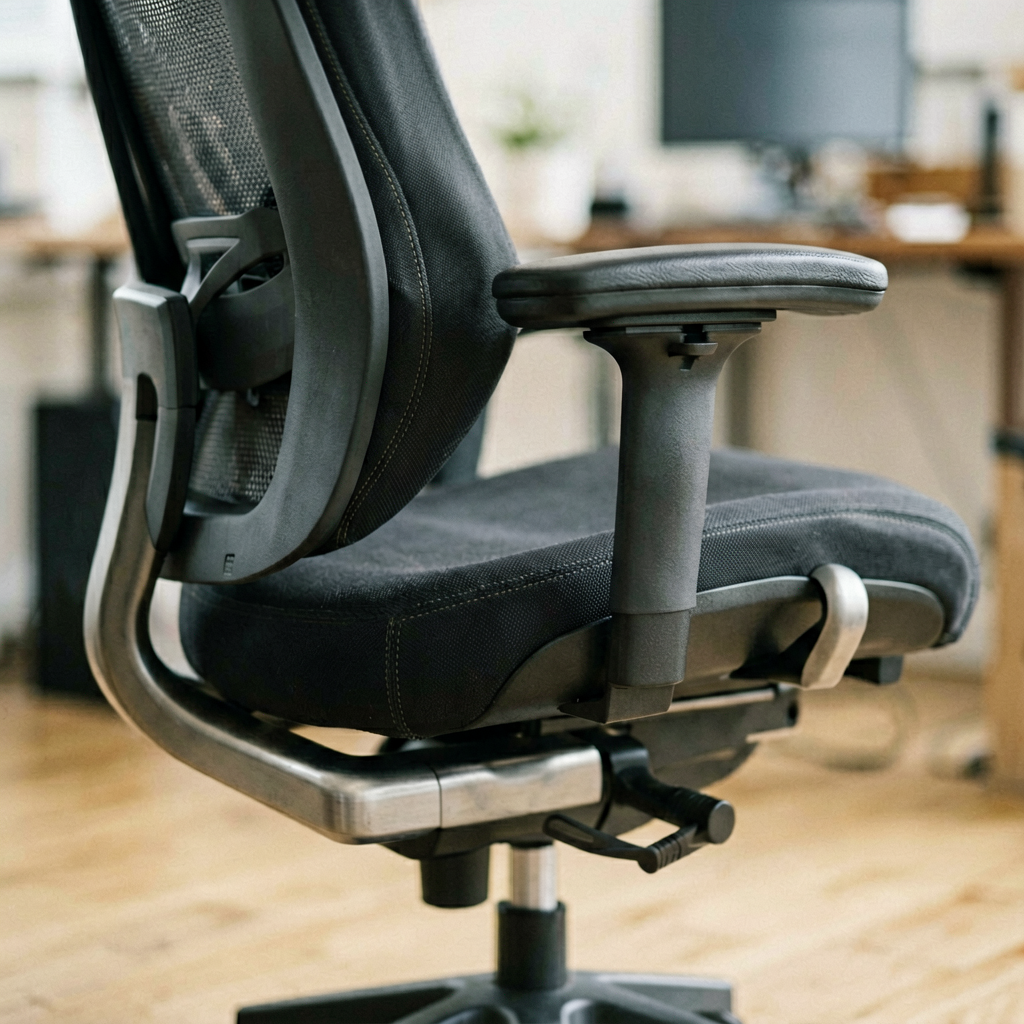
First Impressions: Looked sleek online. In person, the plastic parts feel… fine. Not cheap, but not premium. Assembly was straightforward. The lumbar support is a fixed curve you can adjust up and down, but not in depth. My first thought was, “This is okay.”
What I Loved: The recline tension is super easy to adjust with a big knob right under the seat. You can go from almost upright to a laid-back lounge mode in seconds. For just leaning back to watch a tutorial video, it’s great.
What Annoyed Me: Here’s the thing. It’s not that good. After three weeks, I found myself missing my old, terrible chair’s *feeling* of depth in the seat. The ErgoChair Core’s seat pan is quite short and doesn’t tilt in sync with the backrest in a satisfying way. Also, the mesh started to feel a little abrasive against my arms in short sleeves. It’s not uncomfortable, but it’s not the soft, breathable mesh of a higher-end model. At $449, I expected more.
Who It’s For: Someone who wants a basic, adjustable chair that looks modern and doesn’t cost a fortune. If you’re tall with short legs, the shallow seat might be perfect.
Who It’s NOT For: Anyone over 6 feet tall or anyone who plans to sit for 8+ hours a day. The support just isn’t there for marathon sessions. [Check Price on Amazon]
4. HON Ignition 2.0
Price I Paid: $349 (on sale from $450)
Time Tested: 4 weeks.
First Impressions: This is a pure workhorse chair. It feels built to survive an apocalypse. The mesh is thick, the frame is all hard plastic and metal. It looks and feels like it belongs in a government office building. Because it probably does. HON sells to a lot of corporations.
What I Loved: The durability. I yanked on things, leaned back hard, and it didn’t complain. The seat is firm but supportive. For the price, the build quality is top-notch (sorry, had to use that phrase once). It’s a chair you don’t have to baby.
What Annoyed Me: It’s loud. Every adjustment—the seat height, the recline, the armrests—makes a distinct, hollow plastic *clunk*. It’s not a huge deal, but in a quiet office, you’ll hear yourself adjusting all day. The lumbar support is a flimsy plastic paddle you slide up and down. It provides a gentle nudge, not real support. For me, it did almost nothing.
Who It’s For: Companies buying in bulk for offices, or individuals who need a tough, no-frills chair for a workshop or garage office. It’s built to last, not to pamper.
Who It’s NOT For: If you need serious lower back support. Or if you’re sensitive to noise.
5. Herman Miller Embody (The Splurge)
Price I Paid: $1,795 (with free expedited shipping)
Time Tested: 10 weeks.
First Impressions: The packaging is an event. It arrives in a massive, heavy-duty box. The chair itself looks like a biological specimen—vertebrae, ribs, a spine. It’s wild. Sitting in it for the first time is weird. There’s no thick foam. You’re sitting on a matrix of pixels that conform to you. It feels… alive.
What I Loved: The back support is unlike anything else. It doesn’t just hold your spine; it distributes pressure across your entire back. After a 10-hour day, I feel less fatigued than I do after 6 hours in other chairs. The lack of traditional padding means you never get hot or sweaty. It’s pure, dynamic support. It looks like a piece of modern art.
What Annoyed Me: The price. My god, the price. For $1,795, I expected perfection, and it’s *almost* there. The armrests are my one gripe. They’re fully adjustable, but the padding is thin and hard. After a long day, resting my elbows feels like resting them on a table edge. Also, you really need to commit to it. It has a 30-day break-in period where it can feel strange. If you give up after two days, you’ll hate it.
Who It’s For: Tech professionals, writers, designers, anyone who sits for a living and considers their chair a capital investment in their health and productivity. If you can afford it, it’s worth it. [Check Price on Amazon]
Who It’s NOT For: 95% of the population. Seriously. If you’re on the fence, buy the Steelcase Leap. It gives you 90% of the benefit for 40% of the price.
Side-by-Side Comparison
| Chair Model | Price Paid | Lumbar Support (1-5) | Build Quality (1-5) | Adjustability (1-5) | My Personal Score (1-5) |
|---|---|---|---|---|---|
| Steelcase Leap V2 | $789 | 5 | 5 | 5 | 5 |
| FlexiSpot C7 | $499 | 4 | 3.5 | 4.5 | 4 |
| Autonomous ErgoChair Core | $449 | 2 | 3 | 3 | 2.5 |
HON Ign
📚 Related Articles |