American Salmon Skillet for Date Night
American Salmon Skillet for Date Night: A Simple, Impressive One-Pan Dinner
Cooking for a special occasion at home doesn’t require complex techniques or a dozen pots. This American Salmon Skillet is designed for a successful date night: it’s fast, elegant, and yields a restaurant-quality result with minimal cleanup. The magic lies in a perfect sear, a flavorful pan sauce, and one-pan convenience. This recipe is ideal for an intermediate home cook looking to impress, focusing on foundational techniques like controlling searing heat and building a quick pan sauce. You’ll achieve crispy-skinned salmon with a moist, flaky interior, served over tender, charred vegetables.
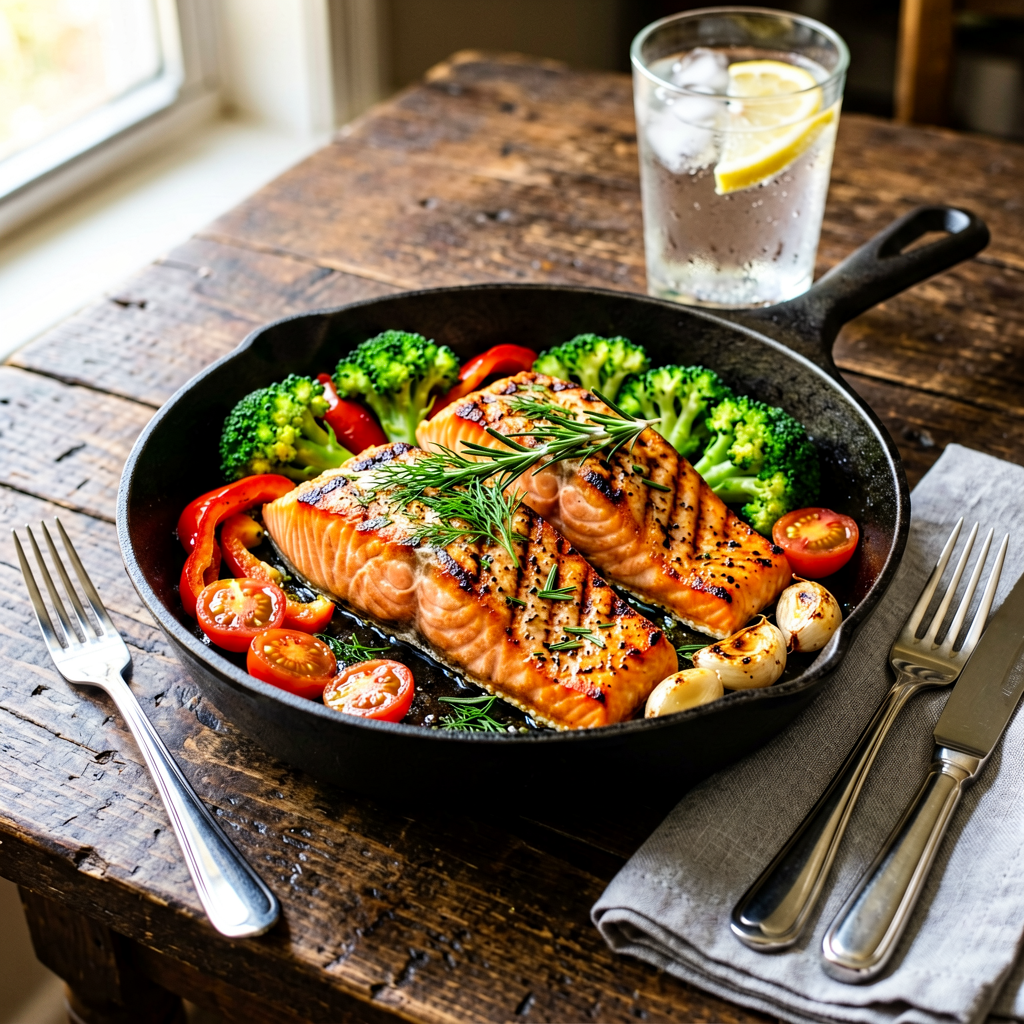
What You’ll Need
Ingredients (Serves 2)
- Salmon fillets: 2 (6 oz / 170g each), skin-on. *Choose fillets of uniform thickness for even cooking. The skin is essential for crispiness and helps hold the fish together.
- Olive oil: 2 tablespoons, divided. *Use a neutral, high-smoke-point oil like avocado or grapeseed for searing if preferred.
- Unsalted butter: 2 tablespoons, divided.
- Garlic: 3 cloves, minced.
- Shallot: 1 medium, finely diced.
- Cherry tomatoes: 1 cup (150g), halved.
- Asparagus: 1 bunch (about ½ lb / 225g), trimmed and cut into 2-inch pieces. *Substitute with broccolini or green beans.
- White wine (or chicken broth): ¼ cup (60ml). *Dry Sauvignon Blanc or Pinot Grigio works well.
- Fresh lemon juice: 1 tablespoon.
- Fresh dill or parsley: 2 tablespoons, chopped, plus more for garnish.
- Kosher salt and freshly ground black pepper.
Equipment Needed
- 12-inch Cast Iron or Stainless Steel Skillet: Essential for high-heat searing and oven use. A non-stick pan is not suitable for this technique.
- Instant-Read Thermometer: The most reliable tool for perfect doneness. [Check Price on Amazon]
- Fish Spatula or Thin, Wide Turner: For flipping delicate fillets without breaking the skin.
- Tongs.
Prep Work
1. Prepare the Salmon: Remove fillets from the refrigerator 20-30 minutes before cooking. Bringing them closer to room temperature promotes more even cooking. Pat the salmon, especially the skin side, completely dry with paper towels. Moisture is the enemy of a crisp sear. Season generously on all sides with kosher salt and pepper.
2. Prep the Vegetables: Trim and cut the asparagus. Halve the tomatoes. Mince the garlic and dice the shallot. Organize everything within reach—a practice known as mise en place is crucial for this quick cook.
3. Preheat Oven: Position a rack in the upper third of your oven. Preheat to 400°F (205°C).
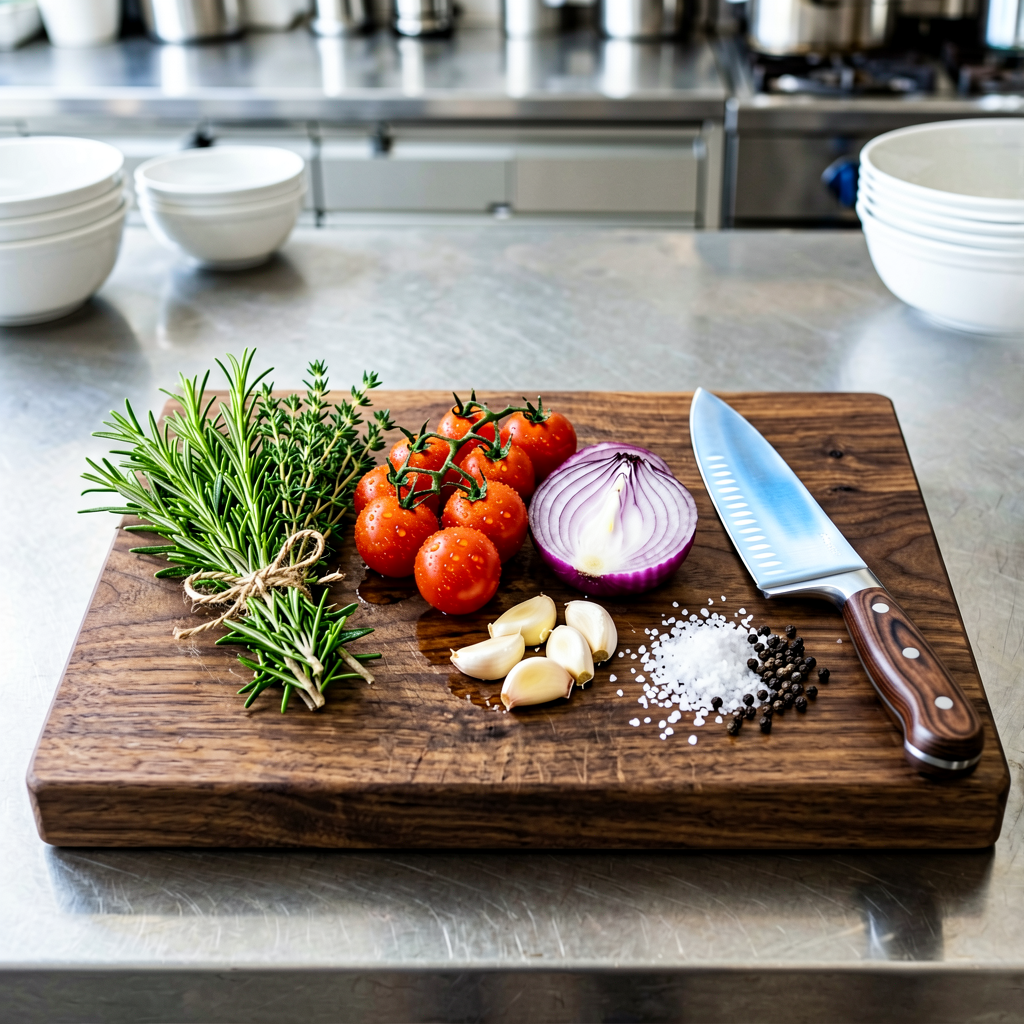
Cooking Instructions
- Sear the Salmon Skin-Side Down (4-5 minutes): Heat your skillet over medium-high heat. Add 1 tablespoon olive oil. When the oil shimmers and just begins to smoke, carefully place the salmon fillets skin-side down. Press gently with the spatula for the first 10 seconds to ensure full contact. Cook undisturbed for 3-4 minutes. You will hear a steady sizzle. The skin will release easily when ready. Flip carefully and sear the flesh side for 1 minute only. Transfer salmon to a plate, skin-side up. *Do not wipe the skillet.*
- Cook the Vegetables (3-4 minutes): Reduce heat to medium. Add the remaining 1 tablespoon olive oil and 1 tablespoon butter to the skillet. Add the asparagus and shallot. Sauté for 2-3 minutes, stirring occasionally, until asparagus is bright green and tender-crisp. Add the garlic and cook for 30 seconds until fragrant.
- Build the Pan Sauce (2 minutes): Pour in the white wine (or broth) to deglaze. Scrape up the flavorful browned bits (fond) from the bottom of the pan. Let it simmer and reduce by half, about 1 minute. Stir in the cherry tomatoes, remaining 1 tablespoon butter, lemon juice, and chopped dill. Cook until the butter melts and tomatoes just begin to soften.
- Finish in the Oven (5-7 minutes): Create a nest in the vegetables and return the salmon fillets to the skillet, skin-side up. Place the entire skillet in the preheated oven. Roast for 5-7 minutes. The exact time depends on fillet thickness. For a 1.5-inch thick fillet, aim for an internal temperature of 125°F (52°C) for medium-rare, which will carry over to a perfect 145°F (63°C) as it rests. *In my experience, checking with a thermometer at 5 minutes is the key to avoiding overcooked, dry salmon.*
- Rest and Serve (3-5 minutes): Carefully remove the skillet from the oven (handle will be extremely hot!). Transfer salmon to plates. Spoon the vegetables and pan sauce over and around the fish. Let the salmon rest for 3-5 minutes before serving. This allows juices to redistribute, ensuring moist fish.
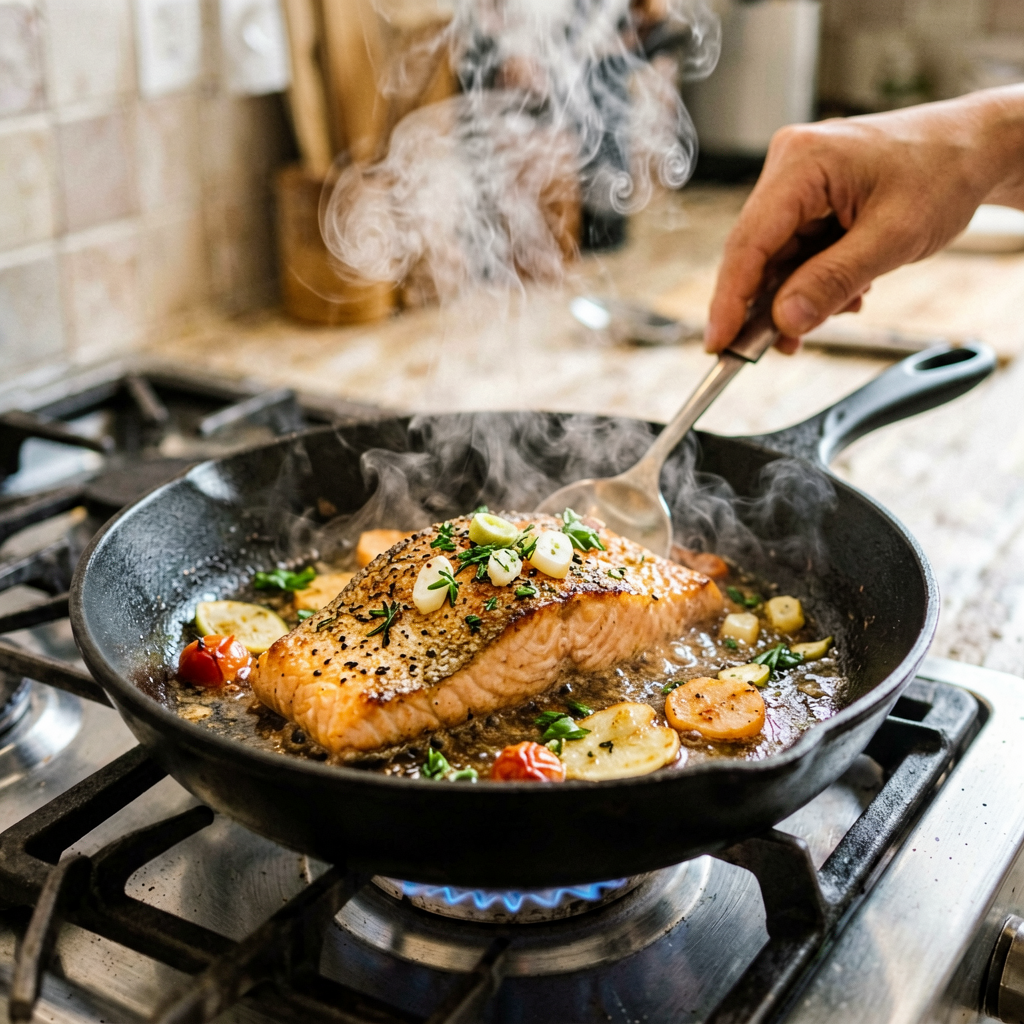
Pro Tips
- The Dry Skin Rule: I cannot stress this enough: a bone-dry salmon skin is the non-negotiable secret to restaurant-quality crispiness. Pat it multiple times if necessary.
- Don’t Crowd the Pan: If your fillets are large, ensure they have space. Overcrowding drops the pan temperature, causing steaming instead of searing.
- Skillet Choice Matters: Cast iron retains heat superbly for an even sear and can go straight to the oven. A stainless steel pan is also excellent. Avoid non-stick, as it cannot achieve the same fond development or high-heat oven performance.
- Sauce Variations: For a richer sauce, add 1 tablespoon of Dijon mustard with the wine. For a Mediterranean twist, add 1 tablespoon of capers and substitute oregano for dill.
- Make-Ahead: The vegetables can be prepped and the sauce ingredients measured up to a day ahead. Do not season or sear the salmon in advance.
Serving Suggestions
This skillet is a complete meal, but to round it out for a date night:
- Starch: Serve with a side of creamy mashed potatoes, buttered angel hair pasta, or crusty bread to soak up the incredible pan sauce.
- Wine Pairing: A crisp, acidic white wine like Sauvignon Blanc or a light, red-fruit Pinot Noir complements the rich salmon and bright sauce beautifully.
- Plating: Serve directly from the skillet placed on a wooden board for a rustic, communal feel, or plate individually by placing a bed of vegetables, topping with salmon, and spooning sauce over.
FAQ
Can I use frozen salmon?
Yes, but thaw it properly first. The best method is to place the frozen fillets in the refrigerator overnight. For a quicker thaw, seal them in a bag and subse in cold water for 30-60 minutes. Ensure they are completely dry before seasoning and searing. Thawed salmon will release more moisture, so patting it dry is even more critical.
How do I know when the salmon is done without a thermometer?
The most reliable visual cue is to gently press on the thickest part of the fillet with a finger. For medium-rare, it should feel soft with just a little resistance, like the fleshy part of your palm below the thumb. If it feels firm, it’s well-done. The flesh should also be mostly opaque, with just a hint of translucence in the very center. However, using an instant-read thermometer removes all guesswork.
Can I prep this ahead for an easier date night?
Absolutely. Complete all vegetable preparation (cutting asparagus, halving tomatoes, mincing garlic/shallot) and store in airtight containers in the fridge. Measure out your wine, lemon juice, and herbs. This mise en place reduces active cooking time to just over 10 minutes, making the final cooking process completely stress-free.
*As an Amazon Associate I earn from qualifying purchases.*