Introduction
This Asian-inspired chicken and vegetables soup delivers a clear, deeply savory broth with perfectly tender protein and crisp-tender produce. What makes this easy recipe work is the controlled layering of aromatics and a precise simmering window that prevents the broth from turning cloudy while extracting maximum flavor. Designed for home cooks seeking a homemade, quick dinner, this method requires exactly 30 minutes of active time. The technique focuses on building umami through fresh ginger, garlic, and toasted sesame oil without relying on heavy stocks or artificial flavor enhancers. It is accessible to beginners but introduces professional broth-clarity principles. 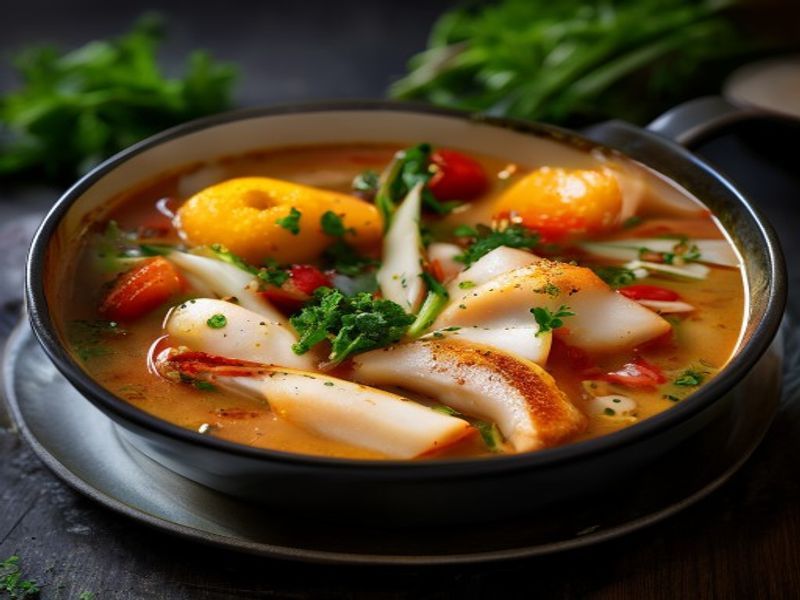
What You’ll Need
Ingredients
- Chicken thighs: 1.5 pounds (680g), boneless and skinless, cut into 1-inch cubes
- Shiitake mushrooms: 6 ounces (170g), fresh, stems removed, caps sliced 1/4-inch thick
- Baby bok choy: 2 small heads (10 oz total), white stems separated from green leaves, chopped
- Carrots: 2 medium (150g), peeled and sliced into 1/8-inch half-moons
- Fresh ginger: 2 tablespoons, finely minced (no paste)
- Garlic: 4 cloves, smashed and roughly chopped
- Chicken broth: 4 cups (950ml), low-sodium, straight from the refrigerator
- Soy sauce: 2 tablespoons, light or regular
- Rice vinegar: 1 tablespoon
- Toasted sesame oil: 1.5 teaspoons
- Neutral oil: 1 tablespoon (grapeseed or avocado)
- White pepper: 1/4 teaspoon, freshly ground
- Scallions: 3 stalks, thinly sliced on a sharp diagonal
Equipment
- 4-quart heavy-bottomed Dutch oven or stockpot
- 10-inch stainless steel skillet
- 8-inch chef’s knife and flexible cutting board
- Instant-read digital thermometer
- Fine-mesh skimmer or ladle
- [Check Price on Amazon] for a professional-grade instant-read thermometer
Prep Work
Proper mise en place dictates the speed and consistency of this dish. Begin by patting the chicken completely dry with paper towels; residual surface moisture will cause the meat to steam rather than sear, preventing proper Maillard browning. Cut the thighs into uniform 1-inch cubes to ensure even heat distribution. Keep the chicken chilled at 40°F / 4°C until you are ready to cook. For the vegetables, separate the bok choy stems and leaves; the stems require exactly 3 minutes of simmering while the leaves wilt in under 30 seconds. Slice the carrots to exactly 1/8-inch thickness so they soften at the same rate as the mushroom caps. Mince the ginger and chop the garlic; keep them in separate small bowls, as ginger burns rapidly at 250°F / 121°C if added too early. You can prep all vegetables and portion the broth up to 24 hours in advance. Store them in airtight containers at 38°F / 3°C to maintain crispness and prevent enzymatic browning.
Cooking Instructions
- Sear the chicken: Place your 4-quart Dutch oven over medium-high heat and add 1 tablespoon neutral oil. Heat until the oil surface shimmers and registers 350°F / 177°C on a laser thermometer. Add the chicken in a single layer. Do not crowd the pot. Cook undisturbed for exactly 3 minutes until a deep golden crust forms on the contact side. Flip and sear the second side for 2 minutes. Remove chicken to a plate with a slotted spoon. This step develops fond, the flavor base for the broth. Avoid stirring constantly; it releases internal moisture and prevents proper browning.
- Bloom the aromatics: Reduce heat to medium (surface temp ~325°F / 163°C). Add ginger and garlic to the residual oil. Sauté for exactly 45 seconds until fragrant but not browned. Ginger and garlic turn bitter rapidly past this point. If the edges start to darken, immediately add 1/4 cup of cold broth to halt the cooking.
- Deglaze and build broth: Pour in 4 cups cold chicken broth. Scrape the bottom of the pot firmly with a flat wooden spoon to release the fond. Bring to a gentle simmer at 185°F / 85°C. Do not allow a rolling boil; aggressive boiling emulsifies fat and protein into the liquid, creating a cloudy, heavy broth. Skim any surface impurities with a fine-mesh ladle for the first 5 minutes.
- Simmer the root vegetables: Add carrots and mushroom slices. Maintain temperature strictly between 180°F–185°F / 82°C–85°C. Simmer for exactly 4 minutes until carrots are just tender but still offer slight resistance when pierced. The mushrooms should release their moisture and shrink by approximately 20%.
- Return chicken and finish: Add the seared chicken and bok choy stems to the pot. Simmer for exactly 3 minutes until the chicken reaches an internal temperature of 165°F / 74°C. Add the bok choy leaves, soy sauce, rice vinegar, and white pepper. Stir gently and immediately remove from heat. The residual heat will wilt the leaves perfectly without turning them dull gray or rubbery.
- Final seasoning and serve: Stir in 1.5 teaspoons toasted sesame oil. Taste and adjust salt only if absolutely necessary; soy sauce typically provides sufficient sodium. The broth should be clear, highly aromatic, and slightly glossy. Ladle immediately into pre-warmed bowls.
Pro Tips
In my experience, the difference between a standard soup and a restaurant-quality version lies entirely in temperature control and ingredient sequencing. I find that using cold broth instead of hot when deglazing slows the extraction process, resulting in a cleaner, more transparent liquid that highlights the delicate flavors. For substitutions, extra-firm tofu (pressed for 20 minutes and cubed) replaces chicken effectively for a plant-based version, but reduce the simmer time to 2 minutes to prevent structural breakdown. If you cannot source fresh shiitake, rehydrate 0.5 ounces (14g) dried mushrooms in 1 cup of hot water for 15 minutes; strain the soaking liquid and add it to the broth for concentrated glutamate. This dish holds exceptionally well for make-ahead meals. Store cooled soup at 40°F / 4°C for up to 4 days. Reheat gently on the stove over medium-low heat to 175°F / 79°C rather than using high microwave settings, which violently break down delicate vegetable cell walls.
Serving Suggestions
Serve this Asian-style broth hot, ideally in wide, shallow ceramic bowls to maximize surface area and aroma release. A standard portion is 1.5 cups (355ml) of liquid with a balanced 1:1 ratio of protein to vegetables per serving. Pair it with steamed jasmine rice, exactly 1/2 cup cooked per person, to absorb the savory notes. For added textural contrast, offer a small ramekin of crispy fried shallots or a drizzle of Sichuan chili crisp. This homemade bowl functions as a complete quick dinner when accompanied by a light smashed cucumber salad dressed with rice vinegar and a pinch of sugar. The contrast of hot, umami-rich liquid against cool, crisp vegetables creates a nutritionally balanced meal that satisfies without causing post-meal heaviness.
FAQ
Can I use frozen chicken or vegetables?
You can use frozen chicken thighs, but thaw them completely in the refrigerator and pat them extremely dry before searing. Frozen vegetables release excess water during cooking, which dilutes the broth and drops the temperature below the optimal simmering range of 180°F / 82°C. If you must use frozen, add them directly to the simmering liquid and extend cooking time by exactly 2 minutes, but expect a noticeably softer final texture.
How do I know when it’s done?
Verify doneness with an instant-read thermometer; the thickest piece of chicken should register exactly 165°F / 74°C. The carrots should pierce easily with slight structural resistance, and the bok choy leaves should be fully opaque but still retain a vibrant emerald green hue. Cooking past this 3-minute window causes the protein fibers to contract tightly and the vegetables to turn mushy.
Can I prep this ahead and freeze it?
Yes, but with strategic modifications. Freeze only the cooked broth and chicken base. Delicate vegetables like bok choy and carrots suffer severe texture degradation after freezing and thawing due to ice crystal formation. When ready to serve, thaw the base overnight, bring it to a gentle simmer at 185°F / 85°C, and add fresh vegetables for the final 5 minutes. This preserves the crisp-tender quality and maintains broth clarity.
*As an Amazon Associate I earn from qualifying purchases.
发表回复