Introduction
This 20-minute cast-iron baked lemon ricotta pancake delivers a consistently light crumb and rich flavor profile without the tedious stovetop flipping required by traditional griddle methods. The technique relies on oven-baking in a preheated skillet, which creates an immediate thermal shock for a crisp, caramelized crust while retaining internal moisture. Whole milk ricotta introduces lactic acid and fat, which tenderize gluten strands and yield an easy fluffy pancake structure. A warm maple sage syrup recipe balances the bright citrus notes with earthy, herbaceous depth. Designed for intermediate beginners, this skillet baked pancakes method streamlines weekend brunch ideas into a single-pan workflow, making it a reliable family brunch favorite. The dairy friendly breakfast format ensures a rich mouthfeel while remaining straightforward to execute.
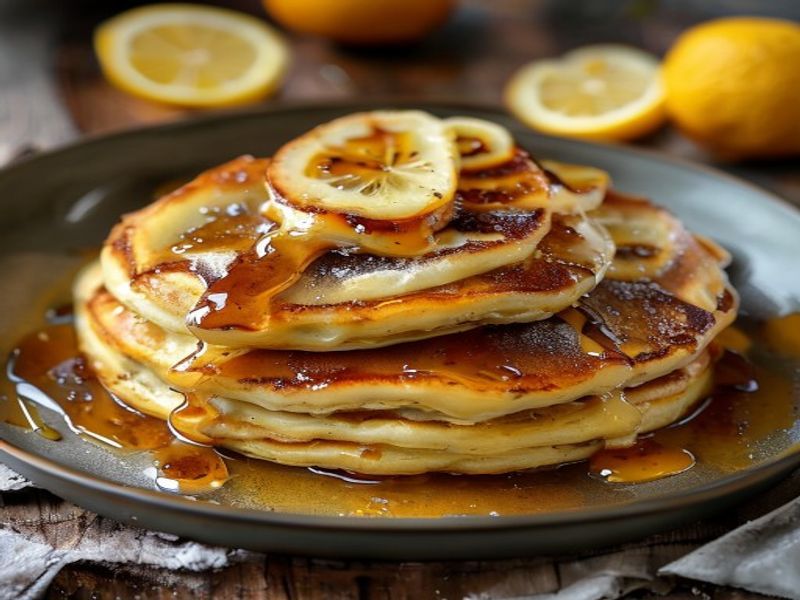
What You’ll Need
Ingredients
- All-purpose flour: 1 cup (120g), spooned and leveled
- Baking powder: 1.5 teaspoons, aluminum-free
- Baking soda: 0.5 teaspoon
- Granulated sugar: 1 tablespoon
- Kosher salt: 0.5 teaspoon (Diamond Crystal)
- Whole milk ricotta: 1 cup (245g), drained if watery
- Large eggs: 3, room temperature
- Unsalted butter: 2 tablespoons, melted and cooled slightly
- Whole milk: 2 tablespoons, room temperature
- Unsalted butter: 1 tablespoon, for glaze
- Fresh sage leaves: 6 medium leaves, finely chopped
- Pure maple syrup: 3 tablespoons (Grade A dark)
- Lemon: 1 medium (zest 2 teaspoons, juice 1 tablespoon)
Equipment
- 10-inch cast iron skillet: Must be oven-safe and well-seasoned. [Check Price on Amazon]
- Instant-read digital thermometer: For precise internal temperature verification
- 2 medium mixing bowls: 1-quart and 2-quart capacity
- Silicone spatula: For gentle folding without overworking
- Small saucepan: 1-quart for glaze reduction
- Microplane zester: For fine citrus zest extraction
Prep Work
Professional execution begins with precise mise en place. Bring eggs and whole milk to room temperature for 20-30 minutes before mixing; cold dairy will cause the melted butter to seize and create a grainy batter. Drain the ricotta in a fine-mesh sieve for 5 minutes to remove excess whey, which prevents a soggy crumb structure. Zest the lemon completely before juicing to maximize oil extraction and minimize bitter pith inclusion. Measure dry ingredients into the 2-quart bowl and whisk thoroughly to distribute leavening agents evenly. Combine wet ingredients in the 1-quart bowl, whisking until the ricotta breaks into small curds but remains slightly lumpy. Strip and finely chop sage leaves. Total active prep time is 6 minutes. The dry flour-leavening mixture can be whisked and stored in an airtight container up to 48 hours in advance.
Cooking Instructions
- Preheat oven and skillet: Position an oven rack in the center and set temperature to 400°F / 205°C. Place the empty 10-inch cast iron skillet on the rack during preheating. Allow it to heat for 10 full minutes. The cast iron skillet breakfast method relies on retained thermal mass for immediate batter set and crust formation.
- Combine wet and dry: Pour the wet mixture into the dry ingredients. Using the silicone spatula, fold gently for exactly 10-12 strokes. Stop when the flour streaks disappear but small lumps remain. Overmixing develops gluten, which will produce a dense, chewy texture instead of a tender crumb. Let the batter rest for 3 minutes to allow starch hydration.
- Transfer and bake: Carefully remove the hot skillet from the oven using dry oven mitts. Immediately add 1 tablespoon of unsalted butter to the pan and swirl to coat the bottom and sides. Pour the rested batter into the center and spread evenly to the edges with the spatula. Return to the oven. Bake for 12-14 minutes undisturbed. Watch for visual cues: the edges will turn deep golden, the center will dome slightly, and the surface will spring back immediately when lightly pressed with a fingertip. Verify doneness with an instant-read thermometer inserted into the thickest part; it should read 190°F / 88°C.
- Prepare the glaze: While the pancakes bake, place the small saucepan over medium-low heat (approx. 250°F / 120°C). Add 1 tablespoon butter and melt completely. Add chopped sage and toast for 30 seconds until fragrant and slightly crisped at the edges. Pour in 3 tablespoons pure maple syrup, increase heat to medium (300°F / 150°C), and simmer for 1 minute until the mixture thickens slightly and coats the back of a spoon. Remove from heat immediately to prevent scorching.
- Finish and portion: Remove the skillet from the oven. Pour half of the warm maple-sage glaze directly over the baked pancake, allowing it to pool and absorb. Rest for 2 minutes to allow the structure to set. Slice into 8 equal wedges using a sharp chef’s knife, then drizzle with remaining glaze. Serve immediately while the crust remains crisp and the interior stays steam-soft.
Pro Tips
I find that chilling the ricotta-draining bowl in the refrigerator for 10 minutes before mixing significantly improves moisture control, especially during summer months when dairy warms quickly. If whole milk ricotta is unavailable, substitute with 3/4 cup (180ml) buttermilk and increase baking powder to 2 teaspoons to compensate for the missing fat and acid structure. For a make-ahead quick pancake recipe workflow, combine the dry ingredients and store them in a sealed container. Measure wet ingredients into a separate airtight jar and refrigerate overnight. Combine and bake in the morning; just add 2 extra minutes to the bake time if the batter starts cold. Never use a glass or ceramic baking dish for this method, as they lack the rapid heat transfer required for proper crust development.
Serving Suggestions
Pair this skillet baked pancakes dish with high-protein, savory elements to balance the sweet-acidic glaze profile. Crispy thick-cut bacon, roasted prosciutto, or smoked salmon provide excellent textural contrast. Fresh berries such as blackberries or raspberries add natural acidity that cuts through the dairy richness. For beverage pairing, serve with a dark roast pour-over or a lightly oxidized oolong tea. The recipe yields one 10-inch round, which portions cleanly into 4 main servings or 8 smaller tasting plates. For larger family brunch favorites gatherings, simply double the recipe and bake in two separate skillets on staggered racks, rotating halfway through the 12-14 minute window.
FAQ
Can I use part-skim or frozen ricotta?
Part-skim ricotta works but yields a slightly drier crumb due to reduced fat content. If using frozen ricotta, thaw completely in the refrigerator overnight, then drain thoroughly through a fine-mesh sieve for 15 minutes to remove separated whey. Failure to drain will introduce excess water and prevent proper oven spring.
How do I know when the pancake is fully baked?
Rely on three indicators simultaneously: visual, tactile, and thermal. The perimeter should be uniformly golden brown (approx. 340°F / 170°C surface temp), the center must spring back when pressed firmly, and the internal temperature must reach 190°F / 88°C. If the top browns too quickly before the center sets, tent loosely with aluminum foil for the final 3 minutes of baking.
Can I prep the batter completely ahead of time?
Complete batter prep ahead is not recommended because the baking soda activates upon contact with acidic lemon juice and ricotta. If mixed too early, the leavening gases dissipate, resulting in a flat, dense final product. Always keep wet and dry components separate until 5 minutes before baking to maximize rise and maintain the easy fluffy pancake structure.
*As an Amazon Associate I earn from qualifying purchases.
发表回复