Introduction
These pan-seared salmon bowls deliver a precise balance of lean protein, complex carbohydrates, and healthy fats in under 25 minutes. The recipe works because it separates high-heat protein cooking from the gentle simmering of whole grains, allowing you to maintain optimal texture control in both components. The honey-garlic glaze relies on controlled reduction rather than heavy thickening agents, preserving the bright, clean flavor profile while creating a glossy finish. Designed for intermediate beginners, this method teaches foundational techniques like moisture removal before searing, carryover temperature management, and proper emulsification of sweet and acidic components. Whether you are searching for quick healthy lunch ideas or assembling 20 minute meal prep lunches, this approach guarantees consistent results. The farro salad lunch base holds its chew through refrigeration, while the omega-3 rich recipes format supports sustained energy without midday crashes.
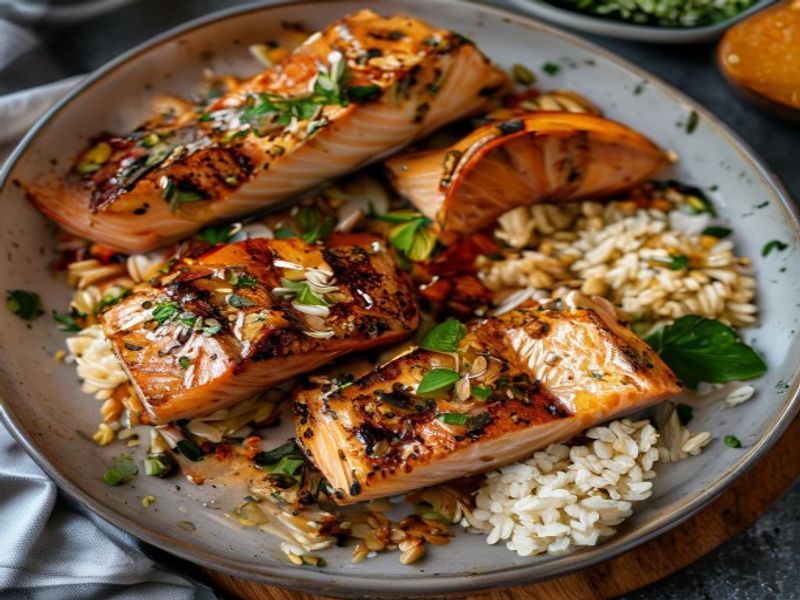
What You’ll Need
Ingredients
- Salmon fillets: 4 pieces (6 ounces each), skin-on, center-cut for even thickness
- Farro: 1 cup (180 grams), pearled or semi-pearled for faster cooking
- Low-sodium chicken or vegetable broth: 2 cups (475 milliliters)
- Honey: 3 tablespoons (63 grams)
- Fresh garlic: 4 cloves (12 grams), finely minced
- Fresh ginger: 1 tablespoon (6 grams), grated
- Soy sauce or tamari: 2 tablespoons (30 milliliters)
- Rice vinegar: 1 tablespoon (15 milliliters)
- Sesame oil: 1 teaspoon (5 milliliters)
- High-smoke-point oil: 2 tablespoons (30 milliliters), such as avocado or refined safflower oil
- Red bell pepper: 1 medium (150 grams), thinly sliced
- English cucumber: 1/2 (125 grams), diced
- Kosher salt: 1.5 teaspoons total
- Freshly cracked black pepper: 1/2 teaspoon
- Sesame seeds: 1 tablespoon (8 grams), for garnish
- Lime wedges: 4 pieces, for finishing
Equipment
- 12-inch cast iron skillet or heavy stainless steel sauté pan (retains heat evenly for consistent searing)
- Instant-read digital thermometer (critical for precise protein doneness) [Check Price on Amazon]
- 2-quart saucepan with tight-fitting lid
- Fine-mesh sieve for rinsing grains and straining sauce
- Small mixing bowl and silicone spatula
- Wire cooling rack (optional, for resting salmon skin-side up)
Prep Work
Proper mise en place prevents rushed decisions during high-heat cooking. Remove the salmon fillets from refrigeration exactly 15 minutes before cooking. Bringing the protein to 65°F / 18°C eliminates cold spots that cause uneven cooking and prevents the pan temperature from dropping drastically upon contact. Pat the fillets completely dry using paper towels on both sides and the skin. Residual surface moisture creates steam, which inhibits the Maillard reaction and results in a pale, soggy exterior. Score the skin lightly with 3 shallow diagonal cuts using a sharp chef’s knife to prevent curling.
Rinse the farro under cold water in a fine-mesh sieve until the runoff runs clear, removing excess surface starch. This step prevents clumping and ensures distinct grains. Dice the cucumber and slice the pepper, then store them in a sealed container in the refrigerator at 38°F / 3°C until assembly. Whisk the honey, minced garlic, grated ginger, soy sauce, rice vinegar, and sesame oil together in a small bowl. Cover and set aside at room temperature.
Timing note: The farro can be cooked up to 24 hours in advance. Store it cooled in an airtight container at 34°F–38°F / 1°C–3°C. The honey-garlic glaze also holds for 3 days refrigerated. Keep the salmon raw and covered until immediately before cooking.
Cooking Instructions
- Cook the farro base: Place the rinsed farro and 2 cups (475 ml) broth in a 2-quart saucepan. Bring to a rolling boil at 212°F / 100°C, then immediately reduce heat to maintain a gentle simmer at 185°F–190°F / 85°C–88°C. Cover and cook for 25 minutes. Remove from heat, let it rest undisturbed for 5 minutes, then fluff with a fork. The grains should be tender but retain a distinct bite. Drain any excess liquid through a sieve.
- Season and prepare the pan: Sprinkle the salmon fillets evenly with 3/4 teaspoon kosher salt and 1/4 teaspoon black pepper. Heat your 12-inch cast iron skillet over medium-high heat for 4 minutes until the surface reaches approximately 375°F / 190°C. Add the high-smoke-point oil and swirl to coat. Wait 30 seconds until the oil shimmers and moves fluidly without smoking.
- Sear the salmon: Carefully place the fillets skin-side down, pressing firmly with a spatula for 3 seconds to ensure full contact. Cook undisturbed for exactly 3 minutes. You will hear a steady sizzle; do not move the pan. The edges will turn opaque about halfway up the fillet thickness. After 3 minutes, check for a deep golden-brown crust by gently lifting one corner with a fish spatula. If it releases cleanly, flip. Cook the flesh side for 2 minutes at medium heat (325°F / 163°C).
- Apply the glaze and finish: Reduce heat to low (275°F / 135°C). Pour the honey-garlic mixture into the pan around the fillets, avoiding direct contact with the skin to maintain crispness. Baste the tops continuously with a spoon for 45 seconds until the sauce thickens to a glossy consistency that coats the back of the spoon. Remove the pan from heat. The internal temperature should read 125°F–128°F / 52°C–53°C. Rest the salmon on a wire rack for 4 minutes. Carryover heat will bring the final temperature to the FDA-recommended 145°F / 63°C while preserving moisture.
- Assemble the bowls: Divide the warm farro evenly among 4 containers or plates. Top each with a salmon fillet. Arrange the sliced pepper and cucumber alongside. Spoon the reduced pan glaze evenly over the salmon. Sprinkle with sesame seeds and serve immediately with lime wedges.
Pro Tips
In my experience, the most common failure point with honey-based glazes is burning the sugars before the garlic softens. I find that adding the glaze only after the protein is fully seared and reducing the heat immediately prevents scorching while allowing the raw garlic bite to mellow into a rounded sweetness. If you prefer gluten free lunch bowls, substitute the soy sauce with an equal volume of coconut aminos or certified gluten-free tamari. For high-protein meal variations, replace the farro with 1 cup (185g) of cooked quinoa or brown rice, though the chew will differ. These high protein seafood lunch formats scale efficiently: simply cook the salmon in two batches to avoid overcrowding, which drops pan temperature and causes steaming instead of searing. Always use a sharp spatula to flip; a dull edge will tear the delicate flesh.
Serving Suggestions
These pan-seared salmon bowls function as complete meals, but they pair exceptionally well with quick-pickled red onions or a handful of microgreens for added acidity and crunch. Portion guidance suggests 6 ounces of salmon per adult, paired with 1/2 cup cooked farro and 3/4 cup total vegetables to maintain optimal macronutrient distribution for clean eating midday meals. If serving immediately, keep the salmon skin-side up on a warm plate to prevent condensation from softening the crust. For meal prep, store the warm farro and raw vegetables at the bottom, place the cooled salmon on top, and keep the honey-garlic sauce in a separate small compartment until reheating to preserve texture integrity.
FAQ
Can I use frozen salmon fillets?
Yes, but you must thaw them completely in the refrigerator at 34°F–38°F / 1°C–3°C for 12–16 hours before cooking. Never thaw at room temperature or in warm water, as this degrades cell structure and releases excess moisture that ruins searing. Once thawed, pat aggressively dry and proceed with the recipe. Frozen fillets often cook 30–45 seconds faster due to slight structural changes.
How do I know when it’s done without overcooking?
Visual and tactile cues are secondary to temperature. The flesh should transition from translucent pink to opaque pale orange, and the edges should separate slightly from the skin. The most reliable method is inserting an instant-read thermometer into the thickest part. Pull the salmon from heat at 125°F–128°F / 52°C–53°C. After 4 minutes of resting, residual heat will carry it to 145°F / 63°C. If the fish flakes easily with gentle pressure from a fork, it has passed the ideal window and will be dry.
Can I prep this ahead for weekday lunches?
Absolutely. This recipe is optimized for 20 minute meal prep lunches. Cook the farro and prepare the vegetables 2 days in advance. Store them separately in airtight containers at 34°F–38°F / 1°C–3°C. Sear the salmon the night before or morning of, cool it on a rack, and store it skin-side up in a shallow container. Reheat the farro and vegetables in the microwave for 60 seconds, then add the salmon for an additional 20–30 seconds just to take the chill off. Add the glaze cold or gently warmed to preserve the fresh garlic notes.
What if my honey-garlic sauce separates or becomes grainy?
Separation occurs when the emulsion breaks due to excessive heat or rapid cooling. If the sauce splits, remove it from heat, add 1 teaspoon of cold water, and whisk vigorously until it re-emulsifies. Graininess indicates crystallized honey, which happens when the pan temperature exceeds 300°F / 149°C. Lower the heat immediately and stir until smooth. For foolproof results, keep the heat at low when reducing sweet sauces.
*As an Amazon Associate I earn from qualifying purchases.
发表回复