Introduction
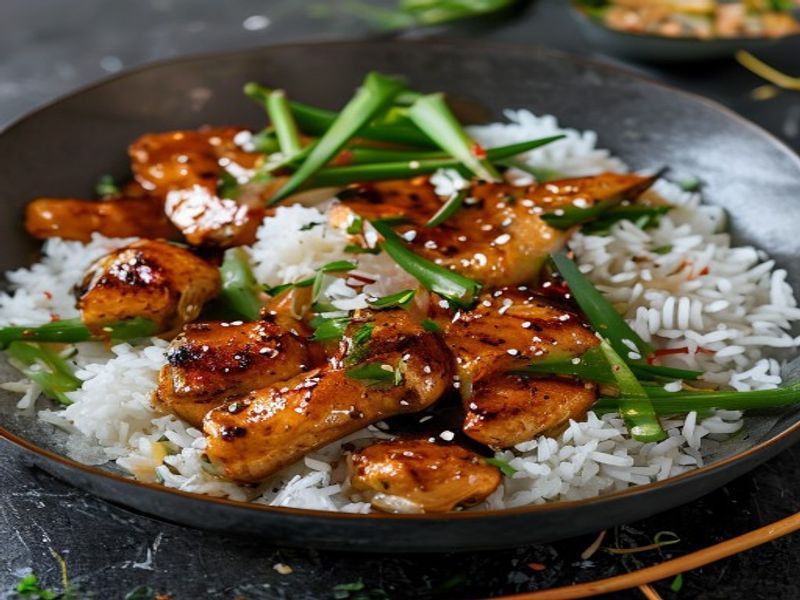
This 20-minute skillet miso ginger chicken with coconut rice delivers restaurant-quality flavor through precise heat control and strategic timing. Designed as a quick healthy lunch recipe, it balances umami-rich protein, fragrant grains, and a crisp vegetable component without requiring complex techniques. The miso-ginger marinade caramelizes rapidly over high heat, creating a glossy glaze that clings to thinly sliced chicken. Simultaneously, the coconut rice simmers passively while snap peas are blanched and shocked for maximum crunch. This dish works best at an intermediate beginner skill level because it teaches fundamental pan management and sequential cooking. Whether you are building high protein meal prep containers or assembling weeknight lunch bowls, this dairy free lunch relies on clean, easy asian inspired meals methodology. Every element is engineered to finish within a strict window, making it one of the most reliable 20 minute lunch ideas for busy schedules.
What You’ll Need
Ingredients
- Chicken: 1.5 pounds (680g) boneless, skinless chicken thighs, trimmed and sliced into ½-inch strips. Thighs retain moisture better than breast during high-heat searing.
- White miso paste: 3 tablespoons (45g). Use refrigerated paste, not shelf-stable seasoning paste, for proper fermentation depth.
- Fresh ginger: 1.5 tablespoons (9g), finely grated on a microplane. Avoid pre-minced jarred ginger; it contains too much moisture.
- Rice vinegar: 2 tablespoons (30ml), unseasoned.
- Coconut aminos: 1 tablespoon (15ml). Provides umami without soy.
- Sesame oil: 1 teaspoon (5ml), toasted.
- Coconut milk: 1 can (13.5 oz / 400ml), full-fat, well shaken.
- Jasmine rice: 1.25 cups (230g), rinsed until water runs clear.
- Water: 1.25 cups (300ml), measured at room temperature.
- Snap peas: 8 ounces (225g), strings removed.
- Neutral oil: 2 tablespoons (30ml), high smoke point (avocado or grapeseed).
- Scallions: 3 stalks (15g), thinly sliced on the bias.
- Sesame seeds: 1 tablespoon (8g), toasted.
Equipment
- 12-inch heavy-bottomed stainless steel skillet for even heat distribution and proper searing. [Check Price on Amazon]
- Instant-read thermometer for precise doneness verification. [Check Price on Amazon]
- Microplane grater for ginger paste extraction.
- Medium saucepan with tight-fitting lid (2-quart capacity).
Prep Work
Proper mise en place is non-negotiable for a 20-minute execution window. All components must be measured and staged before heat is applied.
- Chicken preparation: Pat the sliced chicken completely dry with paper towels. Moisture prevents Maillard reaction and causes steaming. Keep refrigerated until 5 minutes before cooking.
- Miso-ginger glaze: Whisk together 3 tablespoons white miso, 1.5 tablespoons grated ginger, 2 tablespoons rice vinegar, 1 tablespoon coconut aminos, and 1 teaspoon toasted sesame oil in a small bowl until smooth. The mixture should coat the back of a spoon thickly. Set at room temperature.
- Coconut rice: Rinse the jasmine rice in a fine mesh strainer under cold running water for 45 seconds until the runoff is clear. This removes excess surface starch that causes gummy textures. Keep at room temperature.
- Snap peas: Trim stem ends and pull strings downward. Leave whole or halve diagonally if pods exceed 3 inches. Chill until ready to blanch.
- Advance prep: The miso glaze can be mixed up to 3 days ahead and stored covered in the refrigerator. Bring to room temperature 15 minutes before use to ensure even coating and proper caramelization.
Cooking Instructions
- Start the coconut rice (Time: 0:00-12:00): In a 2-quart saucepan, combine the rinsed jasmine rice, 1.25 cups (300ml) room-temperature water, and the shaken 13.5 oz coconut milk. Place over medium-high heat until the liquid reaches a rolling boil, approximately 240°F / 115°C. Immediately reduce to the lowest heat setting, cover tightly, and simmer for exactly 12 minutes. Do not lift the lid. The rice is done when the surface shows small steam craters and the liquid is fully absorbed.
- Sear the chicken (Time: 5:00-10:00): While the rice cooks, place your 12-inch skillet over medium-high heat. Add 2 tablespoons neutral oil and heat until the oil shimmers and reaches 375°F / 190°C. Lay the chicken strips in a single layer with ½-inch spacing. Cook undisturbed for 3 minutes until a deep golden-brown crust forms on the bottom. Flip and cook for an additional 2 minutes. The internal temperature should read 155°F / 68°C on an instant-read thermometer before glazing.
- Glaze and finish the protein (Time: 10:00-14:00): Reduce heat to medium. Pour the room-temperature miso-ginger mixture evenly over the chicken. Toss continuously for 60-90 seconds. The sauce will bubble vigorously, thicken into a glossy lacquer, and cling to the meat. Remove the pan from heat immediately once the glaze coats the chicken uniformly. Overheating miso above 325°F / 160°C burns the sugars and creates a bitter, acrid flavor.
- Blanch the snap peas (Time: 12:00-15:00): While the chicken rests, bring 4 cups of salted water to a boil (212°F / 100°C). Submerge the snap peas for exactly 60 seconds. Drain immediately and shock in an ice bath for 2 minutes. This halts enzymatic breakdown and locks in a vibrant emerald color and snappy texture. Drain thoroughly on paper towels.
- Fluff and assemble (Time: 15:00-20:00): Let the rice rest off heat, covered, for 5 minutes. Remove the lid and fluff gently with a fork to release trapped steam. Divide the coconut rice among bowls, top with the glazed chicken, arrange snap peas alongside, and garnish with sliced scallions and toasted sesame seeds. Serve immediately while the skillet chicken retains surface warmth.
Pro Tips
- Temperature management is critical: In my experience, miso-based glazes require a two-stage approach. High heat builds the initial sear, but dropping to medium before adding the glaze prevents the fermented sugars from carbonizing. I find that letting the glaze sit at room temperature for 10 minutes before hitting the pan ensures it spreads evenly rather than clumping.
- Coconut milk separation fix: If your coconut milk has separated, simply whisk it vigorously for 30 seconds or blend it briefly with an immersion blender before adding to the rice. This guarantees a uniform coconut rice recipe without grainy pockets.
- Protein substitutions: Firm tofu or extra-large shrimp (16-20 count) work seamlessly. Reduce shrimp cook time to 90 seconds per side. For tofu, press for 20 minutes to remove moisture, then cube and sear identically.
- Make-ahead protocol: Cook the coconut rice and blanch the snap peas up to 24 hours in advance. Store separately in airtight containers. Reheat rice with 1 tablespoon of water in the microwave for 90 seconds to restore moisture. Sear the chicken fresh for optimal texture.
Serving Suggestions
This recipe yields 4 balanced portions, each containing approximately 320-350 calories with 28g of protein. For optimal skillet chicken bowls assembly, portion ½ cup of coconut rice, 5 ounces of glazed chicken, and 2 ounces of snap peas per container. The dish pairs exceptionally well with a light, acid-forward garnish such as quick-pickled daikon or a squeeze of fresh lime juice to cut through the rich coconut and miso. Serve alongside a small snap pea side dish or a cucumber-tomato salad to round out the nutrient profile. This dairy free lunch holds its structural integrity for up to 4 days refrigerated, making it ideal for high protein meal prep rotations.
FAQ
Can I use frozen snap peas or chicken?
Thawed frozen snap peas can be used, but they will lose structural integrity during blanching. If using frozen, skip the ice bath and reduce blanching time to 30 seconds. Frozen chicken must be completely thawed in the refrigerator before slicing; searing partially frozen meat drops pan temperature below 300°F / 149°C and causes steaming rather than caramelization.
How do I know when the chicken is safely cooked?
Visual color alone is unreliable. Insert an instant-read thermometer into the thickest piece. The USDA safe internal temperature for poultry is 165°F / 74°C. Because carryover cooking will raise the temperature by 5-7°F / 3-4°C after removing from heat, pull the chicken at 158°F-160°F / 70°C-71°C. The meat should offer slight resistance when pressed and release clear, not pink, juices.
Can I prep this ahead for the week?
Yes, this dish is highly optimized for high protein meal prep. Store the coconut rice, glazed chicken, and snap peas in separate compartments to prevent the rice from absorbing excess moisture and the peas from softening. The miso glaze will continue to penetrate the chicken over 3 days, deepening the flavor. Reheat components separately at 350°F / 175°C for 8 minutes or microwave at 50% power to preserve texture.
What if my coconut rice turns out too wet?
Excess moisture usually stems from inaccurate liquid measurement or insufficient simmer time. If the rice remains soggy after the 12-minute cook, remove the lid, increase heat to medium-low, and stir gently for 2-3 minutes to evaporate residual liquid. Ensure your saucepan lid fits tightly; a loose lid allows steam to escape unevenly and disrupts the cooking ratio.
*As an Amazon Associate I earn from qualifying purchases.
发表回复