Introduction
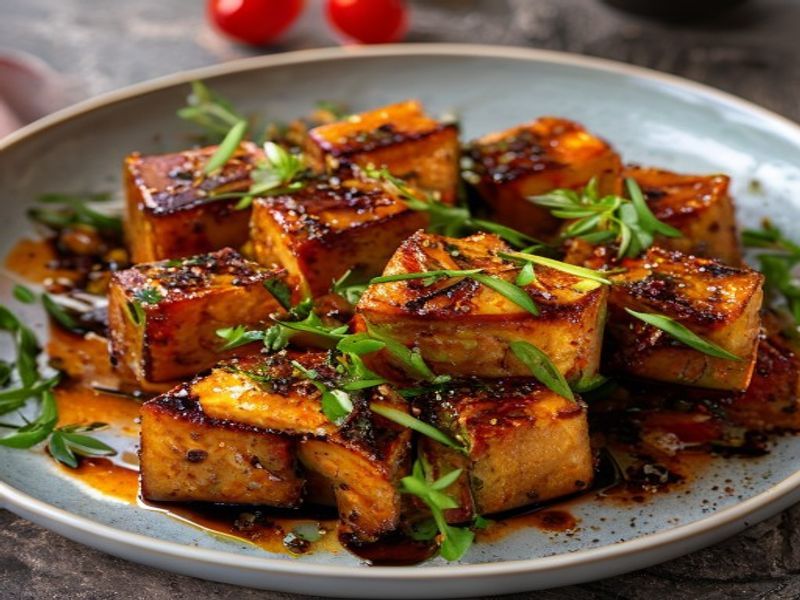
This air fryer tofu with honey soy and fresh herbs delivers restaurant-quality texture without the overhead of a commercial deep fryer. The combination of rapid convection heat and a precise starch coating creates a shatteringly crisp exterior while preserving a tender, custard-like interior. This easy recipe relies on controlled moisture removal and a balanced glaze applied at the exact correct stage to prevent sogginess. It is engineered for home cooks seeking a healthy meal that requires minimal active time but delivers consistent, reliable results. The technique works because the air fryer’s forced air circulation dehydrates the tofu surface faster than a conventional oven, while the honey soy mixture caramelizes into a sticky, glossy finish. Whether you are building grain bowls or preparing a quick weeknight protein, this homemade approach guarantees structural integrity and bold flavor. Skill level: Beginner to intermediate. Total active time: 20 minutes. Cook time: 14 minutes.
What You’ll Need
- Tofu: 1 block (14 oz / 400 g) extra-firm or firm, water-packed
- Cornstarch: 2 tablespoons, measured flat
- Neutral oil: 1.5 tablespoons total (divided), avocado or grapeseed oil recommended
- Soy sauce: 3 tablespoons, low sodium preferred
- Honey: 2 tablespoons, runny consistency
- Rice vinegar: 1 tablespoon
- Fresh ginger: 1 teaspoon, finely microplaned
- Garlic: 2 cloves, minced to paste consistency
- Toasted sesame oil: 1 teaspoon
- Fresh herbs: 1/4 cup total, chopped cilantro, Thai basil, and thinly sliced scallions
Ingredient selection notes: Always choose water-packed extra-firm tofu over silken or soft varieties for high-heat applications. The protein matrix must be dense enough to withstand convection airflow without collapsing. Select low-sodium soy sauce to maintain control over salt levels during the reduction phase. Fresh ginger must be grated finely to avoid burning in the direct air stream.
Equipment required: 5.8-quart basket-style air fryer, 12-inch rimmed baking sheet, two 1-quart glass mixing bowls, fine-mesh strainer, silicone pastry brush, instant-read thermometer, heavy cast-iron skillet (approx. 8 lbs) for pressing. For reliable temperature control, I recommend using a [Check Price on Amazon] digital instant-read thermometer to monitor internal doneness.
Prep Work
Proper moisture management dictates the final texture. Begin by draining the tofu and wrapping it completely in a clean, lint-free kitchen towel. Place it flat on a 12-inch rimmed baking sheet and position the heavy cast-iron skillet directly on top. Press firmly for 20 minutes. This step removes approximately 1/3 cup of trapped water, which is critical for starch adhesion and crisp formation.
After pressing, cut the block into 1-inch uniform cubes. Transfer to a dry 1-quart bowl. Sprinkle with exactly 2 tablespoons cornstarch and toss gently until every surface is coated with a matte, powdery layer. Let the coated tofu rest for 3 minutes. This hydration window allows the starch to form a cohesive film that will not blow off during air circulation.
In a separate bowl, whisk together the soy sauce, honey, rice vinegar, microplaned ginger, minced garlic, and toasted sesame oil. The glaze should remain at room temperature (68°F / 20°C) to ensure proper viscosity. Cold glaze will pool and slide off hot tofu.
Temperature and timing notes: Pressed tofu should reach room temperature before cooking. You can complete the pressing, cutting, and coating steps up to 4 hours ahead. Store the coated cubes uncovered on a wire rack in the refrigerator to further dry the surface. Keep the glaze refrigerated separately and bring to room temperature 15 minutes before cooking.
Cooking Instructions
- Preheat the air fryer: Set your unit to 375°F / 190°C and run it empty for 5 minutes. Preheating ensures the cooking surface hits the target temperature immediately, triggering the Maillard reaction on contact rather than allowing the tofu to steam. Visual cue: The basket interior should feel radiantly hot when you place your hand 2 inches above it.
- Arrange and initial cook: Lightly spray the preheated basket with 1/2 tablespoon neutral oil. Place tofu cubes in a single layer, maintaining exactly 1/2-inch spacing between each piece. Overcrowding drops the internal temperature and causes steaming. Cook at 375°F / 190°C for 8 minutes undisturbed.
- Flip and continue crisping: Open the drawer carefully and flip each cube using silicone tongs. Return to 375°F / 190°C and cook for an additional 4 minutes. Watch for a pale golden color and listen for a distinct, dry tapping sound when the tongs contact the surface. If the coating still feels soft or damp, add 1 minute at 375°F / 190°C.
- Glaze application: Reduce air fryer temperature to 325°F / 160°C. Using a silicone pastry brush, apply the honey soy mixture in a thin, even coat across all visible surfaces. Return to the basket for exactly 2 minutes. The glaze will bubble and tighten into a glossy shell. Watch closely: honey contains high fructose content and will carbonize rapidly above 340°F / 170°C. Remove the basket the moment the edges turn deep amber.
- Rest and garnish: Transfer the tofu immediately to a wire cooling rack. Do not plate directly on a solid surface, as trapped steam will soften the crust within 90 seconds. Toss with the fresh herbs while the exterior is still warm but not sizzling. The heat will release the herb oils without wilting them completely.
Common mistakes to avoid: Skipping the preheat cycle, which leads to sticking and uneven browning. Applying the glaze too early in the cooking process, which creates a soggy barrier. Using low-firm tofu, which lacks the structural density required for convection cooking. Placing finished pieces directly on a cold plate, which traps residual steam and ruins the crisp texture.
Pro Tips
I find that adding exactly 1/2 teaspoon of baking powder to the cornstarch coating alters the surface pH during heating, generating microscopic bubbles that yield a significantly crunchier crust without changing the flavor profile. In my experience, brushing the glaze in two thin layers separated by 45 seconds of air frying prevents pooling and guarantees uniform caramelization across every edge. This method eliminates the common issue of burnt sugar patches alongside raw, wet spots.
Substitutions that actually work: Pure maple syrup or light agave nectar can replace honey with a 1:1 ratio. For gluten-free applications, use tamari; for soy-free diets, substitute coconut aminos. If fresh herbs are unavailable, 1 tablespoon of dried oregano or thyme mixed into the glaze before cooking will provide aromatic depth, though fresh is strongly preferred for finish brightness.
Make-ahead options: Complete steps 1 through 3, then cool the tofu completely on a rack. Store in a single layer inside an airtight container with a paper towel lining for up to 3 days. Reheat at 350°F / 175°C for 4 minutes to restore the crust, then apply glaze and herbs immediately before serving.
Serving Suggestions
This dish functions optimally when balanced with contrasting textures and clean, acidic components. Serve over steamed jasmine rice, quinoa, or soba noodles. Pair with blanched bok choy tossed in garlic and a quick-pickled daikon-carrot slaw to cut through the rich honey soy coating. The high protein content makes it an excellent standalone main course.
Portion guidance: Yields 4 main course servings (approximately 3.5 oz / 100 g tofu per person) or 6 side/appetizer portions. For meal prep, divide into four containers with 1 cup cooked grains and 1 cup roasted vegetables per container. Finish each portion with 1 teaspoon toasted white sesame seeds and a final 1/2 teaspoon drizzle of toasted sesame oil just before eating.
FAQ
Can I use frozen tofu?
Yes. Thaw completely in the refrigerator for 12 to 16 hours, then press aggressively for 30 minutes. Freezing expands ice crystals that rupture the protein matrix, resulting in a denser, chewier, meat-like texture. Drain the thawed liquid thoroughly before coating to prevent splattering during the air frying cycle.
How do I know when it’s done?
Texture is the primary indicator. The exterior should be uniformly golden-brown with a distinct, dry snap when tapped. The internal temperature should reach 145°F / 63°C on an instant-read thermometer, but the crust formation matters more than internal heat. If the surface feels tacky or yields to light pressure, continue cooking at 375°F / 190°C for 2-minute intervals.
Can I prep this ahead of time?
Yes. The pressing, cubing, and starch coating stages can be completed up to 4 hours in advance. Store the coated tofu uncovered on a wire rack in the refrigerator. Keep the honey soy glase separate until the final cooking stage. Applying liquid to starch-coated tofu too early activates gluten-like proteins and creates a gummy surface that will not crisp properly.
*As an Amazon Associate I earn from qualifying purchases.
发表回复