Introduction
This Busy Weeknights Asian Chicken Roast delivers restaurant-quality results with minimal hands-on time, making it an ideal easy recipe for families. The method relies on a controlled sear followed by a high-heat roast to lock in moisture while caramelizing a balanced sweet-savory glaze. Designed for home cooks, it requires foundational knife skills and basic oven management but delivers consistent, family-friendly results every time. The sauce combines soy, ginger, garlic, and a touch of rice vinegar to create a sticky, umami-rich coating without requiring hours of marination. By controlling pan temperature and monitoring internal doneness precisely, you eliminate the dryness that plagues standard weeknight dinners. This approach guarantees juicy meat, crisp skin, and a cohesive sauce that coats evenly.
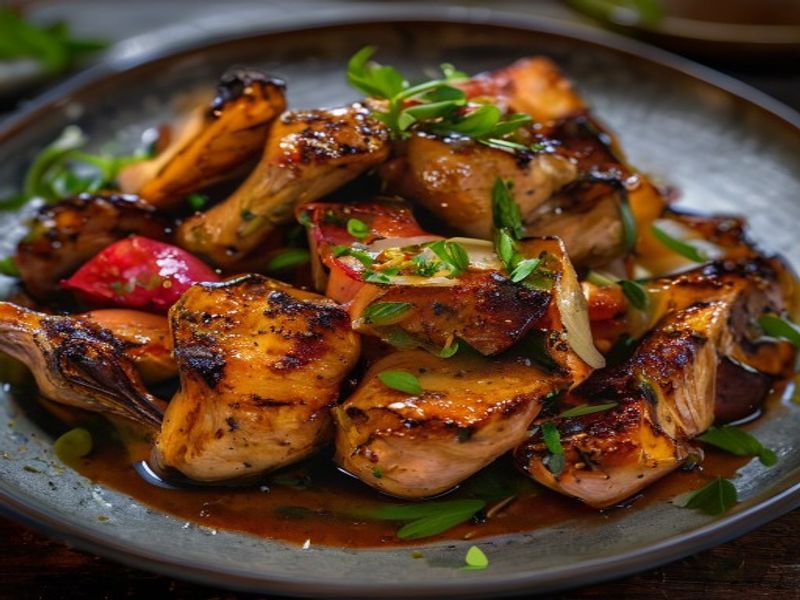
What You’ll Need
- 1.5 pounds (680g) boneless, skin-on chicken thighs: Skin-on retains fat during roasting, preventing dryness and providing structural integrity during high heat.
- 3 tablespoons (45ml) neutral oil: Avocado or refined canola works best due to a 520°F (271°C) smoke point.
- 1/4 cup (60ml) low-sodium soy sauce: Controls sodium levels while maintaining deep umami.
- 2 tablespoons (30ml) honey: Provides viscosity and rapid caramelization during the roast phase.
- 1 tablespoon (15ml) toasted sesame oil: Adds aromatic depth without burning when added to the glaze.
- 4 cloves garlic, finely minced: Fresh yields sharper, more complex flavor than pre-minced jarred alternatives.
- 1 tablespoon (15g) fresh ginger, finely grated: Use a microplane for maximum juice extraction and even distribution.
- 1 teaspoon (5ml) rice vinegar: Cuts richness and balances the honey’s sweetness.
- 1/2 teaspoon (2g) red pepper flakes: Optional heat that blooms during cooking.
- 1 teaspoon kosher salt and 1/2 teaspoon freshly cracked black pepper: Standard seasoning ratio for poultry.
Equipment: 12-inch oven-safe cast iron skillet [Check Price on Amazon], instant-read thermometer, silicone basting brush, wire cooling rack, and heavy-duty kitchen tongs.
Prep Work
Remove the chicken from refrigeration 20 minutes before cooking to bring the core temperature to approximately 55°F (13°C). Cold protein sears unevenly and drops pan temperature rapidly, resulting in steamed rather than browned meat. Pat the skin completely dry with paper towels; surface moisture creates steam and prevents the Maillard reaction from occurring properly. Whisk soy sauce, honey, sesame oil, rice vinegar, minced garlic, grated ginger, and red pepper flakes in a small bowl until the honey fully dissolves. This glaze can be mixed up to 3 days in advance and stored chilled in an airtight container. Preheat your oven to 425°F (218°C) while prepping the protein. Season both sides of the thighs with the measured kosher salt and black pepper just before hitting the pan. Salt initially draws out moisture but reabsorbs during the cooking phase, seasoning the muscle fibers deeply.
Cooking Instructions
- Initial Sear: Heat 2 tablespoons of neutral oil in a 12-inch cast iron skillet over medium-high heat (approximately 375°F / 190°C surface temperature). Add the chicken thighs skin-side down. Press gently with tongs for 10 seconds to ensure full skin contact with the pan. Sear undisturbed for 5-6 minutes until the skin renders fat and achieves a deep golden-brown crust. Do not flip early; releasing the meat before the collagen contracts will tear the skin and release valuable juices into the pan.
- Second Side: Flip the thighs using heavy-duty tongs. They should slide freely in the rendered fat. Cook for exactly 2 minutes to lightly brown the second side. Carefully pour off excess rendered fat into a heat-safe container, leaving exactly 1 tablespoon in the pan. This reserved fat will emulsify with the glaze and prevent burning.
- Glaze and Roast: Pour the prepared glaze evenly over the chicken. The liquid will bubble vigorously and reduce immediately. Transfer the skillet directly to the preheated 425°F (218°C) oven. Roast for 18-20 minutes. Open the oven at the 10-minute mark and baste the skin once by spooning the reduced liquid over the surface. Watch for the sauce to thicken into a glossy, syrup-like consistency that clings to a spoon.
- Temperature Check and Rest: Monitor internal temperature with an instant-read thermometer. Insert the probe into the thickest part of a thigh without touching the pan bottom. The chicken is safely done at 175°F (79°C). This higher target ensures connective tissue fully converts to gelatin, yielding a tender, pull-apart texture. Remove the skillet and transfer the chicken to a wire rack to rest for 5 minutes. Resting allows muscle fibers to relax and redistribute juices evenly throughout the meat.
Pro Tips
I find that using a heavy, oven-safe skillet eliminates hot spots and ensures the skin crisps uniformly across the entire batch, which is critical when cooking multiple pieces at once. In my experience, resting the meat on a wire rack rather than leaving it in the hot pan prevents the bottom from continuing to cook and keeps the crust from turning soggy in pooled condensation. If your honey crystallizes, warm it in a microwave-safe bowl for 15 seconds before whisking; cold honey will not emulsify properly with the soy and vinegar. For a lighter variation, substitute boneless skinless chicken breasts, but reduce oven time to 12-14 minutes and pull at 160°F (71°C) to avoid drying out the lean muscle fibers. The entire dish can be seared, cooled, and refrigerated for up to 24 hours, then finished in the oven when you are ready to serve.
Serving Suggestions
This homemade Asian chicken roast pairs best with starches that readily absorb the glossy pan sauce. Serve over 2 cups of steamed jasmine rice or 12 ounces of tossed soba noodles. Add a quick-pickled cucumber and scallion slaw to cut through the rich, sticky glaze and provide a bright textural contrast. For a complete family-friendly meal, portion one thigh and 1/2 cup of rice per adult, with an additional half-portion for children under ten. The dish holds exceptionally well in a warming drawer at 180°F (82°C) for up to 30 minutes if your schedule requires staggering service times.
FAQ
Can I use frozen chicken for this recipe?
Thaw completely before cooking. Frozen protein releases ice crystals during searing, which drops pan temperature below 285°F (140°C) and steams the skin instead of crisping it. Thaw in the refrigerator for 24 hours or submerge sealed packaging in cold water for 90 minutes, changing the water every 30 minutes.
How do I know when it’s done without a thermometer?
While an instant-read thermometer is non-negotiable for consistency, visual and tactile cues provide reliable backup. The juices should run completely clear when pierced at the thickest point, the meat should feel firm but yield slightly under gentle pressure, and the interior should show zero pink translucency when sliced against the grain.
Can I prep this ahead and reheat later?
Yes. After roasting, cool the chicken completely within 2 hours, then store in an airtight container for up to 3 days. Reheat in a covered dish at 350°F (177°C) for 15 minutes to restore moisture without overcooking. Add 1 tablespoon of water to the container before covering to create steam and prevent the glaze from hardening.
*As an Amazon Associate I earn from qualifying purchases.
发表回复