Introduction
This lamb and quinoa skillet delivers a streamlined, French-inspired one-pan meal that balances rich, savory protein with light, nutty grains. By leveraging classic Provençal aromatics—shallots, thyme, garlic, and a touch of Dijon mustard—the dish builds layered flavor without requiring multiple pots. The method relies on controlled searing followed by a gentle simmer, ensuring the lamb stays tender while the quinoa absorbs every drop of seasoned broth. Designed as an easy recipe for weeknights, it scales effortlessly for a family friendly dinner and requires minimal active supervision. Whether you are cooking for two or four, this homemade approach teaches foundational techniques like proper deglazing, grain-to-liquid ratios, and temperature control. 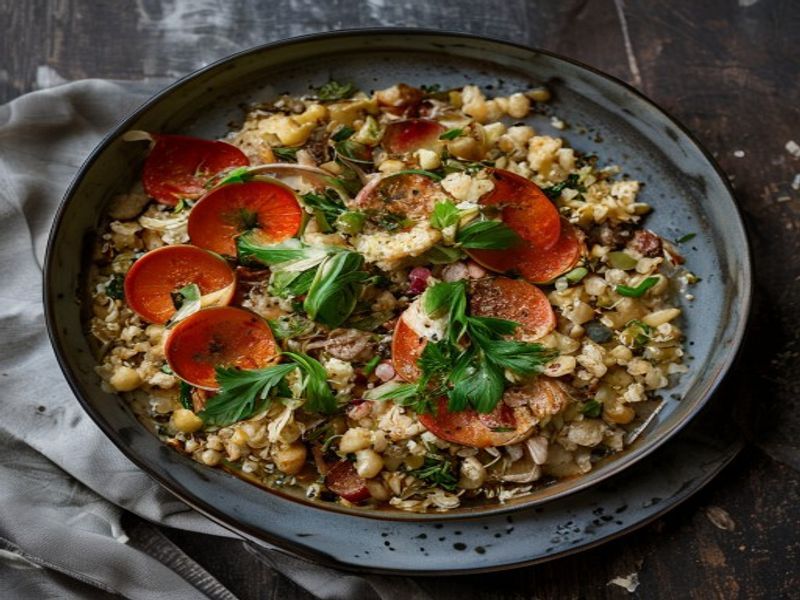
What You’ll Need
Ingredients
- Lamb leg or shoulder chops, boneless, 1.5 pounds (trimmed to 0.5-inch thickness)
- White quinoa, 1 cup (rinsed)
- Low-sodium chicken or vegetable broth, 1.75 cups
- Extra virgin olive oil, 3 tablespoons (divided)
- Shallots, 2 medium (finely diced, approx. 1/2 cup)
- Garlic cloves, 3 (minced)
- Fresh thyme, 2 sprigs (or 1 teaspoon dried)
- Fresh rosemary, 1 teaspoon finely chopped
- Dijon mustard, 1 tablespoon
- Cherry tomatoes, 1 cup (halved)
- Kalamata olives, 1/3 cup (pitted and halved)
- Fresh lemon, 1 (zested and juiced, approx. 2 tablespoons juice)
- Kosher salt, 1.5 teaspoons (plus 1/4 teaspoon for seasoning)
- Freshly cracked black pepper, 1/2 teaspoon
Equipment
- 12-inch heavy-bottomed oven-safe skillet (cast iron or carbon steel preferred) [Check Price on Amazon]
- Instant-read digital thermometer [Check Price on Amazon]
- Fine-mesh strainer
- Wooden spoon or silicone spatula
- Measuring cups and spoons
Prep Work
Proper mise en place ensures consistent cooking and prevents overcooking the aromatics while you scramble for ingredients. Begin by placing the quinoa in a fine-mesh strainer and rinsing under cold running water for 30 seconds. Agitate the grains with your fingers until the water runs clear; this removes the natural saponin coating that causes bitterness. Drain thoroughly and set aside.
Remove the lamb from refrigeration 20-25 minutes before cooking. Bringing the protein to approximately 50°F / 10°C ensures even searing and prevents a gray, overcooked exterior with a cold center. Pat the meat completely dry with paper towels—moisture is the enemy of the Maillard reaction. Season both sides evenly with 1 teaspoon kosher salt and 1/4 teaspoon black pepper.
Dice the shallots to a uniform 1/4-inch size for consistent softening. Mince the garlic and chop the rosemary. Measure the broth, Dijon mustard, and lemon juice into a small bowl and whisk until fully emulsified. This step takes 5-7 minutes total. The prepped components can sit at room temperature for up to 2 hours before cooking.
Cooking Instructions
- Sear the Lamb: Place the 12-inch skillet over medium-high heat. Add 2 tablespoons olive oil and heat until the surface shimmers, approximately 1-2 minutes. The oil should reach roughly 350°F / 175°C before adding the meat. Carefully lay the lamb in the pan, leaving 1 inch between pieces to avoid steaming. Sear undisturbed for 3 minutes per side until a deep, caramelized crust forms. Remove lamb to a clean plate. Watch for: a sharp sizzle upon contact and a uniform golden-brown exterior. Avoid: moving the meat prematurely, which tears the developing crust.
- Sauté Aromatics: Reduce heat to medium. Add the remaining 1 tablespoon oil to the same pan. Immediately add shallots and cook for 2 minutes, stirring constantly, until they soften and turn translucent. Add garlic, thyme, and rosemary. Cook for 45 seconds until fragrant. Watch for: the shallots releasing their natural sugars without browning. Avoid: letting the garlic burn, which turns it acrid.
- Toast the Quinoa: Add the rinsed quinoa to the skillet. Stir for 1 minute, coating every grain in the aromatic oil. You will hear a faint crackling sound and notice a toasted, nutty aroma. This step hydrates the outer layer and prevents mushiness later.
- Deglaze and Simmer: Pour in the broth and Dijon mixture. Scrape the bottom of the pan firmly with a wooden spoon to dissolve all browned fond. Add cherry tomatoes and olives. Return the seared lamb and any accumulated resting juices to the pan. Bring to a gentle simmer, then immediately cover with a tight-fitting lid. Reduce heat to low (275°F / 135°C on induction/stovetop). Simmer undisturbed for 15-18 minutes.
- Check Doneness and Rest: Remove the lid. Insert an instant-read thermometer horizontally into the thickest part of the lamb. Target 145°F / 63°C for medium. The quinoa should display visible white “tails” and be tender but firm. Remove the lamb to a cutting board and tent loosely with foil for 5 minutes. Watch for: the quinoa absorbing all visible liquid. If excess moisture remains, uncover and cook for 2 additional minutes.
- Finish and Serve: Drizzle the skillet contents with fresh lemon juice and zest. Gently fluff the quinoa with a fork. Slice the rested lamb into 1/2-inch strips against the grain. Arrange over the quinoa and spoon pan juices evenly. Avoid: cutting the lamb immediately, which forces juices out and dries the meat.
Pro Tips
I find that toasting the quinoa in the fond left by the lamb adds a depth of flavor that boiling alone cannot achieve. The starches caramelize slightly before hydration, giving each bite a richer mouthfeel. In my experience, using bone broth instead of water or standard broth increases the collagen content, which naturally thickens the skillet liquid into a light, glossy sauce as it reduces. For substitutions, boneless chicken thighs work seamlessly with the same timing and temperature targets, though they require an internal temperature of 165°F / 74°C. If you need to prep ahead, measure and mix the dry aromatics, broth, and Dijon up to 24 hours in advance. Store covered in the refrigerator and bring to room temperature 20 minutes before cooking to maintain precise thermal control.
Serving Suggestions
This lamb and quinoa skillet yields 4 generous portions, approximately 8 ounces of protein and grain per serving. Pair it with a simple shaved fennel and arugula salad dressed in lemon vinaigrette to cut through the richness. A warm, crusty baguette is ideal for soaking up the reduced pan juices. For a complete family friendly meal, serve alongside roasted asparagus or sautéed green beans with toasted almonds. Leftovers store well in an airtight container for up to 3 days and reheat beautifully when sprinkled with 1 tablespoon of water and microwaved at 50% power for 2 minutes to restore moisture without overcooking the quinoa.
FAQ
Can I use frozen lamb?
No. Frozen meat will not sear properly and will release excessive water into the skillet, steaming the aromatics and creating a soggy quinoa base. Thaw frozen lamb completely in the refrigerator for 24 hours, pat it dry, and bring it to room temperature before cooking.
How do I know when it’s done without a thermometer?
While an instant-read thermometer is highly recommended for precision, you can assess doneness by pressing the meat. Medium lamb will yield slightly with firm resistance, similar to the base of your thumb when your hand is relaxed. The quinoa is ready when the germ ring separates from the seed and all liquid is fully absorbed. Always err on the side of slightly undercooking, as carryover heat will add 5°F / 3°C during the resting period.
Can I prep this ahead and reheat later?
Yes. Cook the quinoa and aromatics fully, then cool rapidly and refrigerate separately from the lamb. When ready to serve, reheat the skillet mixture over medium heat with 2 tablespoons of broth until steaming. Quickly sear the lamb separately and slice it to order. This prevents the protein from drying out during storage and maintains the quinoa’s ideal texture.
Is this recipe gluten-free?
Quinoa and lamb are naturally gluten-free. Verify that your Dijon mustard and broth are certified gluten-free, as some commercial brands contain trace wheat or barley derivatives. All other ingredients listed are inherently safe for gluten-sensitive diets.
*As an Amazon Associate I earn from qualifying purchases.
发表回复