Introduction
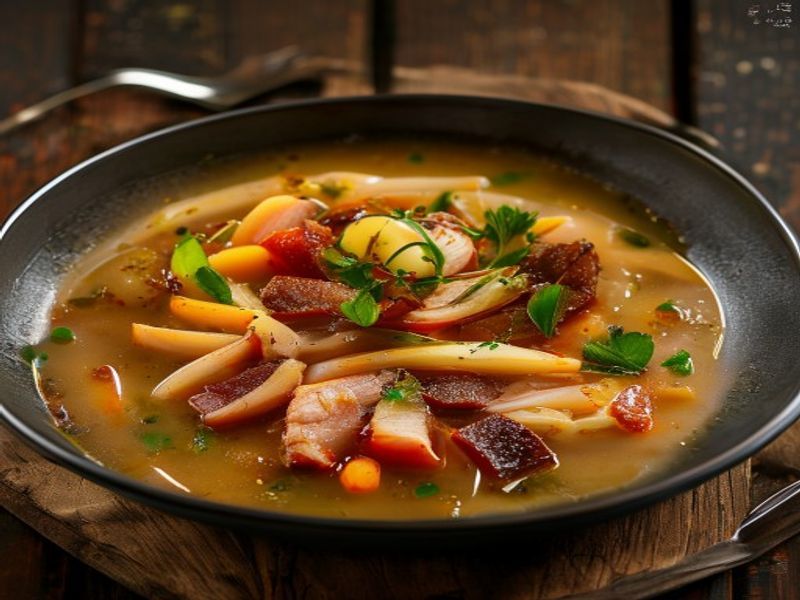
Pork and Vegetables Soup (Asian) delivers a clean, deeply savory broth balanced by tender meat and crisp-tender vegetables. This easy recipe relies on proper ingredient sequencing and controlled heat management rather than complex techniques. The broth builds flavor through a quick aromatic sauté followed by a gentle simmer, ensuring the pork stays moist and the vegetables retain their structural integrity. Designed for home cooks seeking a reliable homemade meal, this family friendly approach requires minimal hands-on time but delivers professional results. Mastering the timing of each component addition is the key to avoiding overcooked vegetables and tough meat. The recipe is structured for intermediate beginners and requires no specialized training. Follow the temperature guidelines and visual cues below to achieve a consistently balanced bowl every time.
What You’ll Need
Ingredients
- Pork: 1.5 pounds (680g) pork tenderloin, trimmed of silver skin and sliced into 1/2-inch (1.25cm) medallions
- Cooking Oil: 2 tablespoons (30ml) neutral oil with a high smoke point (canola or avocado)
- Aromatics: 3 cloves (15g) garlic, thinly sliced; 1-inch (2.5cm) piece fresh ginger, peeled and cut into 1/8-inch matchsticks
- Broth Base: 6 cups (1.4L) low-sodium chicken broth
- Seasoning: 2 tablespoons (30ml) soy sauce; 1 tablespoon (15ml) rice vinegar; 1 teaspoon (5g) fine sea salt
- Vegetables: 1 medium (200g) napa cabbage, cored and cut into 2-inch (5cm) strips; 1 large (180g) carrot, peeled and sliced into 1/8-inch half-moons; 1 cup (100g) fresh shiitake mushrooms, stems removed, caps sliced 1/4-inch thick
- Finishing: 2 scallions (30g), thinly sliced on the bias; 1 teaspoon (5ml) toasted sesame oil
Equipment
- 4-quart heavy-bottomed Dutch oven or stockpot (12-inch diameter base)
- 10-inch chef’s knife and 8-inch flexible slicing knife
- Instant-read digital thermometer [Check Price on Amazon]
- Fine-mesh skimmer or slotted spoon
- Heatproof silicone spatula
Prep Work
Proper mise en place prevents rushed additions that compromise texture. Begin by patting the pork tenderloin completely dry with paper towels. Moisture on the surface will cause the meat to steam rather than gently cook in the broth. Slice the pork across the grain into uniform 1/2-inch medallions. Keep the sliced pork chilled at 38°F (3°C) until the broth reaches the correct temperature. Cold meat added to simmering liquid prevents premature protein denaturation.
Prepare all vegetables before applying heat to the pot. Cut carrots and cabbage into uniform pieces to guarantee even cooking rates. Store prepped vegetables in separate airtight containers in the refrigerator at 35-40°F (2-4°C). Slice garlic and ginger immediately before cooking to preserve volatile aromatic compounds. This entire prep stage takes approximately 15 minutes and can be completed up to 4 hours ahead of time. Do not combine the pork and vegetables during storage, as cross-contamination of raw meat juices and vegetable moisture accelerates spoilage and degrades texture.
Cooking Instructions
- Bloom the Aromatics: Place your 4-quart Dutch oven over medium-high heat. Heat the 2 tablespoons of oil until it reaches 350°F (177°C), which takes approximately 2 minutes. Add the sliced garlic and ginger. Stir constantly for 45 seconds. Watch for the edges to turn pale gold and the oil to become fragrant. Do not exceed 60 seconds, as garlic burns rapidly and turns bitter. Remove the pot from heat for 10 seconds to prevent carryover scorching.
- Build the Broth: Pour in 6 cups of low-sodium chicken broth and 2 tablespoons of soy sauce. Return the pot to medium-high heat and bring to a rolling boil at 212°F (100°C), which requires 4-5 minutes. Once boiling, immediately reduce the burner to medium-low. Maintain a gentle simmer at 185°F (85°C). The surface should show small, steady bubbles breaking every 2-3 seconds, not vigorous rolling. Simmer uncovered for 3 minutes to meld flavors.
- Cook Hard Vegetables: Add the sliced carrots to the simmering broth. Maintain 185°F (85°C) and cook for exactly 4 minutes. The carrots will soften slightly at the edges while retaining a firm center. Overcooking at this stage causes structural collapse in later steps.
- Add Leafy Vegetables and Mushrooms: Stir in the napa cabbage strips and sliced shiitake mushrooms. Continue simmering at 185°F (85°C) for 3 minutes. The cabbage will wilt to half its original volume and turn translucent green. The mushrooms will release moisture and darken slightly. Use a fine-mesh skimmer to remove any foam or impurities that rise to the surface.
- Introduce the Pork: Verify the broth temperature is between 180-185°F (82-85°C). Gently lower the chilled pork medallions into the pot one at a time to prevent temperature drop. Do not stir vigorously. Simmer undisturbed for 5-6 minutes. The pork is done when it turns uniformly opaque white, feels firm to gentle pressure with a spatula, and registers 145°F (63°C) on an instant-read thermometer. Boiling the broth during this stage will squeeze out moisture and create a rubbery texture.
- Finish and Rest: Remove the pot from heat completely. Stir in 1 tablespoon of rice vinegar and 1 teaspoon of toasted sesame oil. The vinegar adds brightness without cooking off. Add the sliced scallions and let the soup rest for 2 minutes. This resting period allows the residual heat to distribute evenly and the proteins to relax, ensuring maximum tenderness.
Pro Tips
Temperature control is the single most critical factor in this recipe. Maintaining a strict 185°F (85°C) simmer prevents the rapid contraction of muscle fibers in the pork, which directly correlates to juiciness. I find that blooming ginger in oil rather than boiling it raw releases significantly more zingerone, the compound responsible for that signature sharp, warming flavor profile. In my experience, adding rice vinegar at the very end preserves its volatile acidity, creating a bright finish that cuts through the natural richness of the pork and broth.
- Substitutions: Pork shoulder can replace tenderloin, but increase simmer time to 25-30 minutes until the meat shreds easily. Substitute napa cabbage with 1.5 cups of baby bok choy, adding it 1 minute later due to faster wilting rates.
- Make-Ahead Strategy: The broth base, carrots, and mushrooms can be cooked together and refrigerated for up to 3 days. Reheat to 185°F (85°C) before adding fresh pork and cabbage. Never freeze the soup with the pork already cooked, as reheating will dry out the lean meat.
- Broth Clarity: Avoid stirring once the pork enters the pot. Agitation emulsifies fat and proteins into the liquid, creating a cloudy appearance. Gentle ladling preserves the clean, restaurant-style presentation.
Serving Suggestions
Portion this soup at 1.5 cups (360ml) of broth with approximately 4 ounces (115g) of pork and vegetables per person. The recipe yields four standard servings. Serve immediately in pre-warmed ceramic bowls to maintain optimal temperature. Pair with 0.5 cups of steamed jasmine rice per portion to absorb the savory broth. For additional texture, offer a side of crispy fried shallots or toasted sesame seeds. A light garnish of fresh cilantro leaves or a few drops of chili oil works well for diners who prefer elevated heat. The soup holds well for 10 minutes at room temperature, making it ideal for family-style service.
FAQ
Can I use frozen vegetables in this recipe?
Frozen carrots and mushrooms work if thawed completely and patted dry first, but they will release additional water. Reduce the broth by 0.5 cups (120ml) to compensate for the extra liquid. Avoid frozen napa cabbage, as the high water content destroys cellular structure during freezing, resulting in a mushy texture that cannot be recovered.
How do I know when the pork is properly cooked?
Visual opacity is your first indicator; raw pork appears pinkish and glossy, while cooked pork is uniformly white and matte. Confirm doneness with an instant-read thermometer inserted into the thickest medallion. The target is 145°F (63°C). At this temperature, the meat remains juicy while meeting food safety standards. Pull the pork at 143°F (61°C) as carryover heat will add the remaining 2 degrees during the resting phase.
Can I prep this soup ahead for a busy weeknight?
Yes. Complete all vegetable prep and slice the pork up to 24 hours in advance. Store components separately in airtight containers at 38°F (3°C). The broth base can be simmered and refrigerated for up to 3 days. When ready to serve, reheat the broth to 185°F (85°C), add the pork and cabbage, and follow the 5-6 minute simmer step. This method preserves the fresh texture and prevents the vegetables from turning gray or waterlogged.
*As an Amazon Associate I earn from qualifying purchases.
发表回复