Introduction
This 20-Minute Pan-Seared Miso-Honey Glazed Salmon with Ginger Scallions delivers restaurant-quality results with minimal hands-on time. The recipe relies on a precise balance of umami-rich white miso, floral honey, and sharp aromatics to create a glossy, caramelized crust while keeping the interior moist. Designed for intermediate home cooks, it teaches fundamental techniques: proper protein drying, controlled pan heat management, and rapid glaze reduction. By focusing on timing and temperature control, this easy weeknight seafood dish transforms simple ingredients into a reliable 20 minute dinner that fits any schedule. The miso honey glazed fish method ensures consistent browning without burning the sugars, while the ginger scallion glaze adds brightness that cuts through the richness of high protein meals. Follow the steps exactly, and you will achieve perfect texture and flavor every time.
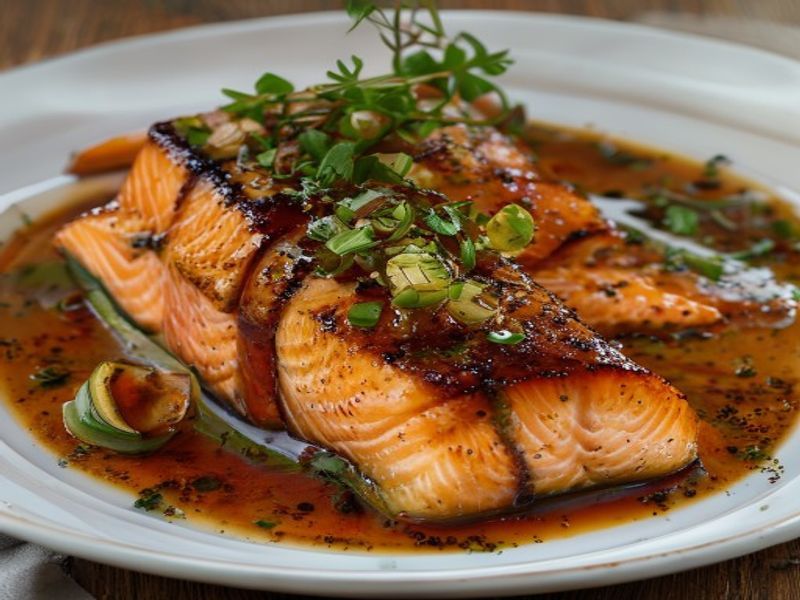
What You’ll Need
Ingredients
- Salmon fillets: 4 portions, 6 ounces (170g) each, skin-on for optimal crispiness and even heat transfer
- Kosher salt: 1.5 teaspoons (9g)
- Freshly ground black pepper: 0.5 teaspoon (1g)
- High-smoke point oil: 2 tablespoons (30ml) avocado or refined grapeseed oil
- White miso paste: 2 tablespoons (36g), preferably shiro miso
- Honey: 2 tablespoons (42g), raw or clover
- Rice vinegar: 1 tablespoon (15ml), unseasoned
- Soy sauce: 1 teaspoon (5ml), low sodium
- Fresh ginger: 1 tablespoon (6g) finely grated
- Scallions: 4 stalks (30g), thinly sliced on a sharp bias, green and white parts separated
- Water: 1 tablespoon (15ml) for glaze thinning
Equipment
- 12-inch heavy-bottomed stainless steel skillet or high-quality non-stick pan (stainless provides superior heat retention and even searing)
- Instant-read thermometer for precise internal temperature tracking [Check Price on Amazon]
- Flexible silicone spatula
- Paper towels for thorough moisture removal
Prep Work
Proper mise en place dictates success for quick dinner ideas like this. Begin by removing the salmon from refrigeration and letting it sit at room temperature for exactly 10 minutes. Cold protein hits a hot pan unevenly, causing the exterior to overcook while the center remains underdone. While the fish warms, thoroughly pat each fillet dry on all sides using fresh paper towels until no surface moisture remains. Surface water creates steam, which prevents the Maillard reaction from occurring. Measure all glaze components into a small bowl and whisk until completely smooth. Separate the scallion whites from the greens. The whites require brief sautéing to soften, while the greens will be added at the end for fresh texture and color. You can prep the glaze and slice the scallions up to 24 hours in advance; store them covered in the refrigerator. Keep the miso mixture chilled until ready to use, as honey and miso degrade if left warm. Ensure your workspace is clear and all tools are within arm’s reach before applying heat.
Cooking Instructions
- Season and Heat the Pan: Sprinkle 1.5 teaspoons kosher salt and 0.5 teaspoon black pepper evenly over both sides of the salmon. Place your 12-inch skillet over medium-high heat and let it warm for exactly 2 minutes. Add 2 tablespoons of avocado oil and heat until it shimmers and reaches approximately 375°F / 190°C. You will see light wisps of smoke. Do not rush this step; a properly preheated pan ensures immediate searing and prevents sticking.
- Sear the Salmon: Lay the fillets skin-side down, starting from the center of the pan and pressing away from you to avoid oil splatter. Press each fillet gently with a spatula for 3 seconds to ensure full skin contact. Sear undisturbed for exactly 3.5 minutes. You will hear a steady, aggressive sizzle. If the sound becomes quiet, the pan is too cool; if the oil smokes heavily, reduce heat slightly. The skin should release naturally when it forms a rigid, golden brown crust. Flip carefully and sear the flesh side for exactly 1 minute.
- Apply Glaze and Finish: Reduce heat to medium (325°F / 163°C). Pour the prepared miso-honey mixture evenly over the fillets. Immediately scatter the scallion whites around the pan. Cook for 2 minutes, tilting the pan and spooning the bubbling glaze continuously over the fish. The sauce will thicken and coat the back of a spoon. Watch closely; honey burns rapidly above 350°F / 177°C. Once the internal temperature reaches 125°F / 52°C, remove the pan from heat. The carryover heat will finish cooking to the target 140°F / 60°C during resting.
- Rest and Garnish: Transfer the salmon to a warm plate using a wide spatula. Let it rest for exactly 3 minutes. This allows muscle fibers to relax and redistribute juices. Sprinkle the reserved scallion greens over the glazed fillets. Serve immediately.
Common Mistake to Avoid: Moving the salmon too early. Flipping before the crust releases tears the skin and ruins presentation. Wait for the natural release and audible reduction in sizzle intensity.
Pro Tips
- Temperature Control is Everything: I find that most home cooks struggle with glaze application because they keep the heat too high. Lowering the pan to medium when adding honey prevents bitter caramelization and ensures a glossy, even coating without scorching.
- Substitutions That Work: If white miso is unavailable, yellow miso works with identical ratios. For a lower-sodium option, reduce soy sauce to 0.5 teaspoon and add 0.5 teaspoon of water. Maple syrup can replace honey, though it yields a slightly less viscous finish.
- Make-Ahead Strategy: While the sear requires fresh execution, the glaze can be doubled and stored in a sealed container for up to 5 days. Warm it gently in a microwave at 50% power for 20 seconds before use to restore fluidity.
- Texture Check: In my experience, relying solely on time leads to inconsistent results. Use an instant-read thermometer inserted into the thickest part of the fillet. Pull at 125°F / 52°C for medium-rare texture, or 135°F / 57°C if you prefer fully opaque, flaky meat. The flesh should transition from translucent pink to opaque coral at the edges.
Serving Suggestions
Each 6-ounce portion provides approximately 34 grams of lean protein, making this an ideal anchor for balanced healthy salmon recipes. Pair with quick-cooking carbohydrates that absorb excess glaze, such as 0.5 cup cooked jasmine rice or 4 ounces of soba noodles tossed in neutral oil. Add a crisp vegetable component like 1 cup blanched bok choy or roasted asparagus at 425°F / 218°C for 12 minutes to contrast the rich umami profile. Serve family-style or individually plated. Drizzle any remaining pan sauce over the base before placing the salmon on top to prevent the crust from softening prematurely.
Frequently Asked Questions
Can I use frozen salmon fillets?
Yes, but only if fully thawed. Transfer frozen fillets to the refrigerator 24 hours before cooking. Once thawed, remove them from packaging, pat dry thoroughly, and proceed with the recipe. Never cook salmon directly from frozen, as ice crystals create steam pockets that prevent crust formation and result in uneven cooking.
How do I know when it’s done?
Visual cues and internal temperature are your most reliable indicators. The flesh should transition from deep translucent pink to opaque light pink. When pressed gently with a fork, it will separate along the natural muscle lines (flaking). The instant-read thermometer should register 145°F / 63°C at the center for FDA guidelines, though I recommend pulling at 125°F / 52°C to 135°F / 57°C to account for carryover cooking and preserve moisture.
Can I prep this ahead and reheat?
Salmon reheats poorly if subjected to high heat again, which dries out the protein. If meal prepping, store the cooled salmon in an airtight container for up to 2 days. Reheat gently in a covered container at 300°F / 149°C for 8 minutes, or microwave at 30% power in 20-second intervals. Expect slight texture changes, but the flavor profile remains intact.
What if I don’t have a 12-inch skillet?
A 10-inch skillet works for 2 fillets, while a 12-inch model accommodates 4 without crowding. Overlapping fillets traps steam and steams the skin instead of crisping it. If your pan is smaller, cook in two batches. Wipe the pan between batches to remove burnt miso residue, which will otherwise burn during the second round.
*As an Amazon Associate I earn from qualifying purchases.
发表回复