Introduction
This Salmon and Rice Stir Fry (Mediterranean) delivers a balanced, high-protein meal in under 25 minutes by combining precise heat management with bright, acid-forward ingredients. The technique relies on two critical steps: searing salmon to lock in moisture while rendering the skin crisp, then rapidly stir-frying chilled rice with aromatics to prevent clumping and achieve a light, separated texture. The Mediterranean profile—built on extra virgin olive oil, lemon, cherry tomatoes, and briny olives—cuts through the richness of the fish while keeping the dish light. This is an easy recipe designed for home cooks who want a homemade, quick dinner without sacrificing restaurant-level execution. The method works because each component is treated according to its thermal properties, ensuring the salmon stays tender and the rice develops a subtle toasted finish. Skill level is beginner to intermediate, requiring only basic knife work and controlled stovetop heat.
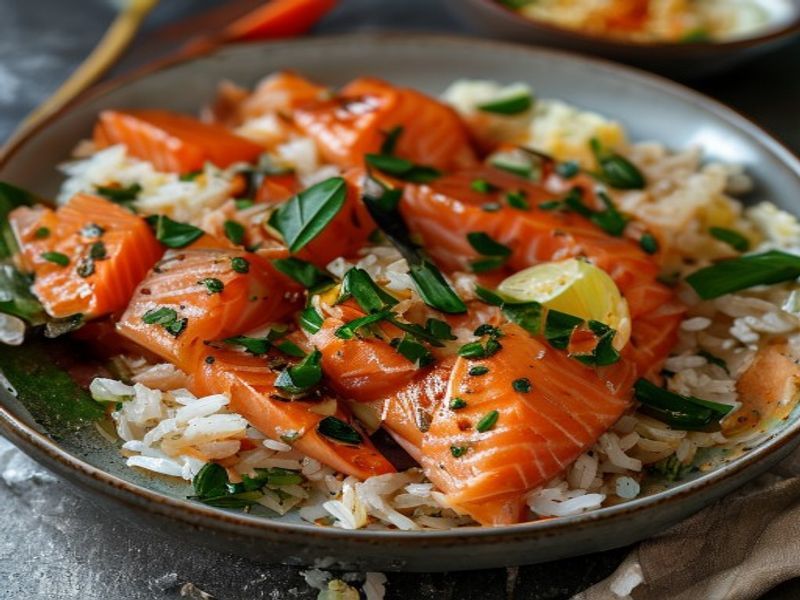
What You’ll Need
Ingredients
- Salmon fillets: 4 fillets, 6oz (170g) each, skin-on for structural integrity and crisp rendering
- Long-grain white rice: 2 cups (380g) cooked, thoroughly chilled for at least 2 hours
- Extra virgin olive oil: 2 tablespoons (30ml), divided
- Cherry tomatoes: 1 cup (150g), halved
- Kalamata olives: 1/4 cup (40g), pitted and roughly chopped
- Red onion: 1/2 medium (80g), finely diced
- Garlic: 3 cloves (9g), minced
- Lemon: 1 medium, for 2 tablespoons (30ml) fresh juice and 1 teaspoon finely grated zest
- Fresh dill: 1 tablespoon (3g), finely chopped
- Feta cheese: 2 ounces (55g), crumbled
- Kosher salt: 1 teaspoon (6g), plus additional to taste
- Black pepper: 1/2 teaspoon freshly cracked
Equipment
- 12-inch carbon steel or heavy-gauge stainless steel skillet (high heat retention is critical)
- Instant-read digital thermometer [Check Price on Amazon]
- Microplane zester
- Flexible fish spatula
- Sharp 8-inch chef’s knife and stable cutting board
Prep Work
Proper mise en place prevents thermal shock and ensures consistent cooking. Start by patting the salmon fillets completely dry with paper towels; surface moisture will steam the skin instead of crisping it. Season both sides evenly with 3/4 teaspoon of the kosher salt and 1/4 teaspoon black pepper, then let them rest at room temperature for 12-15 minutes. Cold fish hitting hot oil drops pan temperature too rapidly, ruining the sear. Dice the red onion, mince the garlic, and halve the tomatoes. Place all vegetables, olives, dill, lemon juice, and lemon zest in separate small bowls within arm’s reach of the stove. The rice must be cold straight from the refrigerator; warm rice releases excess starch and becomes pasty when stir-fried. If using freshly cooked rice, spread it on a baking sheet and refrigerate uncovered for 45 minutes to dehydrate the surface. Total prep time: 18 minutes.
Cooking Instructions
- Heat the oil: Place the 12-inch skillet over medium-high heat. Add 1 tablespoon of extra virgin olive oil. Heat until the oil reaches approximately 375°F / 190°C. You will know it is ready when the oil shimmers and begins to produce a light, steady smoke. If the oil smokes heavily, remove from heat for 30 seconds to cool.
- Sear the salmon: Carefully place the salmon fillets skin-side down, pressing gently with the spatula for 5 seconds to prevent curling. Cook undisturbed for 3 minutes. Do not move the fish; a golden-brown crust will form naturally. Flip the fillets and cook for 1.5-2 minutes on the flesh side. The internal temperature should reach 135°F / 57°C for medium doneness. Remove immediately to a clean plate and let rest for 5 minutes. Carryover heat will push the final temperature to 145°F / 63°C.
- Sauté aromatics: Reduce heat to medium. Add the remaining 1 tablespoon of olive oil to the same pan. Add the diced red onion and cook for 2 minutes until translucent and softened at the edges. Add the minced garlic and stir for 30 seconds until fragrant. Garlic burns rapidly at this stage; watch for a pale golden color, not brown.
- Build the vegetable base: Increase heat to medium-high. Add the halved cherry tomatoes and chopped olives. Cook for 2 minutes, tossing constantly. The tomatoes will blister and release their juices, creating a light emulsion with the oil. This step builds the foundation of the Mediterranean flavor profile.
- Stir-fry the rice: Add the chilled rice directly to the center of the pan. Use the spatula to break apart any clumps. Toss and stir continuously for 3-4 minutes. Listen for a light sizzling sound and watch for the rice grains to separate and develop a faint toasted edge. If the pan looks dry, add 1 tablespoon of water to create steam and prevent scorching.
- Combine and finish: Remove the rested salmon from the plate. Use the spatula to gently flake it into 1-inch pieces, discarding the skin. Fold the salmon, lemon juice, lemon zest, and fresh dill into the rice mixture. Cook for 1 minute just to warm the fish. Remove from heat. Sprinkle crumbled feta and the remaining 1/4 teaspoon kosher salt over the top. Toss lightly to distribute without breaking down the cheese.
Pro Tips
- Rice hydration control: Day-old rice contains 15-20% less surface moisture than freshly cooked rice. This is the primary factor in achieving that clean, separate grain texture during high-heat stir-frying.
- Heat management: I find that most home cooks overcrowd the pan, which drops the temperature below the Maillard reaction threshold. Cook in two batches if your skillet is smaller than 12 inches.
- Acid timing: Add lemon juice and zest off direct heat or at the very end. Prolonged exposure to high heat volatilizes citrus aromatics, leaving behind only flat acidity. In my experience, finishing with acid preserves the bright, layered flavor that defines Mediterranean cooking.
- Substitutions: Quinoa or cauliflower rice work well for low-carb variations. Capers (1 tablespoon, rinsed) can replace olives if you prefer a sharper brine. Avoid using low-fat salmon; the fat content is necessary for moisture retention during quick searing.
Serving Suggestions
Plate immediately while the rice is still hot and the feta is slightly softened but intact. Serve with extra lemon wedges on the side for adjustable acidity. This recipe yields 4 generous portions, with approximately 1.5 cups per serving. Pair with a simple bitter green salad (arugula or radicchio dressed with 1 teaspoon olive oil and a pinch of flaky salt) to balance the richness. A crisp, dry white wine such as Assyrtiko or Vermentino complements the briny and citrus notes without overpowering the fish. Store leftovers in an airtight container in the refrigerator for up to 2 days; reheat gently in a covered skillet over low heat with 1 tablespoon of water to restore moisture.
FAQ
Can I use frozen salmon for this recipe?
Yes, but thaw it completely in the refrigerator for 24 hours before cooking. Never cook from frozen, as the exterior will overcook while the center remains raw, and the excess water will prevent proper searing. After thawing, dry the fillets thoroughly and season as directed.
How do I know when the salmon is perfectly cooked?
Use an instant-read thermometer inserted into the thickest part of the fillet. Pull it from the pan at 135°F / 57°C. The flesh will transition from translucent pink to opaque pink and will flake easily with gentle pressure from a fork. If it turns chalky white or separates into dry flakes, it has exceeded 150°F / 65°C and is overcooked.
Can I prep this dish entirely ahead of time?
You can prep all ingredients up to 24 hours in advance and store them in sealed containers in the refrigerator. However, do not cook the salmon ahead and reheat it later, as the delicate protein will dry out. For meal prep, cook the rice and vegetables, store them, then quickly sear fresh salmon when ready to serve and combine.
Why does my stir-fried rice turn mushy?
Mushy rice results from using warm, freshly cooked rice or insufficient pan heat. Cold rice has retrograded starch that holds its shape. Ensure your skillet is fully preheated before adding the rice, and avoid adding excess liquid during the stir-fry stage. Continuous movement and high heat are required to toast the exterior while keeping the interior tender.
*As an Amazon Associate I earn from qualifying purchases.
发表回复