Introduction
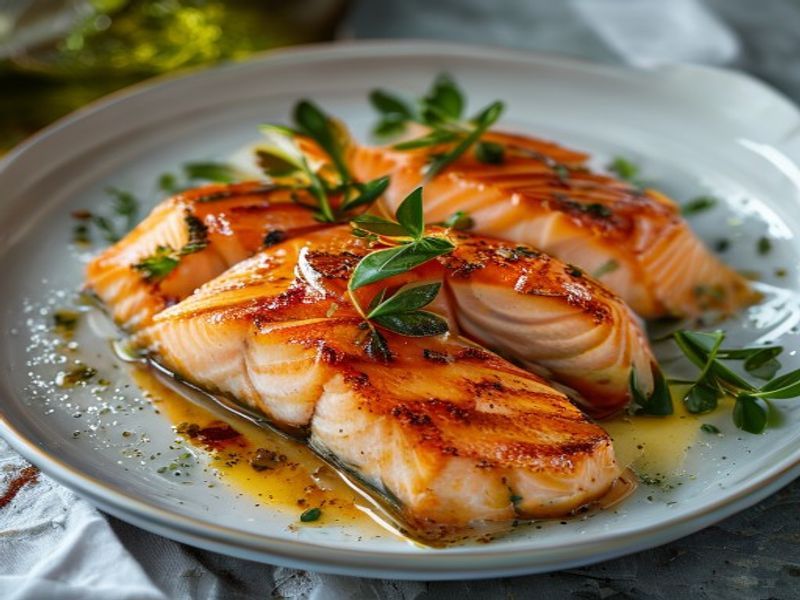
Air fryer salmon delivers restaurant-quality results through precise convection cooking. The rapid, circulating hot air creates a lightly caramelized exterior while preserving the delicate, buttery interior that defines premium seafood. This method eliminates the guesswork of stovetop searing and oven baking by providing consistent, direct heat transfer. The recipe is designed for beginner to intermediate cooks who want a reliable healthy dinner without sacrificing technique. Mastering this preparation teaches proper moisture management, temperature control, and carryover cooking principles. You will achieve a fillet that flakes cleanly, retains moisture, and develops a subtle crust in under ten minutes. The air fryer’s compact chamber concentrates heat efficiently, making it ideal for portion-controlled seafood.
What You’ll Need
Ingredients
- 4 salmon fillets: 6 ounces each, center-cut, skin-on (skin provides structural integrity and prevents curling during high-heat cooking)
- 1.5 tablespoons extra-virgin olive oil: high smoke point oil that promotes even browning
- 1 teaspoon kosher salt: Diamond Crystal preferred for accurate volumetric measurement
- 0.5 teaspoon freshly cracked black pepper: coarse grind for controlled spice distribution
- 0.5 teaspoon smoked paprika: adds depth without overwhelming the natural fish flavor
- 0.25 teaspoon garlic powder: dried form prevents burning at high temperatures
Equipment
- 5.5-quart basket-style air fryer with adjustable temperature control
- Instant-read digital thermometer (range 0°F to 500°F / -18°C to 260°C) [Check Price on Amazon]
- Silicone basting brush with 8-inch handle
- Paper towels (unprinted, food-safe grade)
- Small mixing bowl (8-ounce capacity)
- 12-inch rimmed baking sheet (for resting and carryover cooking)
Prep Work
Proper preparation determines whether your salmon steams or sears. Remove the fillets from refrigeration and place them on a clean surface for exactly 10 minutes. This brings the protein to approximately 60°F / 16°C, which prevents a cold center from causing uneven cooking. Pat each fillet thoroughly with paper towels on both sides until the surface feels completely dry to the touch. Moisture creates steam, which inhibits the Maillard reaction responsible for browning. In a small mixing bowl, combine 1 teaspoon kosher salt, 0.5 teaspoon black pepper, 0.5 teaspoon smoked paprika, and 0.25 teaspoon garlic powder. Whisk until the spices are evenly distributed without clumping. Brush 1.5 tablespoons of olive oil evenly across the top and sides of each fillet, avoiding the skin side. Season generously with the spice blend, pressing gently so the mixture adheres to the oiled surface. You can complete this seasoning stage up to 24 hours in advance. Store the seasoned fillets uncovered on a wire rack set over a baking sheet in the refrigerator. Air circulation during this window further dries the surface, which guarantees superior crust formation.
Cooking Instructions
- Preheat the air fryer to 400°F / 204°C for 3 minutes. Preheating establishes immediate thermal shock upon loading. Without this step, the basket will absorb initial heat, dropping the temperature and causing the salmon to sweat instead of sear. The heating element should glow red and the fan should run at maximum speed before you open the drawer.
- Arrange fillets skin-side down in a single layer. Leave exactly 0.5 inches of space between each piece. Overcrowding blocks airflow channels, which creates hot spots and uneven cooking. Do not line the basket with foil or parchment at this stage, as it restricts bottom air circulation and prevents the skin from crisping.
- Cook for 7 to 9 minutes undisturbed. Set the timer for 7 minutes. At this temperature, the circulating air transfers heat rapidly through the flesh. You will hear a faint sizzle and smell toasted paprika. Do not open the drawer before the 6-minute mark, as sudden temperature drops interrupt protein coagulation.
- Check internal temperature at the 7-minute mark. Insert an instant-read thermometer horizontally into the thickest part of the fillet. Target 125°F / 52°C for medium-rare texture or 130°F / 54°C for medium. Remove the fillets immediately when they reach these thresholds. The residual heat will raise the temperature by 3 to 5 degrees during resting.
- Transfer to a rimmed baking sheet and rest for 3 minutes. This resting period allows muscle fibers to relax and reabsorb expelled juices. The edges will turn fully opaque while the center transitions from translucent pink to a uniform peach tone. The skin will pull away slightly from the flesh, indicating complete rendering of the subcutaneous fat layer.
Common mistakes to avoid: Flipping the fillets during cooking tears the delicate structure and releases moisture onto the basket floor. Opening the air fryer door repeatedly causes temperature fluctuations that extend cooking time by up to 40%. Skipping the thermometer leads to dry, chalky flesh because visual cues alone cannot accurately measure doneness in proteins with varying thickness.
Pro Tips
In my experience, the difference between good and exceptional air-fried salmon comes down to moisture control and timing precision. I find that lightly spraying the basket with high-heat cooking oil before loading prevents the skin from sticking without compromising airflow. If you prefer a glaze, mix 2 tablespoons maple syrup with 1 tablespoon soy sauce and brush it over the fillets during the final 2 minutes of cooking. Adding sugar-based sauces earlier causes rapid caramelization and burning at 400°F / 204°C. For meal prep, fully cooked salmon holds safely in airtight containers for up to 3 days. Reheat gently at 275°F / 135°C for 6 minutes to preserve texture. Avoid microwaving, as it denatures proteins aggressively and creates a rubbery mouthfeel.
Serving Suggestions
Balance the rich, fatty profile of salmon with bright, acidic accompaniments. Serve each 6-ounce portion alongside 0.75 cups cooked quinoa, 4 ounces roasted asparagus tossed with lemon zest, and a 2-tablespoon dollop of Greek yogurt whisked with fresh dill and cracked pepper. The dish scales linearly, but never exceed three batches in a standard 5.5-quart unit to maintain proper convection. For a complete healthy dinner, aim for a 1:1:1 ratio of protein, complex carbohydrate, and non-starchy vegetables on each plate. Garnish with 1 teaspoon of flaky sea salt and a 0.5-inch lemon wedge per serving to cut through the natural oils.
FAQ
Can I use frozen salmon directly in the air fryer?
No. Cooking from frozen creates a severe temperature gradient where the exterior burns before the center reaches a safe internal temperature. Thaw fillets in the refrigerator for 12 to 18 hours until they reach 38°F / 3°C. Pat them aggressively dry after thawing, as ice crystals create excess surface moisture. Add 2 to 3 minutes to the standard cooking time if the fillets are thicker than 1.25 inches.
How do I know when it is done without a thermometer?
While a thermometer is the only reliable method, visual and tactile cues provide secondary verification. Gently press the thickest part of the fillet with a fork tine or your finger. Properly cooked salmon will offer slight resistance before yielding, similar to pressing the tip of your nose. The flesh will separate cleanly along the natural fat lines when twisted slightly. The color will shift from translucent, deep pink to opaque, pale pink throughout. If the center appears glossy and gel-like, it needs 1 additional minute. If it appears dry and fibrous, it has exceeded optimal doneness.
Can I prep this ahead for weeknight dinners?
Yes. Season the dried fillets with oil and spices, then place them uncovered on a wire rack in the refrigerator for up to 24 hours. This dry-brining technique draws out additional moisture and concentrates flavor. When ready to cook, let the fillets sit at room temperature for 10 minutes, then load them directly into the preheated air fryer. Do not cook more than 1 hour after removing from refrigeration to maintain food safety standards.
*As an Amazon Associate I earn from qualifying purchases.
发表回复