Sheet-Pan Roasted Maple-Miso Pork Tenderloin with Caramelized Shallots
This sheet pan pork tenderloin delivers restaurant-quality results with minimal active time. The combination of fermented white miso paste and pure maple syrup creates a deeply savory, glossy glaze that caramelizes perfectly during high-heat roasting. Paired with a rich caramelized shallot topping, this maple miso pork recipe transforms a notoriously lean cut into a juicy pork tenderloin with exceptional depth. Designed as an easy weeknight dinner, it requires only one heavy-duty baking sheet and falls squarely into the realm of reliable 30 minute meals. Ideal for beginners and home cooks seeking straightforward family dinner ideas, this method relies on precise temperature control and proper resting to guarantee consistent, quick roasted meals without guesswork.
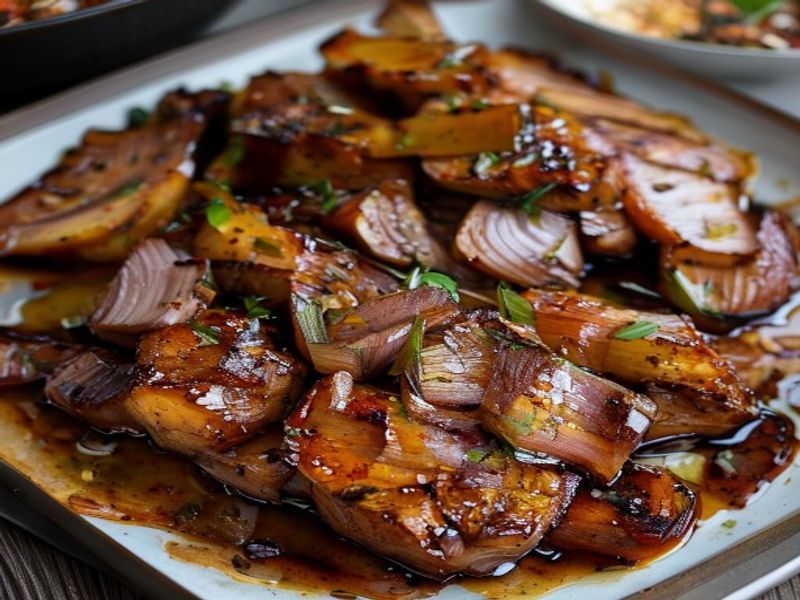
What You’ll Need
- Pork tenderloin: 1.5 pounds total (typically two 12-ounce tenderloins), fully trimmed of silverskin and excess fat
- White miso paste: 3 tablespoons (choose mild, fermented white shiro miso; red miso will overpower the dish)
- Pure maple syrup: 2 tablespoons (Grade A Amber or Dark Robust provides optimal caramelization and viscosity)
- Neutral high-heat oil: 2 tablespoons (avocado or grapeseed oil, divided for shallots and pan)
- Shallots: 3 large bulbs, peeled and sliced into uniform ¼-inch half-moons
- Fresh thyme: 1 tablespoon leaves, finely chopped
- Rice vinegar: 1 teaspoon (unseasoned, to balance fermentation and sweetness)
- Kosher salt: 1.5 teaspoons, divided
- Black pepper: ½ teaspoon, freshly cracked
Equipment: 18×13-inch half-sheet pan, heavy-duty rimmed baking sheet, digital instant-read thermometer, small mixing bowl, silicone basting brush, chef’s knife.
Prep Work
Proper preparation ensures even cooking and maximum glaze adhesion. Remove the pork from refrigeration exactly 20 minutes before roasting to take the chill off. Cold meat hitting a hot pan causes immediate temperature shock, leading to uneven cooking and poor browning. Pat the tenderloins completely dry with paper towels; residual moisture creates steam, which prevents the Maillard reaction from occurring. In a small bowl, whisk together 3 tablespoons white miso paste, 2 tablespoons maple syrup, 1 teaspoon rice vinegar, and ½ teaspoon black pepper until completely smooth. The mixture should coat the back of a spoon without lumps. Toss the sliced shallots with 1 tablespoon neutral oil and ½ teaspoon kosher salt until evenly coated.
You can prep the glaze and slice the shallots up to 2 hours ahead. Store the glaze covered at room temperature to keep it pliable, and keep the shallots refrigerated in an airtight container. Trim the pork and pat it dry up to 4 hours ahead; wrap tightly in parchment paper and refrigerate until 20 minutes before cooking.
Cooking Instructions
- Preheat and prepare the pan: Set your oven to 425°F / 220°C and position a rack in the center. Place the half-sheet pan in the oven during preheating to ensure the metal is hot. A hot pan jump-starts caramelization the moment the ingredients make contact.
- Apply initial seasoning and glaze: Season the dried pork evenly with 1 teaspoon kosher salt. Using a silicone pastry brush, coat each tenderloin with exactly half of the miso-maple glaze. Reserve the remaining glaze. The thin initial layer acts as a flavor base and prevents the sugars in the maple syrup from burning during the first roast phase.
- Arrange and roast: Carefully remove the hot pan from the oven. Place the pork and tossed shallots on the same sheet, spacing them at least 2 inches apart. Crowding traps moisture and steams the shallots instead of caramelizing them. Roast for 15 minutes undisturbed. At the 12-minute mark, the shallots will soften and the pork exterior will turn opaque and slightly tacky.
- Glaze and continue roasting: Remove the pan. Brush the reserved glaze evenly over the pork. Gently flip the shallots to expose raw edges. Return to the oven for 10-12 minutes. Watch closely as the glaze bubbles and tightens. The shallots should collapse into dark, jammy clusters with charred edges. The pork will develop a deep mahogany crust.
- Check doneness and remove: Insert your instant-read thermometer into the geometric center of the thickest tenderloin. Remove the pan immediately when the internal temperature reaches 140°F / 60°C. The residual heat will safely carry it to the USDA-recommended 145°F / 63°C. If the pork hits 145°F / 63°C in the oven, it will be overcooked and dry.
- Rest and slice: Transfer the pork to a cutting board. Let it rest undisturbed for 8 minutes. Do not tent with foil; trapped steam softens the crust. Slice diagonally into ½-inch medallions. You will see clear, slightly viscous juices and a pale, uniform pink center. Spoon the pan-roasted shallots and their accumulated juices directly over the sliced meat.
Pro Tips
I find that scoring the surface of the tenderloin in a shallow crosshatch pattern (no deeper than ⅛ inch) before applying the glaze dramatically increases surface area and flavor penetration. In my experience, the single biggest mistake home cooks make with lean pork is skipping the rest; cutting into hot meat forces the internal juices to flood out immediately, leaving the meat stringy and dry. If your miso paste is overly dense, warm it in a microwave-safe bowl for exactly 10 seconds to improve whisking consistency without killing the beneficial fermentation enzymes. For substitutions, chickpea miso works well for a soy-free version, though you will need to add an extra ½ teaspoon of salt to match the sodium profile.
Serving Suggestions
This recipe yields four 6-ounce portions, making it ideal for standard family dinner ideas. Serve alongside roasted Brussels sprouts, buttered egg noodles, or a sharp arugula salad dressed with lemon juice and olive oil. The acidity in the greens and the starch from the noodles balance the rich umami-sweet profile. The caramelized shallot topping functions as a built-in pan sauce, eliminating the need for additional gravies. Reserve 10 minutes for plating to maintain the temperature contrast between the hot meat and room-temperature accompaniments.
FAQ
Can I use frozen pork tenderloin?
No. Thaw frozen pork completely in the refrigerator for 24-36 hours before cooking. Roasting from frozen causes severe temperature gradients; the exterior will overcook and dry out while the center remains raw. The glaze will also fail to adhere to the thawing, wet surface.
How do I know when it’s done?
Rely strictly on a calibrated digital thermometer. The meat should register exactly 140°F / 60°C when removed from the oven. Visually, the pork will feel firm but retain slight elasticity when pressed with tongs. The exterior will be deeply browned, and the internal color will transition from translucent pink to a uniform, opaque pale pink with clear juices.
Can I prep this ahead for busy weeknights?
Yes. Slice the shallots and whisk the glaze up to 48 hours in advance. Store the glaze covered at room temperature and keep the shallots refrigerated. Keep the pork trimmed, dried, and refrigerated. Assemble directly on the hot sheet pan and roast immediately. Do not marinate longer than 12 hours, as the salt in the miso will begin to cure and toughen the lean muscle fibers.
*As an Amazon Associate I earn from qualifying purchases.
发表回复