Introduction
This cast iron frittata recipe delivers a perfectly balanced butternut squash breakfast with minimal hands-on time and maximum structural integrity. The heavy-gauge cast iron skillet provides superior heat retention, allowing the egg custard to set evenly from the bottom up while developing a crisp, golden crust that releases cleanly. The sage apple cider glaze introduces a bright, sweet-tart finish that cuts through the richness of the dairy and eggs, creating a harmonious flavor profile ideal for easy vegetarian brunch service. Designed for intermediate home cooks, this dish relies on precise temperature control, accurate ingredient ratios, and proper resting periods rather than advanced culinary techniques. It functions equally well as a cozy breakfast idea for weekend mornings or a reliable make ahead egg dish for weekday meal prep. By following the exact measurements, thermal guidelines, and visual cues outlined below, you will achieve consistent, restaurant-quality results that hold their shape when sliced and maintain optimal moisture levels.
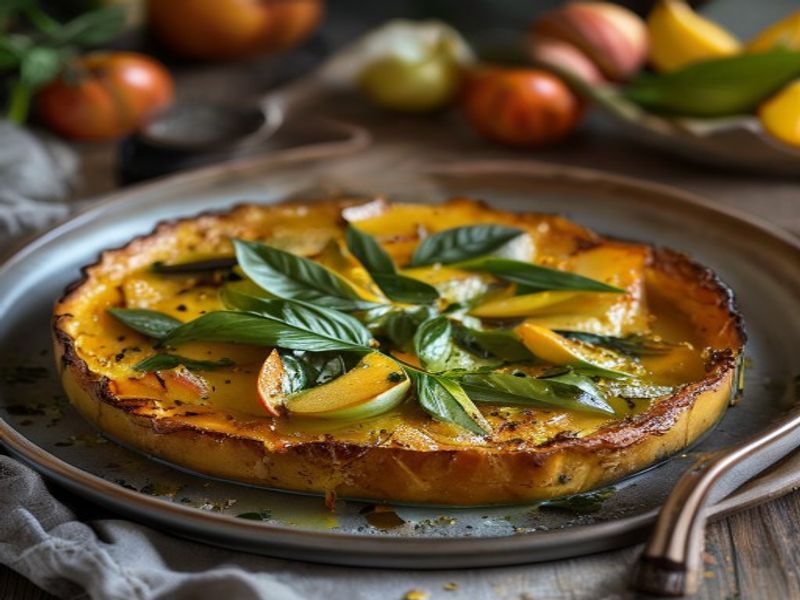
What You’ll Need
Ingredients
- Butternut squash: 1.5 pounds (approx. 1 medium), peeled, seeded, and diced to 1/2-inch cubes. Select squash that feels dense for its size with uniform tan skin and no soft spots.
- Yellow onion: 1 medium (6 ounces), finely diced. Vidalia or Spanish onions provide optimal sugar content for proper caramelization.
- Fresh sage: 2 tablespoons finely chopped leaves for the base, plus 12 whole leaves reserved for the glaze reduction.
- Eggs: 8 large eggs, refrigerated. Cold eggs incorporate more smoothly with dairy and delay premature coagulation during the stovetop phase.
- Whole milk: 1/2 cup. Provides necessary fat for a tender crumb without masking the squash.
- Gruyère cheese: 3 ounces (3/4 cup), freshly grated. Avoid pre-shredded varieties, which contain cellulose that disrupts protein melting.
- Olive oil: 2 tablespoons, divided. Use standard olive oil for sautéing and extra-virgin for roasting.
- Unsalted butter: 2 tablespoons, chilled.
- Apple cider: 3/4 cup, 100% pure and unfiltered. Do not substitute with sweetened cider or apple juice.
- Apple cider vinegar: 1 tablespoon.
- Kosher salt: 1 teaspoon total (1/2 teaspoon for squash, 1/2 teaspoon for eggs).
- Freshly cracked black pepper: 1/2 teaspoon.
Equipment
- 12-inch cast iron skillet (oven-safe handle, rated to 500°F / 260°C) [Check Price on Amazon]
- Rimmed baking sheet (half-sheet size) for squash roasting
- Instant-read digital thermometer for precise protein doneness [Check Price on Amazon]
- Medium wire whisk and heatproof silicone spatula
- 1-quart saucepan for glaze reduction
Prep Work
Proper mise en place prevents overcooking and ensures uniform texture throughout the frittata. Execute these steps before applying any heat:
- Squash preparation: Dice the 1.5 pounds of butternut squash into exact 1/2-inch cubes. Uniform sizing guarantees simultaneous cooking and prevents some pieces from turning mushy while others remain hard. Toss with 1 tablespoon olive oil and 1/2 teaspoon kosher salt. Spread in a single layer on a rimmed baking sheet. You can prep this up to 24 hours in advance; store covered in the refrigerator and bring to room temperature (68°F / 20°C) before roasting to ensure proper Maillard browning.
- Egg base: In a large mixing bowl, whisk 8 large eggs, 1/2 cup whole milk, 1/2 teaspoon kosher salt, and 1/2 teaspoon black pepper. Whisk continuously for exactly 60 seconds to fully integrate the dairy and trap air bubbles, which expands during baking for a lighter structure. Cover tightly and refrigerate until the squash finishes roasting. Keep below 40°F / 4°C until ready to combine.
- Aromatics and cheese: Finely dice the 6-ounce onion. Finely chop 2 tablespoons of fresh sage. Grate the 3 ounces of Gruyère immediately before assembly. Keep these components separated to maintain distinct flavor layers and prevent the cheese from clumping prematurely.
- Glaze components: Combine 3/4 cup apple cider, 1 tablespoon apple cider vinegar, and 12 whole sage leaves in a prep bowl. Chill until the frittata enters the oven.
Cooking Instructions
- Roast the squash: Preheat your oven to 400°F / 205°C. Place the prepared squash on the center rack and roast for 20-22 minutes. What to watch for: The cubes should develop deep golden-brown edges and yield to gentle fork pressure without collapsing. Remove from oven and set aside. Why it matters: Pre-roasting drives off approximately 30% of the squash’s natural water content, which prevents a wet, broken frittata base.
- Sauté aromatics: Position the 12-inch cast iron skillet over medium heat. Add 1 tablespoon olive oil and the diced onion. Cook for 5-6 minutes, stirring every 60 seconds, until the onion becomes translucent and releases a sweet aroma. Add 2 tablespoons chopped sage and cook for exactly 30 seconds until the oil turns slightly green and fragrant. Remove from heat and spread evenly across the skillet floor.
- Assemble the base: Re-whisk the chilled egg mixture for 15 seconds to re-emulsify. Gently fold in the roasted squash and 3/4 cup grated Gruyère. Pour the entire mixture over the onion layer in the skillet. Tap the skillet firmly against the counter 3 times to release trapped air pockets and settle the ingredients into an even plane.
- Stovetop set: Return the skillet to medium-low heat (300°F / 150°C surface temperature). Cook completely undisturbed for 6-7 minutes. Visual cues: The outer 1.5 inches will turn opaque and pull slightly away from the pan walls, while the center remains gently jiggly. Common mistake: Increasing heat to accelerate setting causes the bottom proteins to contract too quickly, squeezing out moisture and creating a rubbery layer. If the bottom browns before 5 minutes, reduce heat to low immediately.
- Bake to finish: Transfer the skillet directly to the 400°F / 205°C oven. Bake for 12-14 minutes. Begin checking at the 10-minute mark. Doneness indicators: The center should spring back when lightly pressed, and an instant-read thermometer inserted into the thickest section must read 160°F / 71°C. A paring knife inserted near the center should emerge clean, not wet with raw egg. Remove from the oven and rest on a heatproof surface for exactly 5 minutes. This resting period allows residual heat to finish setting the center and relaxes the egg proteins for cleaner slicing.
- Reduce the glaze: While the frittata rests, pour 3/4 cup apple cider and 1 tablespoon apple cider vinegar into a 1-quart saucepan over medium-high heat. Add the 12 whole sage leaves. Bring to a vigorous boil, then reduce to medium-low. Simmer uncovered for 8-10 minutes until the volume reduces by half (approximately 1/2 cup) and coats the back of a spoon. Watch for: A syrupy consistency that leaves a clear trail when a spatula drags through it. Remove from heat, discard sage leaves, and whisk in 2 tablespoons chilled unsalted butter until fully emulsified and glossy. Overreduction will create a bitter, overly acidic syrup that overpowers the eggs.
- Finish and slice: Run a thin offset spatula around the frittata edge to ensure clean release. Slice directly in the skillet into 8 equal wedges. Drizzle 2 tablespoons of warm glaze over each portion. Serve immediately while the crust remains crisp.
Pro Tips
- Thermal management: In my experience, the difference between a dry, overbaked frittata and a custardy slice comes down to strict adherence to the resting phase. I find that letting the skillet sit undisturbed for exactly 5 minutes after removing it from the oven allows the internal temperature to equalize without continuing to cook, which preserves the delicate emulsion.
- Effective substitutions: If Gruyère is unavailable, aged white cheddar or fontina provide comparable fat-to-protein ratios and melt similarly. Avoid low-fat or pre-shredded cheeses, as they release excessive whey and break the custard structure. For gluten free brunch service, this recipe is naturally compliant; simply verify that your apple cider and cheese labels confirm no cross-contamination.
- Make-ahead execution: You can fully assemble the raw egg-squash-cheese mixture up to 12 hours before cooking. Cover tightly with plastic wrap and refrigerate. When ready to cook, add 3 minutes to the oven time to compensate for the cold start. The glaze can be prepared 4 days in advance, stored in a glass jar, and gently reheated with 1 teaspoon of warm water to restore pourable viscosity.
Serving Suggestions
This recipe yields 8 substantial portions, making it ideal for family breakfasts or weekend brunch service. Each wedge delivers complete proteins, complex carbohydrates, and healthy fats that sustain energy through morning activities. For autumn breakfast inspiration, serve alongside a bitter green salad dressed with lemon vinaigrette to cut through the richness. The dish also pairs exceptionally well with toasted gluten free bread, roasted cherry tomatoes, and thinly sliced radishes for textural contrast. Because the cast iron retains heat effectively, the frittata remains warm at room temperature for up to 2 hours, making it highly suitable for buffet-style fall morning meals or holiday gatherings. Store leftovers in an airtight container in the refrigerator for up to 3 days.
FAQ
Can I use frozen butternut squash for this recipe?
Yes, but you must thaw the cubes completely and press them firmly between paper towels to extract excess moisture. Frozen squash releases significant water during thawing, which will dilute the egg matrix and prevent proper setting. After draining, roast at 425°F / 218°C for 15 minutes to evaporate remaining surface moisture before incorporating into the frittata base.
How do I know when it’s done?
Rely on thermal data and structural feedback rather than visual appearance alone. The center should exhibit a slight jiggle but show no liquid movement. An instant-read thermometer inserted into the thickest part must register exactly 160°F / 71°C. If it reads below 155°F / 68°C, bake for 2 additional minutes. Exceeding 165°F / 74°C causes the egg proteins to over-contract, forcing out trapped moisture and creating a grainy, rubbery texture.
Can I prep this entirely ahead of time?
For optimal results, prepare all components separately and store them refrigerated. Roast the squash, grate the cheese, dice the onions, and mix the eggs up to 12 hours in advance. Keep them in separate airtight containers. Combine everything immediately before cooking. This prevents the salt in the egg mixture from drawing moisture out of the squash and cheese prematurely, which would otherwise compromise the final texture and slice integrity.
*As an Amazon Associate I earn from qualifying purchases.
发表回复