20-Minute Pan-Seared Miso Ginger Salmon Lunch Bowls
This pan-seared salmon recipe delivers restaurant-quality results through precise heat management and balanced umami layering. The combination of a crisp-skinned fillet, quick-pickled vegetables, and a glossy miso-ginger glaze creates a high protein meal prep lunch that holds up well in containers without turning soggy. Designed for demanding schedules, this 20 minute lunch recipes framework relies on a single-skillet method to minimize cleanup while maximizing flavor development. The technique is accessible to intermediate home cooks, but the execution relies on professional kitchen standards for moisture control and temperature tracking. By managing the Maillard reaction properly and building the glaze while the fish cooks, you achieve consistent light work lunch ideas that are both nutritionally dense and deeply satisfying. Whether you need quick healthy lunch ideas for the midweek grind or a reliable weeknight salmon lunch, this method guarantees tender, flaky salmon every single time.
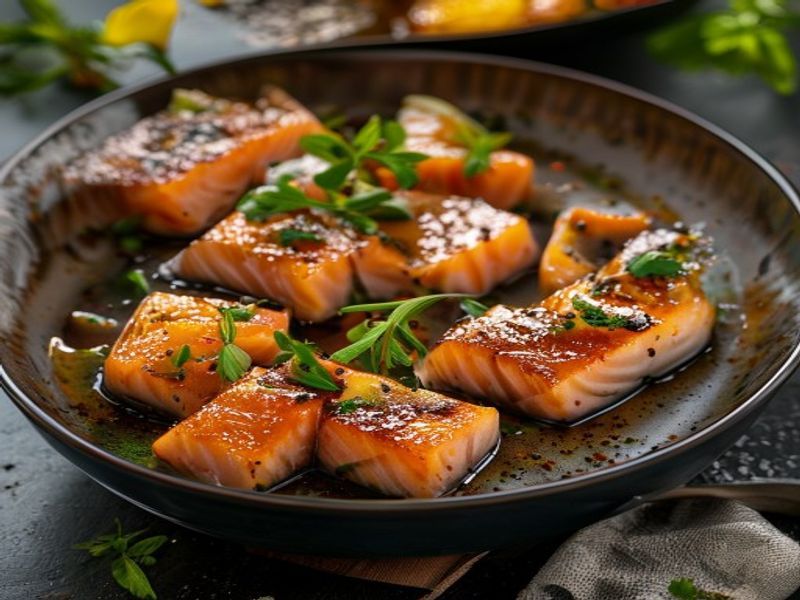
What You’ll Need
Ingredients
- Salmon fillets: 2 fillets, 6 ounces (170g) each, skin-on, pin bones removed
- White miso paste: 2 tablespoons (32g), smooth texture preferred
- Fresh ginger: 1 tablespoon (6g), finely grated
- Rice vinegar: 1 tablespoon (15ml)
- Soy sauce: 1 tablespoon (15ml), low-sodium recommended
- Neutral oil: 2 tablespoons (30ml), avocado or grapeseed oil
- Honey or maple syrup: 1 teaspoon (5ml)
- Cooked brown rice or quinoa: 2 cups (360g), chilled or room temperature
- English cucumber: 1/2 medium (150g), thinly sliced
- Edamame: 1 cup (155g), shelled and thawed
- Toasted sesame seeds: 1 teaspoon (3g), for garnish
- Scallions: 2 stalks (20g), thinly sliced on the bias
Ingredient Notes: Choose wild-caught salmon fillets of uniform thickness (about 1 inch / 2.5 cm) to ensure even cooking across the entire surface. White miso provides a mild, sweet umami base that won’t overpower the ginger. If using frozen edamame, thaw completely and pat dry to prevent excess moisture from diluting the bowl’s flavor profile.
Equipment
- 12-inch nonstick or carbon steel skillet
- Instant-read digital thermometer
- Small mixing bowls (2)
- Flexible offset spatula
- Microplane or fine grater
- Sheet pans or meal prep containers (24-ounce capacity)
Prep Work
Proper preparation is the foundation of a reliable salmon grain bowl recipe. Begin by removing the salmon from the refrigerator exactly 10 minutes before cooking. Pat the fillets completely dry with heavy-duty paper towels on both sides, applying firm pressure to the skin surface. Moisture is the primary enemy of a proper sear and will instantly drop your pan temperature when it hits the oil. Season the flesh side lightly with 1/4 teaspoon kosher salt and set aside on a clean plate. In a small mixing bowl, whisk together the white miso paste, grated ginger, soy sauce, rice vinegar, and honey until completely smooth. The glaze should coat the back of a spoon without immediately dripping off.
While the salmon rests, quickly assemble the cold components. Slice the cucumber into 1/8-inch (3mm) coins and place them in a separate container with a pinch of salt to draw out excess cellular water. Drain the edamame thoroughly and pat dry with a clean towel. Cooked grains should be at room temperature; if using refrigerated leftovers, microwave them for 45 seconds to remove the chill, which improves texture and prevents condensation in your storage containers. This entire prep phase takes exactly 8 minutes.
Make-Ahead Timing: The glaze can be whisked up to 24 hours in advance and stored covered in the refrigerator. Grains and vegetables can be prepped 2 days ahead. The salmon must be dried and seasoned immediately before cooking to maintain optimal texture and food safety standards.
Cooking Instructions
- Heat the Pan: Place your 12-inch skillet over medium-high heat, targeting a surface temperature of 375°F / 190°C. Add 1 tablespoon (15ml) of neutral oil. Swirl to coat the bottom evenly. Wait until the oil shimmers and just begins to produce faint wisps of smoke, about 45 seconds. In my experience, rushing this thermal step causes the skin to bond with the metal instead of releasing cleanly.
- Sear the Salmon: Carefully lay the salmon skin-side down in the pan, pressing gently with your offset spatula for 5 seconds to prevent curling from heat contraction. Immediately reduce heat to medium (350°F / 175°C). Cook completely undisturbed for exactly 4 minutes. You will hear a steady, consistent sizzle. Watch for the flesh to turn opaque about two-thirds of the way up the side of the fillet. Do not move, shake, or attempt to flip the salmon during this critical window.
- Flip & Glaze: Slide a thin metal spatula under the fillet to verify a deep golden-brown crust has formed. Flip carefully. Add the remaining 1 tablespoon (15ml) of oil to the pan, then immediately pour the prepared miso-ginger glaze around the fillets. Cook for exactly 2 minutes on the second side. Baste the top of the salmon continuously with the bubbling glaze using a large spoon. The sauce will reduce by half and thicken to a glossy, syrup-like consistency that clings to the protein.
- Check Doneness: Remove the pan from heat. Insert an instant-read thermometer horizontally into the thickest part of the fillet. The target internal temperature is 140°F / 60°C for medium, or 145°F / 63°C for well-done. The flesh should resist slightly but yield easily to gentle pressure. Let rest in the pan for 3 minutes to allow carryover cooking and muscle fiber relaxation, which locks in juices.
- Assemble Bowls: Divide the room-temperature grains between two 24-ounce containers or bowls. Arrange cucumber slices and edamame alongside. Flake the salmon roughly or leave whole, placing it skin-side up to preserve crispness. Drizzle 1 tablespoon (15ml) of the reduced pan glaze over each portion. Garnish with scallions and sesame seeds. Total active cooking time: 9 minutes. Total time from start to finish: 20 minutes.
Common Mistakes to Avoid: Flipping the salmon too early breaks the crust and releases valuable juices into the pan. Adding glaze to a cold or underheated pan creates a watery, split sauce rather than a reduction. Overcooking past 150°F / 66°C causes the myofibrillar proteins to contract tightly, squeezing out moisture and resulting in a dry, chalky texture.
Pro Tips
Chef Notes & Adjustments
Mastering this technique hinges entirely on moisture control and thermal management. I find that chilling the glaze for 10 minutes before cooking slows its sugar caramelization rate, giving you a wider, more forgiving window to baste without burning the miso. For those tracking macros, this recipe delivers approximately 38 grams of protein per serving, making it an ideal high protein meal prep lunch for active professionals. If you lack white miso, yellow miso works adequately, but reduce the honey by half to compensate for its stronger fermentation notes and salt content. For a completely gluten-free version, substitute coconut aminos for soy sauce and verify your miso paste uses rice koji instead of barley.
This dish scales efficiently for batch cooking. To meal prep for four days, cook the salmon to 135°F / 57°C initially. The slight undercooking accounts for microwave reheating, which adds roughly 10°F / 5°C to the internal temperature and restores the fat’s silky mouthfeel. Store components in separate compartments until the day of consumption to maintain the salmon’s structural integrity and the vegetables’ crunch.
Serving Suggestions
For optimal balance, pair these easy asian inspired bowls with a sharp, acidic element to cut through the rich umami and healthy fats. A side of quick-pickled daikon or a simple cucumber-sesame salad works exceptionally well. If you’re serving this as a standalone weeknight salmon lunch, the portion provides 450-500 calories, 22 grams of complex carbohydrates, and 18 grams of healthy omega-3 fats. Add a handful of baby spinach or lightly steamed bok choy for extra volume and micronutrients without increasing caloric density. For those utilizing this as a light work lunch ideas alternative to heavy takeout, keep the grain portion to exactly 3/4 cup cooked to maintain a leaner profile while still sustaining steady energy through the afternoon. You can find reliable, heat-diffusing cookware like this [Check Price on Amazon] professional-grade skillet for consistent searing results.
Frequently Asked Questions
Can I use frozen salmon fillets?
Yes, but proper thawing is non-negotiable. Place frozen fillets in a sealed zip-lock bag and submerge in cold water for 45-60 minutes until completely pliable throughout. Never cook frozen salmon directly, as surface ice crystals will instantly drop the pan temperature below 300°F / 150°C, guaranteeing a pale, steamed exterior instead of a crisp sear.
How do I know when it’s done without a thermometer?
Press the center of the fillet gently with a fork or your fingertip. At 140°F / 60°C, the flesh will feel slightly firm but still yield to pressure, and it will separate into large, opaque flakes along the natural muscle lines. If the flakes are tiny, dry, and crumble apart easily, the salmon has exceeded 150°F / 66°C and is overcooked.
Can I prep this ahead for the week?
Absolutely. These quick healthy lunch ideas store well for up to 4 days. Keep the cooked grains, vegetables, and salmon in separate airtight containers in the refrigerator at 40°F / 4°C or below. Store the glaze in a small sealed jar. When ready to eat, assemble the bowl, microwave for 60 seconds, then add the salmon and drizzle with glaze to preserve the texture and prevent the skin from becoming soggy.
What pan works best if I don’t have nonstick?
A well-seasoned 12-inch carbon steel or heavy cast iron skillet performs exceptionally well. Preheat it slowly over medium heat for 3 minutes before adding oil to reach the target 375°F / 190°C surface temperature. If using stainless steel, ensure the pan passes the water droplet test (beads skitter and evaporate instantly) before adding fat to prevent sticking through the Leidenfrost effect.
*As an Amazon Associate I earn from qualifying purchases.
发表回复