Introduction
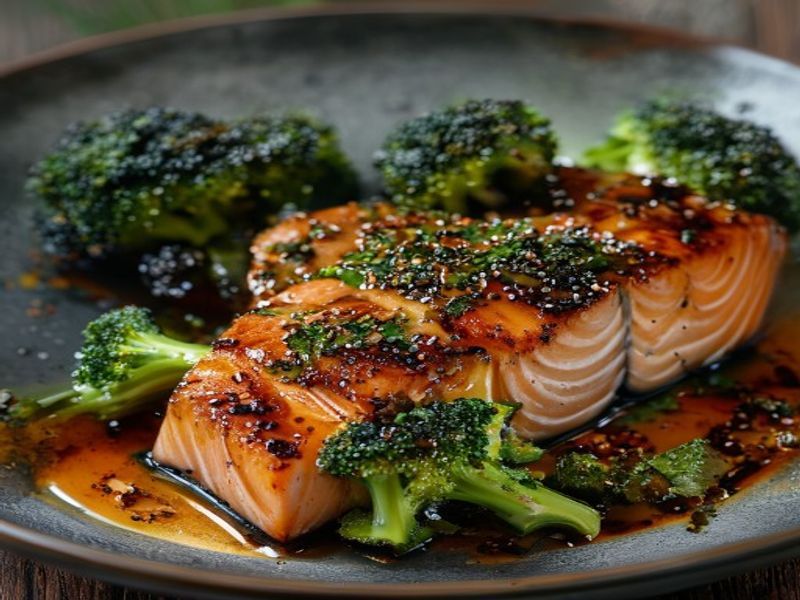
This cast iron salmon recipe delivers restaurant quality salmon at home through controlled heat management and a balanced asian inspired salmon glaze. The method relies on a single skillet to achieve a glass-like crust on the fish while simultaneously roasting broccoli to a crisp-tender finish. Designed as a healthy weeknight seafood option, this high protein pescatarian meal comes together as a 25 minute skillet dinner without sacrificing depth of flavor. The miso ginger fish dinner format provides umami complexity while cast iron retains steady thermal energy for consistent searing. This easy one pan fish recipe is ideal for cooks who understand basic pan management and want reliable, repeatable results. You will learn how to control moisture, manage glaze viscosity, and time your protein and vegetables to hit the table simultaneously.
What You’ll Need
Ingredients
- Salmon fillets: 4 pieces, 6 ounces each, skin-on (1 to 1.5 inches thick)
- White miso paste: 3 tablespoons (unpasteurized preferred)
- Fresh ginger: 2 tablespoons finely grated
- Rice vinegar: 1.5 tablespoons
- Low-sodium soy sauce: 1 tablespoon
- Honey: 1 teaspoon
- Toasted sesame oil: 2 teaspoons
- High-smoke point oil: 1.5 tablespoons (avocado or refined grapeseed)
- Broccoli florets: 1.5 pounds, cut into uniform 1.5-inch pieces
- Sesame seeds: 2 tablespoons
- Kosher salt: 1.5 teaspoons total (divided)
- Black pepper: 0.5 teaspoon freshly cracked
Ingredient Notes: Select center-cut salmon for even thickness and consistent cooking. Skin-on fillets are mandatory; the skin acts as a thermal barrier and crisps beautifully. Fresh ginger must be grated finely to integrate into the glaze without scorching.
Equipment
- 12-inch cast iron skillet (pre-seasoned)
- Instant-read digital thermometer
- Microplane grater
- Silicone basting brush
- Wide fish spatula (thin, offset edge)
For consistent heat retention, I recommend a heavy-bottomed 12-inch Lodge Cast Iron Skillet [Check Price on Amazon that maintains steady surface temperature during the sear and vegetable finish.
Prep Work
Proper mise en place prevents rushed execution and ensures precise temperature control. Begin by removing the salmon from refrigeration 15 to 20 minutes before cooking. Cold fish hitting a hot pan causes immediate temperature drop, resulting in steaming rather than searing. While the salmon rests, prepare the glaze. In a small bowl, whisk together 3 tablespoons white miso paste, 2 tablespoons grated ginger, 1.5 tablespoons rice vinegar, 1 tablespoon soy sauce, 1 teaspoon honey, and 2 teaspoons toasted sesame oil until completely smooth. Set aside at room temperature.
Trim broccoli florets to identical 1.5-inch sizes to guarantee even caramelization. Pat every salmon fillet aggressively dry with paper towels on both sides, then season with 1 teaspoon kosher salt and 0.5 teaspoon black pepper. Moisture is the enemy of crust formation. This prep phase takes approximately 8 minutes. The glaze and broccoli can be prepped up to 24 hours in advance and stored covered in the refrigerator. The salmon must be seasoned immediately before cooking to prevent salt from drawing out surface moisture too early.
Cooking Instructions
- Preheat the Skillet: Place the 12-inch cast iron skillet over medium-high heat for 4 minutes. Add 1.5 tablespoons high-smoke point oil and swirl to coat. The oil should shimmer and just begin to smoke, reaching approximately 375°F / 190°C. If the oil smokes heavily, reduce heat to medium immediately to prevent scorching.
- Sear the Salmon: Carefully lay the fillets skin-side down into the pan. Press gently with the spatula for 3 seconds to prevent curling. Cook undisturbed for 3 minutes. You will hear a steady sizzle that gradually quiets as surface moisture evaporates. The skin will turn deep golden brown and release from the pan naturally when the crust forms. Do not force it early.
- Flip and Glaze: Flip the fillets using the fish spatula. Immediately reduce heat to medium-low. Brush the top and sides of each fillet with half the miso-ginger mixture. Cook for exactly 2 minutes. The sugars in the glaze will begin to bubble and thicken. Watch closely; miso contains natural sugars that burn rapidly above 325°F / 160°C.
- Finish to Temperature: Check doneness with an instant-read thermometer inserted into the thickest part. The target internal temperature is 130°F / 54°C to 135°F / 57°C for medium. The flesh will appear opaque on the outside with a translucent pink center. Remove the salmon immediately and transfer to a warm plate. Tent loosely with foil and rest for 3 minutes. Carryover cooking will raise the temperature to the standard 145°F / 63°C.
- Cook the Broccoli: Return the skillet to medium heat. Add the broccoli florets, 0.5 teaspoon kosher salt, and 1 tablespoon water. Cover with a lid or sheet pan for 2 minutes to steam. Uncover, increase heat to medium-high, and toss constantly for 4 minutes until edges char and stems turn bright green. Sprinkle 2 tablespoons sesame seeds over the hot broccoli and toss for 15 seconds until toasted.
- Final Plating: Divide the crispy sesame broccoli across four plates. Place the rested salmon fillets on top, skin-side up. Spoon any remaining pan juices or reserved glaze over the fish. Serve immediately while the crust remains intact.
Common Mistakes to Avoid: Flipping too early tears the skin and destroys the crust. Overcooking the glaze creates bitterness and a charred aftertaste. Crowding the pan drops the thermal energy and steams the fish instead of searing it.
Pro Tips
Temperature Management: In my experience, cast iron responds slowly to dial adjustments, so always anticipate heat shifts. I find that pulling the pan off the burner for exactly 30 seconds between the fish and vegetable stages prevents the broccoli from scorching while maintaining enough thermal mass for rapid caramelization. This brief thermal reset is critical for consistent results.
Glaze Viscosity Control: Miso thickens when heated. If your glaze becomes too pasty to brush, whisk in 1 teaspoon warm water. This keeps it fluid enough to coat evenly without dripping into the pan and burning.
Make-Ahead Options: This recipe works well for meal prep seafood ideas when handled correctly. Store cooked salmon and broccoli in separate airtight containers for up to 3 days. Reheat gently in a 300°F / 150°C oven for 8 minutes to preserve moisture. The glaze can be mixed 4 days in advance and kept refrigerated.
Substitutions: If white miso is unavailable, yellow miso works but adds slight saltiness; reduce soy sauce by 0.5 teaspoon. For a nut-free version, replace sesame oil with 1 tablespoon neutral oil and skip the seeds. The broccoli side can be swapped for asparagus or snap peas using the exact same cooking times.
Serving Suggestions
This dish functions as a complete low carb dinner ideas framework, but adding a neutral starch balances the rich umami profile. Serve over 0.75 cups cooked jasmine rice or cauliflower rice per portion. A simple cucumber-scallion salad with 1 tablespoon rice vinegar and 1 teaspoon sesame oil cuts through the richness. Each 6-ounce salmon fillet delivers approximately 35 grams of protein, making this ideal for quick family friendly meals and post-workout recovery. For larger families, scale linearly by using two 12-inch skillets or cooking in batches to maintain pan temperature.
FAQ
Can I use frozen salmon?
Yes, but thaw it completely in the refrigerator for 24 hours, then pat aggressively dry. Frozen fish retains excess water that interferes with crust formation. Never cook salmon directly from frozen in this method, as the temperature differential will ruin the sear and leave the center undercooked.
How do I know when it’s done?
Rely on an instant-read thermometer, not the flake test. At 130°F / 54°C to 135°F / 57°C, the proteins have coagulated sufficiently but retain moisture. Visual confirmation includes a slight resistance when gently pressed and a transition from translucent pink to pale orange at the edges. The flesh will separate easily along the natural fat lines without crumbling.
Can I prep this ahead for weeknight dinners?
Complete all mise en place up to 24 hours in advance. The glaze stores well, and the broccoli can be cut and kept in a sealed container with a damp paper towel. However, cook the salmon day-of. Omega 3 rich dinner options degrade in texture when reheated aggressively, so fresh execution yields the best results.
*As an Amazon Associate I earn from qualifying purchases.
发表回复