Introduction
This 15-minute pan-seared salmon recipe delivers a professional-grade balance of umami, brightness, and texture without demanding advanced culinary skills. The miso-ginger glaze caramelizes rapidly under high heat, creating a savory crust that contrasts with the tender, flaky interior. Paired with a crisp sesame cucumber salad, this dish functions as a complete high-protein lunch bowl that stays light and refreshing. It is ideal for home cooks seeking quick healthy lunch ideas or an easy weeknight lunch that requires minimal active time. The technique relies on controlled heat, precise moisture management, and proper resting to guarantee consistent results. Whether you are meal prepping or cooking for immediate service, the workflow is streamlined and repeatable.
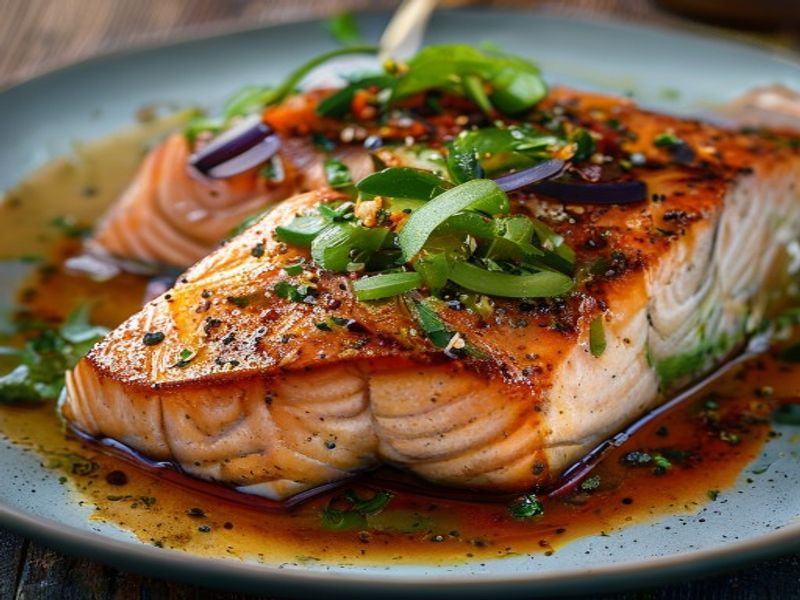
What You’ll Need
Ingredients
- Salmon fillets: 4 pieces, 6 oz each, skin-on, center-cut (uniform thickness ensures even cooking)
- White miso paste: 2 tablespoons (fermented, adds depth without overwhelming the fish)
- Fresh ginger: 1 tablespoon finely grated, peeled (about a 2-inch knob)
- Garlic: 1 clove, microplaned to a paste
- Gluten-free tamari: 1.5 tablespoons (provides salt and umami; use certified GF for dietary compliance)
- Rice vinegar: 1 tablespoon (balances miso sweetness)
- Honey: 1 tablespoon (promotes caramelization and glaze adhesion)
- Neutral high-heat oil: 2 teaspoons (avocado, grapeseed, or refined canola)
- English cucumber: 1 large, approximately 12 oz
- Kosher salt: 0.5 teaspoon (for drawing moisture from cucumber)
- Toast sesame oil: 1 tablespoon
- Rice vinegar: 2 tablespoons (for salad dressing)
- White or black sesame seeds: 1.5 teaspoons (toasted)
Equipment Needed
- 12-inch carbon steel skillet or heavy nonstick pan (flat surface ensures maximum skin contact)
- Instant-read digital thermometer [Check Price on Amazon]
- Microplane zester (creates fine ginger/garlic paste that dissolves evenly into the glaze)
- Two 1-quart mixing bowls
- Sharp 8-inch chef’s knife and flexible offset spatula
Prep Work
Proper mise en place dictates the success of any 15 minute meals. Begin by patting the salmon fillets completely dry with paper towels. Excess surface moisture creates steam, which prevents proper Maillard browning. Remove the fillets from refrigeration 10 minutes before cooking to take the chill off the surface; this reduces temperature shock when they hit the hot pan. Keep the skin side facing up to prevent it from absorbing moisture from the cutting board.
For the glaze, whisk together the 2 tablespoons white miso, 1 tablespoon grated ginger, 1 microplaned garlic clove, 1.5 tablespoons tamari, 1 tablespoon rice vinegar, and 1 tablespoon honey until smooth. The mixture should coat the back of a spoon evenly. Set it aside at room temperature. Cold miso will seize when it contacts the hot pan.
Prepare the cucumber by slicing it lengthwise and using the tip of your knife to scrape out the watery seed core. Cut the remaining flesh into 0.25-inch half-moons. Transfer to a bowl, toss with 0.5 teaspoon kosher salt, and let it sit for exactly 5 minutes. This draws out excess water. After 5 minutes, drain the liquid, rinse quickly under cold water, and pat thoroughly dry. Whisk 2 tablespoons rice vinegar and 1 tablespoon toasted sesame oil in a separate bowl. Add the dried cucumber and 1.5 teaspoons toasted sesame seeds. Keep chilled until plating. This prep sequence can be completed up to 2 hours ahead, but only refrigerate the salad and glaze separately. Never marinate the salmon ahead; the salt in the tamari will begin to cure the surface and alter the texture.
Cooking Instructions
- Heat the Pan: Place your 12-inch skillet over medium-high heat. Allow it to preheat for exactly 3 minutes. Test the temperature by hovering your hand 3 inches above the surface or using an infrared thermometer to target a surface temperature of 400°F / 204°C. Add 2 teaspoons of neutral oil and swirl to coat. Wait 15 seconds until the oil shimmers and just begins to ripple.
- Sear the Skin Side: Gently lay the salmon fillets skin-side down into the pan, working away from you to avoid oil splatter. Immediately press each fillet flat with a flexible offset spatula for 5 seconds to prevent curling. Do not move them. Sear undisturbed for exactly 3 minutes. You will hear a steady, consistent sizzle. Look for the opaque white band to rise halfway up the side of the fillet, and the edges to turn golden brown. If the skin sticks, it is not ready. Proper rendering creates a crisp barrier between the fish and the pan.
- Flip and Glaze: Carefully flip each fillet. Reduce heat to medium (approximately 350°F / 177°C surface temp). Add the prepared miso-ginger mixture directly into the pan around the fish, not on top. The residual heat will loosen the glaze immediately. Spoon it over the top of each fillet using a large spoon. Cook for 2 minutes. The sugars will begin to bubble and thicken into a glossy coating. Baste continuously by tilting the pan and spooning the hot glaze over the fish.
- Check Doneness: Insert your instant-read thermometer into the thickest part of the fillet, avoiding the skin. Remove from heat when the internal temperature reaches 125°F / 52°C. Carryover cooking will raise the internal temperature by 5°F during resting. If you lack a thermometer, press the flesh lightly; it should yield slightly and the center should still be translucent pink. Transfer the fillets to a warm plate, skin-side up, and rest for exactly 2 minutes.
- Finish and Plate: While the salmon rests, give the chilled sesame cucumber salad a final toss. Divide 0.75 cups of salad per portion on a serving plate or bowl. Place one rested salmon fillet skin-side up next to the salad. Spoon any remaining reduced glaze from the pan over the fish. Serve immediately while the crust remains crisp.
Common Mistake to Avoid: Do not overcrowd the pan. If your skillet cannot accommodate four 6 oz fillets with 1 inch of space between them, cook in two batches. Overcrowding drops the pan temperature below 350°F / 177°C, causing the salmon to steam rather than sear, which results in a pale, soggy skin and uneven cooking.
Pro Tips
Miso contains active enzymes and natural sugars that burn rapidly above 400°F / 204°C. I find that adding the glaze only after flipping the salmon, rather than marinating it beforehand, guarantees a clean sear and prevents bitter char. In my professional kitchen, I always use a heavy-bottomed carbon steel or clad stainless skillet because they retain thermal mass better than thin nonstick pans, which cool down the moment cold protein hits the surface. For substitutions, black cod or arctic char respond identically to this technique, though you may need to reduce cook time by 30 seconds due to their higher fat content. If you require strictly gluten free lunch options, verify your tamari and miso labels, as some miso pastes are blended with barley.
Serving Suggestions
This dish scales seamlessly into high protein lunch bowls. Serve each portion over 0.5 cups of cooked short-grain brown rice or quinoa to absorb the excess glaze. Add 2 tablespoons of shelled edamame and 3 thin slices of ripe avocado for healthy fats that complement the lean fish. For a lighter approach, serve the fillet and salad directly over 2 cups of mixed baby spinach. Each serving delivers approximately 34 grams of protein, 14 grams of fat, and 12 grams of carbohydrates, making it a balanced option for sustained afternoon energy. Store leftovers in airtight glass containers with the salad separated from the fish to maintain the cucumber’s crunch for healthy meal prep lunch routines.
FAQ
Can I use frozen salmon?
Yes, but it must be thawed properly to preserve cell structure. Place vacuum-sealed fillets in the refrigerator for 24 hours, or submerge sealed packages in cold water for 45 minutes. Never use hot water or microwave thawing, as it ruptures muscle fibers and causes excessive moisture release during searing. Pat the thawed fillets completely dry before seasoning.
How do I know when it’s done?
The most reliable indicator is an internal temperature of 125°F / 52°C. Remove it from heat at this point. The residual heat will carry it to 130°F / 54°C during the 2-minute rest, which is the FDA-recommended safe minimum for fish. Visually, the flesh will transition from translucent to opaque pink, and a gentle press with your finger will show slight resistance without feeling firm.
Can I prep this ahead for meal prep?
You can prepare the glaze, cucumber salad, and portion the raw salmon up to 48 hours in advance. Store the glaze and salad separately in the refrigerator. However, pan-sear the salmon on the day of service. Reheating seared fish in a microwave destroys the crisp skin and overcooks the interior. If you must reheat, use a 300°F / 149°C oven for 6-8 minutes until warmed through, or serve it cold over fresh greens.
*As an Amazon Associate I earn from qualifying purchases.
发表回复