Introduction
This Sheet Pan Beef with Lemon Herb and Fresh Herbs delivers consistent, restaurant-quality results through controlled high-heat roasting and strategic seasoning. The method relies on maximizing surface caramelization while preserving the natural moisture of lean cuts. By combining citrus acidity, aromatic alliums, and robust woody herbs, you create a balanced flavor profile that cuts through the richness of the meat. This easy recipe requires minimal active time and eliminates the need for multiple pots or skillets, making it an ideal quick dinner for busy weeknights. The technique is accessible to beginners but teaches foundational culinary principles: temperature control, moisture management, and the importance of resting proteins. Mastering this homemade approach will streamline your cooking routine and elevate your understanding of dry-heat roasting methods.
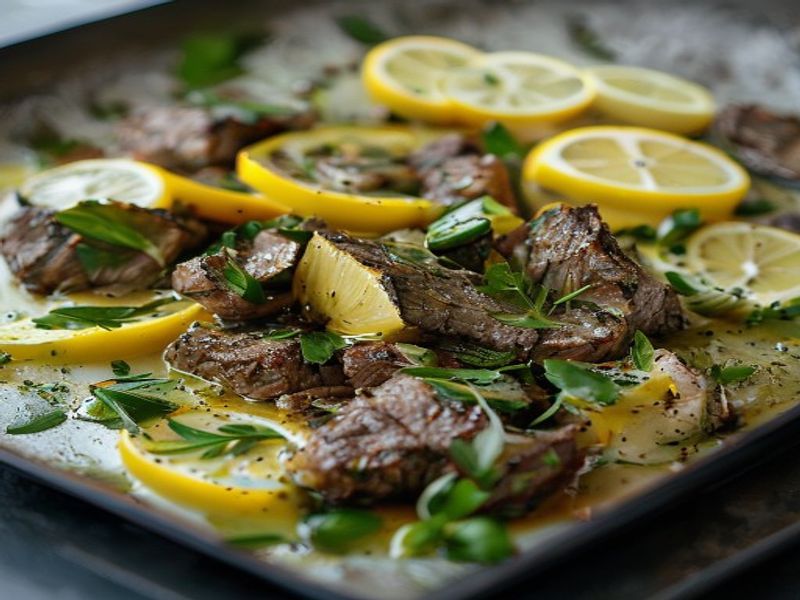
What You’ll Need
Ingredients
- Beef: 1.5 pounds (680g) top sirloin or flank steak, trimmed of excess fat
- Extra virgin olive oil: 3 tablespoons (45ml)
- Fresh lemon: 1 large (yielding 1 tablespoon zest and 2 tablespoons juice)
- Fresh rosemary: 2 sprigs, needles finely chopped (1 tablespoon)
- Fresh thyme: 3 sprigs, leaves stripped from stems (2 teaspoons)
- Fresh parsley: 1/4 cup (10g), flat-leaf, roughly chopped
- Garlic: 3 cloves, finely minced (1 tablespoon)
- Kosher salt: 1.5 teaspoons (Diamond Crystal brand recommended)
- Black pepper: 1 teaspoon, freshly cracked
- Red bell pepper: 1 large, sliced into 1/2-inch strips
- Yellow onion: 1 medium, cut into 1/4-inch wedges
Ingredient Notes: Select beef with consistent thickness to ensure even cooking. Fresh rosemary and thyme provide earthy backbone, while parsley adds brightness at the finish. Avoid pre-minced garlic from jars; it contains stabilizers that burn quickly at high heat.
Equipment
- Half-sheet baking pan (13×18 inches / 33×46 cm) with 1-inch rim
- Instant-read digital thermometer [Check Price on Amazon]
- Heavy-duty parchment paper
- 8-inch chef’s knife and stable cutting board
- Silicone-tipped tongs for safe flipping
Prep Work
Proper preparation directly impacts browning and cooking speed. Remove the beef from refrigeration exactly 20 minutes before cooking. Bringing the meat to near room temperature prevents a drastic temperature drop when it enters the oven, which would otherwise extend cooking time and promote steaming over searing. Pat the beef strips completely dry with paper towels until no moisture transfers to the towel. Surface water inhibits the Maillard reaction.
Identify the direction of the muscle fibers. Slice the beef across the grain into uniform 1-inch strips. Cutting perpendicular to the fibers shortens them, ensuring each bite remains tender rather than chewy. Place the strips in a large mixing bowl. Add olive oil, lemon zest, lemon juice, chopped rosemary, thyme, minced garlic, salt, and black pepper. Toss thoroughly until every surface is coated. Let the mixture sit uncovered at room temperature for 15 minutes. This brief marination allows the salt to penetrate and the acid to begin tenderizing without denaturing the proteins excessively.
Slice the bell pepper and onion into uniform pieces. Toss them separately with 1 tablespoon of olive oil and 1/4 teaspoon of salt. Keeping vegetables separate during prep prevents cross-contamination of juices and allows you to control their placement on the pan later. Timing Note: You can complete all chopping and mixing up to 4 hours ahead. Store components in separate airtight containers in the refrigerator, then bring the beef to room temperature before roasting.
Cooking Instructions
- Preheat the Oven: Set your oven to 425°F / 220°C on conventional bake mode. Position the middle rack centrally. Allow 15 full minutes for the oven to stabilize. An inaccurate temperature will compromise crust development.
- Prepare the Pan: Line your 13×18-inch half-sheet pan with heavy-duty parchment paper. Lightly mist the paper with neutral cooking spray. This prevents sticking while maintaining proper airflow around the ingredients.
- Arrange Strategically: Spread the marinated beef strips across the left two-thirds of the pan. Maintain at least 1/2 inch of spacing between pieces. Place the oiled vegetables on the right third. Overcrowding creates a humid microclimate that boils the meat instead of roasting it.
- Initial Roast Phase (8 minutes): Slide the pan into the preheated oven. Roast undisturbed for exactly 8 minutes. Listen for a sharp, continuous sizzle. If the sizzle fades within 2 minutes, your oven is underheated or the pan is too crowded. Watch for the edges of the beef to tighten slightly and develop a pale golden crust.
- Flip and Rotate (6-8 minutes): Using oven mitts, remove the pan. Flip each beef strip with tongs and toss the vegetables. Rotate the pan 180 degrees to neutralize hot spots. Return to the oven for 6 to 8 minutes.
- Verify Doneness: At the 14-minute mark, probe the thickest piece of beef with an instant-read thermometer. Target 130°F / 54°C for medium-rare, or 140°F / 60°C for medium. The exterior should display a rich mahogany color, and the surface should feel slightly firm to tongs. If the temperature is 5 degrees below target, roast for 90 more seconds and recheck. Do not exceed 145°F / 63°C, as lean cuts will dry out rapidly.
- Rest and Finish: Transfer the pan to a wire rack or heatproof surface. Allow the beef to rest for 5 minutes. This resting period allows internal juices to redistribute. Sprinkle the fresh parsley evenly over the hot ingredients immediately before plating. The residual heat will gently release the parsley’s volatile oils without scorching them.
Pro Tips
I find that chilling the cutting board and knife blade for 10 minutes before slicing significantly improves precision and prevents meat fibers from compressing. In my experience, applying lemon juice exactly 15 minutes before roasting strikes the perfect balance: enough time for the acid to tenderize, but not enough to start curing the surface. If you must substitute, tri-tip or flat iron work exceptionally well when sliced against the grain. For make-ahead execution, mix the herb-oil base up to 24 hours in advance and refrigerate. Combine it with the beef only when you are ready to bring it to temperature. Never skip the resting phase; it is the single most critical step for retaining moisture in lean proteins cooked with dry heat.
Serving Suggestions
This dish pairs optimally with starches that absorb the citrus-herb pan drippings. Serve alongside jasmine rice, roasted fingerling potatoes, or a thick slice of toasted sourdough. A lightly dressed arugula salad with shaved Parmesan provides a peppery contrast that balances the richness. Portion guidance: allocate 6 ounces of raw beef per adult, which yields approximately 4 ounces cooked after moisture evaporation. Maintain a 50/25/25 plate ratio of protein to starch to vegetables for balanced nutrition and visual appeal. Drizzle any remaining pan juices directly over the plated beef to intensify the lemon herb profile.
FAQ
Can I use frozen beef for this recipe?
Yes, but you must thaw it completely in the refrigerator for 24 hours and pat it aggressively dry. Cooking partially frozen beef drops the oven temperature instantly, guaranteeing a gray, steamed exterior instead of a proper crust. Never place frozen strips directly on a hot sheet pan for high-heat roasting.
How do I know when it’s done without a thermometer?
Press the beef gently with tongs. Medium-rare will yield slightly with a springy resistance, similar to the fleshy pad at the base of your relaxed thumb. The exterior should show a firm, caramelized crust, and the juices should appear pale pink when pierced. While tactile cues are reliable, a digital thermometer eliminates guesswork and prevents overcooking lean cuts.
Can I prep this ahead for a quick dinner?
You can complete all chopping, mixing, and marinating up to 4 hours in advance. Store the beef and vegetables in separate containers in the refrigerator. Keep the herb marinade covered and combine it with the beef only when you are ready to bring it to room temperature. This prevents the salt from drawing out excessive moisture prematurely, which would hinder browning.
What if I want a crispier crust?
Switch your oven to convection mode at 400°F / 200°C, or elevate the rack to the upper third during the final 3 minutes of cooking. Ensure the beef is bone-dry before seasoning, and consider placing a wire rack directly on the sheet pan to elevate the meat. This elevates airflow underneath, eliminates steam pockets, and maximizes surface dehydration for a superior sear.
*As an Amazon Associate I earn from qualifying purchases.
发表回复