Introduction
Sheet-pan smoked paprika and maple chicken thighs deliver consistent, restaurant-quality flavor with zero active supervision. This method leverages high-heat convection to render fat and crisp skin while a balanced glaze caramelizes during the final minutes. Engineered for high protein weekly prep, the technique guarantees juicy dark meat without the risk of drying out. The spice blend provides natural antioxidant and anti-inflammatory recipes benefits, while the streamlined workflow fits seamlessly into easy batch cooking recipes and quick family meals. Suitable for beginners but optimized with professional temperature control, this guide ensures reliable gluten-free dinner prep and dependable make-ahead lunch ideas. Master the spacing, moisture control, and glaze timing, and you will have a repeatable one-pan healthy dinners solution.
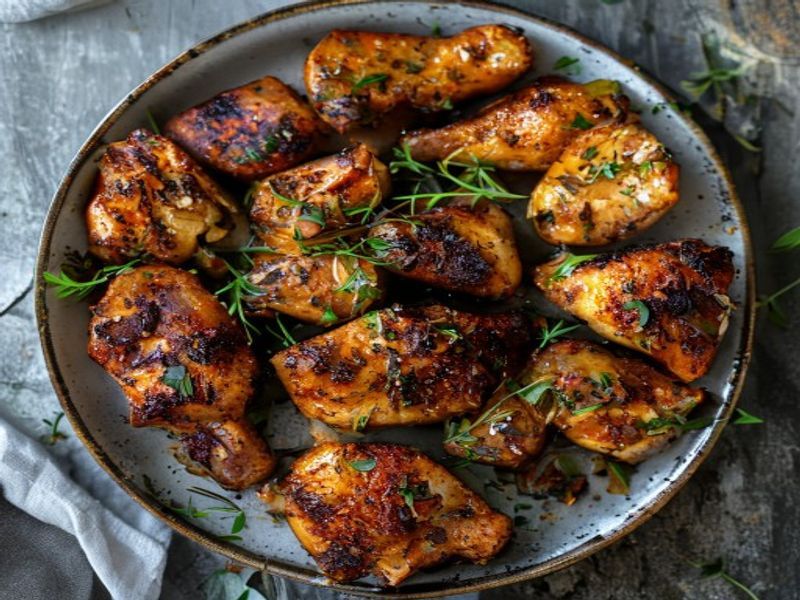
What You’ll Need
Ingredients
- Chicken thighs: 3.5 pounds bone-in, skin-on (approximately 8 pieces, 6–7 oz each). Select thighs with even skin coverage and minimal liquid in the package for optimal browning.
- Extra-virgin olive oil: 2 tablespoons. Provides a stable fat layer for spice adherence and initial heat transfer.
- Smoked paprika: 2 tablespoons. Use Spanish pimentón de la Vera for authentic wood-smoke depth.
- Garlic powder: 1 teaspoon. Avoid fresh garlic here; it burns at high roasting temperatures.
- Onion powder: 1 teaspoon. Delivers sweet, savory notes without moisture interference.
- Fine sea salt: 1.5 teaspoons. Evenly seasons the meat and draws surface moisture for crisp skin.
- Black pepper: 1 teaspoon, freshly cracked.
- Pure maple syrup: 3 tablespoons. Grade A amber provides balanced sweetness and proper viscosity for glazing.
- Apple cider vinegar: 1 tablespoon. Cuts through the fat and prevents the glaze from becoming cloying.
- Dijon mustard: 1 teaspoon. Acts as an emulsifier to keep the glaze cohesive during application.
Equipment
- 18×13 inch half-sheet pan: Standard commercial size ensures adequate spacing for proper air circulation. Avoid smaller jelly roll pans, which cause steaming instead of roasting.
- Parchment paper or silicone baking mat: Prevents maple glaze from carbonizing directly on the metal.
- Instant-read digital thermometer: [Check Price on Amazon] Essential for verifying safe internal temperatures without overcooking.
- Basting brush or silicone spatula: For even glaze distribution without disturbing the skin.
- Small mixing bowl: 8 oz capacity for whisking the glaze.
Prep Work
Proper preparation dictates the final texture. Remove the chicken from refrigeration 30 minutes before cooking. Cold meat dropped into a 425°F / 220°C oven causes uneven cooking and prolonged exposure to the drying phase. Pat every thigh thoroughly with paper towels until no moisture remains on the skin. Surface water is the primary enemy of crispness; it must evaporate before the skin can begin to render fat and brown.
In a small bowl, combine the 2 tablespoons smoked paprika, 1 teaspoon garlic powder, 1 teaspoon onion powder, 1.5 teaspoons sea salt, and 1 teaspoon black pepper. Whisk until completely uniform to avoid hot spots of concentrated spice. In a separate bowl, whisk the 3 tablespoons pure maple syrup, 1 tablespoon apple cider vinegar, and 1 teaspoon Dijon mustard until smooth. Set the glaze aside at room temperature. Cold syrup will seize upon contact with hot fat and fail to spread evenly.
Line the 18×13 inch half-sheet pan with parchment paper. Preheat the oven to 425°F / 220°C with the rack positioned in the center. If your oven has a convection setting, engage it and reduce the target temperature to 400°F / 205°C for 25 minutes. You can mix the dry rub and glaze up to 48 hours in advance and store them covered in the refrigerator. The chicken itself should remain chilled until the 30-minute tempering window.
Cooking Instructions
- Coat and Season: Place the tempered chicken thighs skin-side up on the prepared sheet pan. Drizzle 2 tablespoons olive oil evenly over the surfaces. Using clean hands, sprinkle the spice rub uniformly across all pieces, pressing gently to adhere to the skin. Leave at least 1 inch of space between each thigh. Crowding traps steam, which softens the exterior and ruins the sheet pan chicken thighs texture.
- Initial Roast: Place the pan in the preheated 425°F / 220°C oven. Roast undisturbed for 25 minutes. You will hear a steady, vigorous sizzle as the subcutaneous fat renders and the skin begins to contract. Watch for the edges to pull back slightly and the skin to transition from pale pink to deep amber. Do not open the oven door before the 20-minute mark; temperature drops interrupt the Maillard reaction and delay browning.
- Apply the Glaze: Remove the pan carefully. Brush the maple mixture evenly over the top of each thigh, avoiding the pan edges where syrup will scorch. The sugar in the syrup will begin to bubble immediately upon contact with the hot surface. Work quickly but deliberately to prevent heat loss.
- Final Caramelization: Return the pan to the oven for exactly 5–7 minutes. Monitor closely through the oven window. The glaze should darken to a glossy mahogany and thicken into a light lacquer. If you detect a sharp, acrid smell, remove the pan immediately; sugar transitions from caramelized to burnt in under 60 seconds at this temperature. The internal temperature must read exactly 165°F / 74°C when measured at the thickest part of the meat, avoiding bone contact.
- Rest and Portion: Transfer the pan to a heat-safe surface and let the chicken rest for 5 minutes. Resting allows the muscle fibers to relax and reabsorb juices. Cutting immediately causes rapid moisture loss. The skin should feel firm and shatter slightly when pressed with a fork.
Common Mistakes to Avoid: Overcrowding the pan creates a steaming environment that yields soggy skin. Using light or artificial syrup introduces excess water and corn syrup, which prevents proper caramelization. Skipping the resting phase guarantees dry meat and pooled juices on your cutting board. Always verify doneness with a thermometer; color alone is unreliable due to varying oven hot spots.
Pro Tips
Chef Secrets: In my experience, the difference between good and exceptional roasted poultry comes down to moisture management before heat application. I find that placing the skin-side-up thighs on a wire rack set over the baking sheet for the first 15 minutes of cooking accelerates fat rendering and guarantees uniform crispness across every surface. Additionally, adding a pinch of cayenne pepper to the dry rub enhances the capsaicin profile without altering the primary flavor balance.
Substitutions: For a lower-sugar smoked paprika meal prep, replace the maple syrup with 3 tablespoons sugar-free maple-flavored syrup and 1 teaspoon butter for viscosity. Tamari works as a direct 1:1 substitute for the apple cider vinegar if you prefer a deeper umami base while maintaining gluten-free compliance. Honey can replace maple syrup, but reduce oven time by 2 minutes during the glazing phase to prevent rapid darkening.
Make-Ahead Options: Fully cooked maple glazed chicken stores optimally in airtight glass containers for up to 4 days in the refrigerator. For longer storage, freeze portions for up to 3 months. Reheat in a 350°F / 175°C oven for 12–15 minutes covered with foil to restore internal moisture, then uncover for the final 3 minutes to revive skin texture.
Serving Suggestions
This dish pairs best with starches and bitter vegetables that absorb the sweet-smoke drippings. Serve alongside 1 cup roasted sweet potato wedges or 0.75 cup quinoa per portion. A simple massaged kale salad with lemon juice and toasted pepitas cuts through the richness. For balanced macronutrients, allocate 2 chicken thighs per adult serving, yielding approximately 38 grams of high-quality protein per portion. The dish scales effortlessly for 4 to 6 people without altering cooking times, provided the sheet pan remains unobstructed.
FAQ
Can I use frozen chicken thighs?
Yes, but you must thaw them completely in the refrigerator for 24–36 hours before applying the rub. Cooking from frozen extends the roasting time by 15–20 minutes and prevents the skin from rendering properly, resulting in a rubbery texture and uneven internal doneness.
How do I know when it’s done?
Insert an instant-read thermometer into the thickest part of the thigh without touching the bone. The target is 165°F / 74°C. Visual confirmation includes clear, non-pink juices when the meat is pierced near the bone, and skin that has contracted tightly around the meat.
Can I prep this ahead for meal prep?
Absolutely. You can season and refrigerate the raw chicken on the prepared sheet pan, covered, for up to 12 hours before roasting. This dry-brining period enhances seasoning penetration. Cooked portions remain safe and flavorful for 4 days refrigerated or 3 months frozen, making them ideal for weekly lunch rotation.
*As an Amazon Associate I earn from qualifying purchases.
发表回复