Introduction
This 20-Minute Sheet-Pan Miso-Ginger Salmon with Charred Bok Choy is engineered for efficiency without sacrificing technique. The recipe leverages high-heat roasting to caramelize a balanced miso-ginger glaze while simultaneously blistering baby bok choy on a single tray. This method eliminates multiple pans, reduces active cooking time to under 10 minutes, and delivers consistent results for weeknight schedules. It is ideal for beginner to intermediate home cooks who want to understand heat management and flavor layering. The combination of white miso, fresh ginger, and rice vinegar creates a sweet-savory umami profile that penetrates the fish during the brief roasting window. You will master precise oven timing, proper moisture control, and visual doneness cues that apply to nearly all sheet pan salmon recipes. This is a foundational quick weeknight seafood dish that scales easily and delivers high omega 3 recipes without complicated prep.
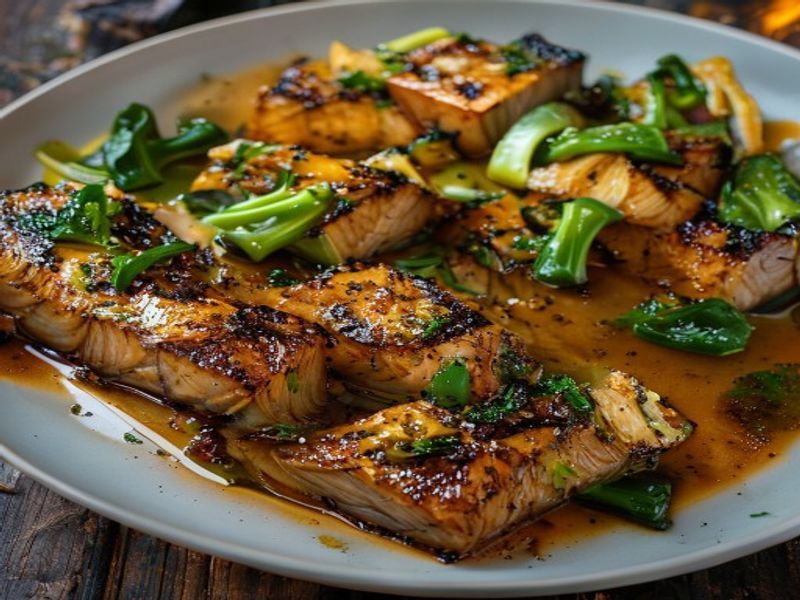
What You’ll Need
Ingredients
- Salmon fillets: 2 pieces, 6 ounces each, skin-on, center-cut, patted completely dry
- Baby bok choy: 1.25 pounds (approximately 4 heads), halved lengthwise through the core
- White miso paste: 3 tablespoons, stirred smooth at room temperature
- Fresh ginger: 1.5 inches, peeled and finely grated (yields approximately 1 tablespoon)
- Garlic: 2 cloves, finely minced
- Soy sauce: 1.5 tablespoons (or tamari for gluten-free)
- Rice vinegar: 1 tablespoon
- Sesame oil: 2 teaspoons
- Neutral oil: 1.5 tablespoons (avocado or grapeseed), divided
- Sesame seeds: 1 teaspoon, toasted, for garnish
- Scallions: 2 stalks, thinly sliced on a bias
Ingredient Notes: Select white (shiro) miso for a milder, sweeter profile that won’t burn quickly at high heat. Center-cut salmon fillets cook more evenly than tail-end pieces. Choose firm bok choy with tight leaves and pale green stems.
Equipment
- Half-sheet baking pan: 18 x 13 inches, heavy-gauge aluminum or carbon steel for even heat distribution
- Parchment paper: 1 full sheet, or a silicone baking mat for easy cleanup
- Instant-read digital thermometer: For precise internal temperature verification. [Check Price on Amazon]
- Small mixing bowl: 12-ounce capacity for whisking the glaze
- Silicone basting brush: For even glaze application
- Wire rack (optional): Elevates vegetables for better airflow, though direct pan contact yields better charring for this recipe
Prep Work
Proper mise en place dictates success in fast-cooking recipes. Begin by removing the salmon from refrigeration and letting it sit on a clean counter for exactly 10 minutes to reach 50°F / 10°C. Cold fish straight from the fridge drops oven temperature and causes uneven cooking. While the salmon rests, thoroughly pat both sides dry with paper towels. Moisture on the surface prevents glaze adhesion and promotes steaming instead of caramelization.
Trim the bok choy base just enough to remove excess dirt, then halve each head vertically, keeping the core intact so leaves stay attached during roasting. Rinse briefly in cold water and shake vigorously to remove excess moisture, then pat completely dry. Wet bok choy will release water into the pan and steam rather than char.
Whisk the white miso, grated ginger, minced garlic, soy sauce, rice vinegar, and 1 teaspoon of sesame oil in a small bowl until completely smooth. If the miso is stiff, warm the mixture gently in a microwave for 8 seconds at 50% power. Cover the glaze and set aside. The entire prep sequence takes 8 minutes. You can prepare the glaze up to 3 days in advance and store it in an airtight container in the refrigerator. Bring it back to room temperature before using to ensure even brushing.
Cooking Instructions
- Preheat Oven: Set your oven to 450°F / 232°C with a standard rack positioned in the center. Allow it to fully preheat for at least 15 minutes. A properly heated oven ensures immediate caramelization upon contact.
- Prepare the Pan: Line the half-sheet pan with parchment paper. Toss the halved bok choy with 1.5 tablespoons neutral oil and 0.5 teaspoon kosher salt. Arrange them cut-side down in a single layer, leaving 0.5 inches of space between each half. Overcrowding creates steam pockets and prevents blistering. Place the pan in the oven and roast for exactly 5 minutes. The cut edges should begin to blister and turn light brown.
- Glaze and Arrange Salmon: Remove the pan from the oven. Push the bok choy to one side. Place the salmon fillets skin-side down on the open side of the pan, leaving 1 inch of clearance from the vegetables. Brush exactly 1.5 tablespoons of the miso-ginger glaze evenly over the top surface of each fillet. Reserve the remaining glaze for finishing. Do not brush the skin side, as it will not crisp properly when coated.
- Roast to Temperature: Return the pan to the 450°F / 232°C oven. Roast for 8 to 10 minutes. Watch closely after the 7-minute mark. The glaze will bubble and darken to a deep amber color. The edges of the salmon will turn opaque and lighten to a pale pink. Insert an instant-read thermometer into the thickest part of the fillet. When it reads exactly 140°F / 60°C, remove the pan. Carryover cooking will raise the internal temperature to the safe 145°F / 63°C standard during resting. The flesh should separate easily when gently pressed with a fork.
- Rest and Finish: Transfer the salmon and bok choy to a wire rack or serving plates immediately to prevent the parchment from trapping residual heat and overcooking the fish. Let rest for exactly 3 minutes. Brush the remaining glaze lightly over the rested salmon. Garnish with toasted sesame seeds and sliced scallions. Serve immediately while the skin retains its crisp texture.
Common Mistake to Avoid: Do not increase oven temperature beyond 450°F / 232°C to speed up cooking. Miso contains sugars that scorch rapidly above this threshold, creating bitter, blackened patches instead of a glossy, caramelized crust. If your oven runs hot, reduce to 425°F / 218°C and add 2 minutes to the cook time.
Pro Tips
- Moisture Control: I find that scoring the skin side of the salmon with three shallow diagonal cuts before roasting prevents curling and promotes even fat rendering. This simple step keeps the fillet flat against the pan and ensures consistent heat transfer.
- Glaze Application: Apply the miso mixture only to the top flesh. If it drips onto the skin, it will burn during the high-heat phase. Use a silicone brush to control the spread, leaving the edges slightly bare to prevent flare-ups.
- Vegetable Variations: This method works with broccoli florets, snap peas, or sliced shishito peppers. Maintain the 1.25-pound total weight and adjust roasting time by ±2 minutes based on density and thickness.
- Make-Ahead Strategy: You can portion the salmon and trim the bok choy up to 24 hours in advance. Store them separately in airtight containers lined with paper towels. Assemble and cook within 20 minutes of removing from the fridge for optimal texture.
Serving Suggestions
Pair this miso ginger fish dinner with 1.5 cups of cooked jasmine rice or 8 ounces of soba noodles tossed in a light sesame dressing. The starch absorbs the residual glaze and balances the umami intensity. For a lower-carb option, serve with 1 cup of cauliflower rice steamed with a pinch of ginger. Garnish with extra scallions and a light drizzle of chili oil if heat is desired. This recipe yields exactly two 6-ounce portions, making it an ideal sheet pan dinners for two format. Plate the salmon slightly overlapping the charred bok choy for structural stability and visual contrast. Serve family-style directly from the sheet pan for casual weeknight meals, or transfer to warmed ceramic plates for a cleaner presentation.
FAQ
Can I use frozen salmon?
Yes, but it must be fully thawed using the cold-water method (sealed bag submerged in 40°F / 4°C water for 30-40 minutes) or overnight in the refrigerator. Never microwave-thaw or cook from frozen, as uneven moisture distribution will cause steaming instead of glaze caramelization. Pat the thawed fillets completely dry before applying the glaze.
How do I know when it’s done without a thermometer?
Look for three visual cues: the opaque color line should have migrated from the bottom to the top center of the fillet, the flesh should flake cleanly along the natural muscle lines when gently nudged with a fork, and the glaze should be set and slightly tacky rather than wet. If the center still appears translucent and glossy, return it to the oven for 1 additional minute and check again.
Can I prep this ahead and cook it later?
You can prepare the glaze and trim the vegetables up to 3 days in advance. However, do not brush the salmon until immediately before roasting. The salt and enzymes in the miso will begin to cure the surface if left in contact for more than 20 minutes, resulting in a mushy texture. Assemble the pan, apply glaze, and place in the preheated oven within 15 minutes for optimal results.
*As an Amazon Associate I earn from qualifying purchases.
发表回复