Introduction
This instant pot salmon stir fry with honey soy delivers restaurant-quality results in under twenty minutes by leveraging controlled pressure and precise heat management. The multi-cooker environment gently steams the fish while simultaneously reducing the glaze into a cohesive, glossy coating. By utilizing the sauté function first, you build foundational Maillard reaction flavors before sealing in moisture. This technique guarantees tender, flaky fillets without the dryness that plagues traditional high-heat methods. Designed for weeknight efficiency, this easy recipe removes guesswork while maintaining professional culinary standards. Whether you are streamlining meal prep or cooking for a family friendly dinner, the controlled environment ensures consistent results. The homemade sauce balances umami-rich soy with floral honey, creating a sticky finish that clings perfectly to the protein. Mastering this method teaches essential pressure-cooking timing and sauce reduction principles applicable to dozens of other dishes.
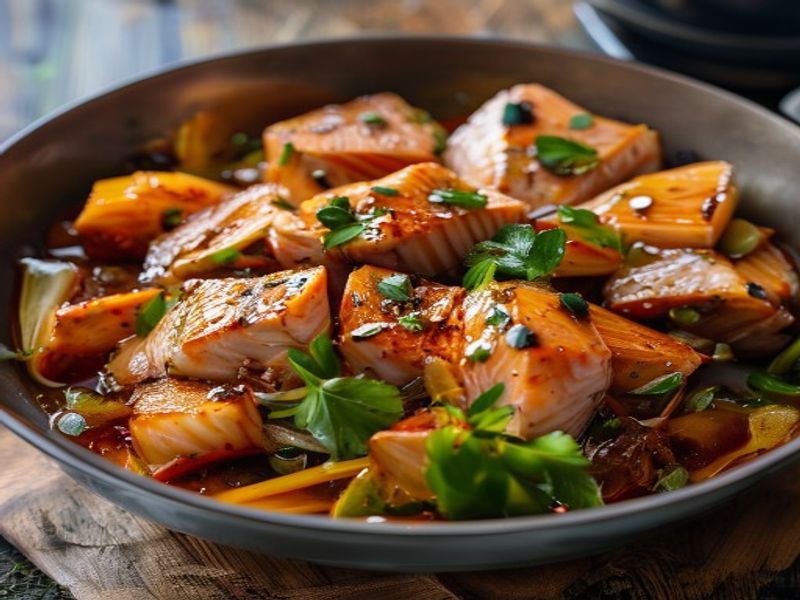
What You’ll Need
Ingredients
- 1.5 pounds wild-caught salmon fillets: Cut into 4 equal portions, skin-on for structural integrity during cooking
- 2 tablespoons neutral oil: Avocado or refined grapeseed oil for high smoke point
- 1 medium red bell pepper: Cored, seeded, and cut into 1/4-inch strips
- 2 medium carrots: Peeled and julienned into 3-inch matchsticks
- 1.5 cups broccoli florets: Cut into uniform 1-inch pieces for even cooking
- 1/2 cup low-sodium soy sauce: Provides balanced salt without overwhelming the glaze
- 3 tablespoons raw honey: Adds viscosity and caramelization notes
- 1 tablespoon rice vinegar: Cuts through richness and brightens the sauce
- 3 cloves fresh garlic: Finely minced, no pre-minced jarred substitutes
- 1 teaspoon fresh ginger: Grated on a microplane for maximum aromatic release
- 1 tablespoon cornstarch: Mixed with 2 tablespoons cold water for final thickening
- 2 scallions: Thinly sliced on a bias, reserved for garnish
Equipment
- 6-quart Instant Pot or compatible multi-cooker [Check Price on Amazon]
- 12-inch stainless steel sauté insert or separate heavy-bottomed pan
- Digital instant-read thermometer [Check Price on Amazon]
- Silicone-tipped tongs for delicate flipping
- Microplane grater and sharp chef's knife
Prep Work
Proper mise en place dictates success in pressure cooking. Pat the salmon completely dry with paper towels and season both sides with 1/2 teaspoon kosher salt. Allow the fish to sit at room temperature for exactly 15 minutes before cooking; this prevents thermal shock and promotes even protein coagulation. While the salmon rests, prepare your vegetables. Cut all produce into uniform dimensions so they cook at identical rates. Whisk the soy sauce, honey, rice vinegar, garlic, and ginger in a small glass bowl until fully emulsified. Keep the cornstarch slurry chilled until the final reduction stage. You can prep the vegetables and sauce base up to 12 hours in advance and store them separately in airtight containers at 39°F / 4°C. Do not combine wet and dry components until immediately before cooking to prevent premature breakdown of vegetable cell walls.
Cooking Instructions
- Heat and Sear: Select the Sauté function on your Instant Pot and set to Normal. Add 2 tablespoons neutral oil and allow it to heat until it reaches 350°F / 175°C. The oil will shimmer and move fluidly across the surface. Place salmon portions skin-side down. Do not move them for 3 minutes. You are listening for a steady sizzle and watching for the protein to turn opaque up the sides by approximately 1/3. Flip using tongs and sear flesh-side for exactly 1 minute until a pale golden crust forms. Remove to a clean plate.
- Stir Fry Vegetables: Add red bell pepper and carrots to the same insert. Toss continuously for 2 minutes until edges soften slightly and color intensifies. Add broccoli florets and stir fry for 45 seconds. Remove all vegetables to the plate with the salmon. Scrape the bottom of the pot with a silicone spatula to release any browned fond; this prevents the burn error during pressure cooking.
- Pressure Build: Pour the soy-honey mixture into the pot. Use a wooden spoon to deglaze any remaining stuck particles. Place the trivet inside and arrange the salmon and vegetables on top. Secure the lid, set the valve to Sealing, and select Manual/Pressure Cook on High for exactly 4 minutes. The pot will reach approximately 11.6 PSI within 3-5 minutes depending on starting temperature.
- Release and Reduce: Once the timer ends, perform a quick release by carefully moving the valve to Venting. Open the lid immediately. Remove the trivet and transfer contents to a warm serving platter. Switch back to Sauté mode and bring the sauce to a rolling boil at 212°F / 100°C. Stir in the cornstarch slurry and cook for 1 minute, whisking constantly until the liquid coats the back of a spoon. Return salmon and vegetables to the pot, toss gently to coat, and heat for 30 seconds.
- Final Verification: Insert your digital thermometer into the thickest part of a fillet. The internal temperature must read exactly 145°F / 63°C. The flesh should separate cleanly along the white fat lines and appear opaque throughout. If under 140°F / 60°C, return to Sauté for 1 additional minute. Check for overcooking; the texture should remain springy, not chalky.
Pro Tips
In my experience, the most common failure point in pressure-cooked seafood is residual heat carryover. I find that removing the salmon 2 degrees below target temperature allows it to reach perfect doneness during the 5-minute resting phase without drying out. Always use cold water for your cornstarch slurry; warm water creates lumps that ruin sauce texture. If low-sodium soy is unavailable, dilute regular soy with 1 tablespoon water and reduce added salt elsewhere. For a lower-sugar variation, substitute the honey with 2 tablespoons erythritol-based syrup and add 1/4 teaspoon xanthan gum during the reduction stage. You can fully assemble the raw ingredients and sauce in a freezer bag, freeze for up to 30 days, and cook directly from frozen by adding 2 minutes to the pressure cycle. Never thaw in warm water, as it activates enzymes that degrade the delicate muscle fibers.
Serving Suggestions
Plate over 1 cup of steamed jasmine or brown rice per portion to absorb excess glaze. The dish pairs exceptionally well with lightly pickled cucumbers or a quick ginger-scallion broth to balance the rich umami. For a low-carb alternative, serve over cauliflower rice or roasted bok choy. Standard portioning is 6 ounces of cooked salmon with 3/4 cup vegetables per adult, and 4 ounces with 1/2 cup vegetables for children under 10. Garnish with 1 teaspoon toasted sesame seeds and the reserved scallions immediately before service to preserve color and crunch.
FAQ
Can I use frozen salmon for this instant pot salmon stir fry?
Yes, but you must adjust the pressure time. Use 1-inch thick frozen fillets and increase the pressure cook time to exactly 7 minutes. Do not stack frozen portions; lay them flat to ensure even heat penetration. Expect slightly longer time to reach full pressure.
How do I know when the salmon is perfectly done?
Rely on internal temperature, not visual guesswork. Insert a digital instant-read thermometer into the thickest section. At 145°F / 63°C, the protein structure has fully coagulated. The flesh will turn from translucent pink to solid opaque and separate easily when pressed with a fork. Remove immediately to prevent carryover cooking from pushing it past 150°F / 66°C, which causes dryness.
Can I prep this ahead and store leftovers?
Store cooled leftovers in a shallow airtight container for up to 3 days at 39°F / 4°C. Reheat gently in a covered pan over low heat with 1 tablespoon water to restore moisture. Avoid microwaving above 50% power, as it rapidly dehydrates the fish and causes the honey soy glaze to separate.
*As an Amazon Associate I earn from qualifying purchases.
发表回复