Introduction
This high-protein salmon bowl delivers a complete, nutritionally balanced meal in under 30 minutes. The recipe hinges on two technical pillars: properly searing skin-on salmon to achieve a crisp exterior while maintaining a moist, tender interior, and emulsifying a stable creamy garlic sauce that clings to warm grains without breaking. Designed for home cooks seeking an easy recipe that doesn’t sacrifice restaurant-quality results, this homemade healthy meal requires basic knife skills and precise heat management. The sauce replaces heavy dairy with Greek yogurt and olive oil, maximizing protein density while keeping the dish light. You will learn how to control pan temperature, read visual doneness cues, and balance acidity and fat for optimal flavor delivery. This guide assumes an intermediate skill level but breaks down every step for reliable execution.
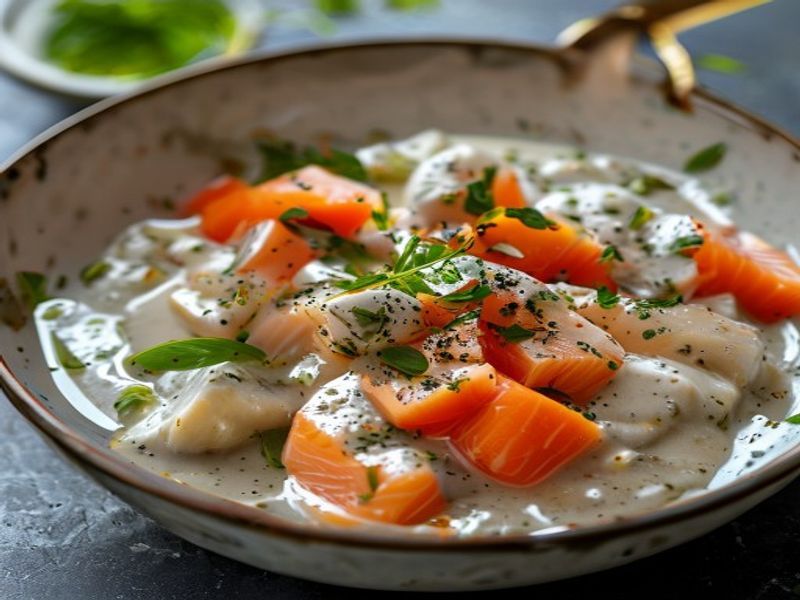
What You’ll Need
- Salmon fillets: 2 pieces (6 oz / 170g each), skin-on, center-cut. Look for firm flesh with tight muscle separation and a bright, ocean-fresh aroma.
- Quinoa: 1 cup (170g) dry. Rinse thoroughly to remove saponins.
- Vegetable broth: 2 cups (480ml) low-sodium, for cooking grains.
- Cherry tomatoes: 1 cup (150g), halved.
- Cucumber: 1 medium (150g), English variety preferred, diced.
- Avocado: 1 large (200g), just-ripe, sliced.
- Edamame: 1 cup (155g) shelled, thawed.
- Garlic: 3 cloves (15g), finely minced.
- Greek yogurt: 1/2 cup (120g) plain, full-fat (5% fat minimum for stability).
- Olive oil: 2 tablespoons (30ml) divided.
- Lemon juice: 2 tablespoons (30ml) fresh-squeezed.
- Dijon mustard: 1 teaspoon (5g) for emulsion binding.
- Kosher salt: 1.5 teaspoons (9g) total, divided.
- Black pepper: 1/2 teaspoon (2g) freshly cracked.
- Fresh dill: 2 tablespoons (3g) chopped.
Equipment: 12-inch nonstick or carbon steel skillet [Check Price on Amazon], 2-quart saucepan, instant-read thermometer, fine mesh strainer, 8-inch chef’s knife, small whisking bowl.
Prep Work
Proper mise en place dictates execution speed and consistency. Begin by placing quinoa in a fine mesh strainer and rinsing under cold running water for exactly 45 seconds. Agitate gently to remove surface starch and saponins, then shake vigorously for 10 seconds to drain excess water. Pat salmon fillets completely dry with heavy-duty paper towels; residual surface moisture is the primary cause of failed searing and steam-cooked fish. Transfer salmon to a plate and let rest at room temperature for 10-15 minutes. This temperature equalization prevents a raw center when the exterior hits the pan.
Mince garlic, halve tomatoes, dice cucumber, and slice avocado. In a small bowl, combine Greek yogurt, 1 tablespoon olive oil, 1 tablespoon lemon juice, Dijon mustard, minced garlic, 1 teaspoon kosher salt, and black pepper. Whisk continuously for 60 seconds until fully homogenized and smooth. Cover tightly and refrigerate until assembly. Cold temperatures help stabilize the emulsion and prevent separation. Timing: Quinoa and sauce can be prepared 24 hours ahead. Vegetables should be prepped within 2 hours of cooking to prevent oxidation and moisture loss.
Cooking Instructions
- Toast and simmer quinoa: Add drained quinoa to a 2-quart saucepan. Pour in vegetable broth. Place over high heat until liquid reaches a rolling boil (212°F / 100°C). Immediately reduce to low heat (simmering at 180°F / 82°C), cover with a tight-fitting lid, and cook for exactly 12 minutes. Remove from heat and let stand covered for 5 minutes. Uncover and fluff with a fork. This resting phase allows residual steam to complete starch gelatinization without overcooking.
- Sear salmon: Heat 1 tablespoon olive oil in your 12-inch skillet over medium-high heat until the surface temperature reaches 400°F / 205°C. Use an infrared thermometer if available. Carefully place salmon fillets skin-side down. Press firmly with a fish spatula for 3 seconds to ensure full pan contact and prevent curling. Cook undisturbed for exactly 4 minutes. You will hear a sharp, consistent sizzle that gradually softens; this acoustic shift indicates moisture is evaporating from the skin and the Maillard reaction is initiating. Flip and cook for an additional 2 minutes on the flesh side. Insert an instant-read thermometer into the thickest part; the internal temperature should read 135°F / 57°C. Remove to a clean plate and rest for 3 minutes. Carryover cooking will safely raise the core to 145°F / 63°C while preserving a tender, opaque texture. Common mistake: Flipping early or sliding the fillet during the first 3 minutes tears the protein matrix and prevents crust formation.
- Warm vegetables: Return the same skillet to the burner and reduce heat to medium (300°F / 150°C). Add cherry tomatoes and edamame. Sauté for exactly 2 minutes until tomatoes blister slightly and release their natural juices. Add diced cucumber and toss for 15 seconds to lightly warm without compromising crispness.
- Assemble bowls: Divide warm quinoa evenly between two wide, shallow bowls. Arrange rested salmon, blistered tomatoes, edamame, cucumber, and sliced avocado over the grains. Spoon the creamy garlic sauce generously over the salmon and grains. Garnish with fresh dill and serve immediately.
Pro Tips
- Score the skin: I find that scoring the salmon skin lightly with a sharp knife, making cuts 1/8-inch deep and spaced 1 inch apart, prevents aggressive curling and ensures uniform contact with the pan surface. This technique guarantees an evenly crisp exterior.
- Adjust sauce viscosity: If the creamy garlic sauce thickens excessively after refrigeration, whisk in 1 teaspoon of warm water at a time until it reaches a pourable consistency. Cold dairy-based emulsions naturally firm as fats solidify.
- Meal prep storage: In my experience, storing components in separate airtight containers preserves texture for up to 3 days. Keep the sauce chilled, quinoa lightly covered, and salmon refrigerated. Reheat grains with 1 tablespoon of water in the microwave for 45 seconds to restore moisture.
- Grain substitution: Swap quinoa for 1.5 cups (300g) cooked farro or short-grain brown rice. Maintain the exact liquid-to-grain ratio, but extend simmer time to 20 minutes for whole grains to achieve proper hydration.
Serving Suggestions
This high-protein salmon bowl provides approximately 45 grams of complete protein per serving, making it ideal for post-workout recovery or sustained energy throughout the workday. Pair with a light arugula salad dressed in lemon vinaigrette to introduce a bitter, peppery contrast that cuts through the richness of the sauce. For precise portion control, weigh your cooked grains before plating; 1/2 cup (90g) per bowl aligns with standard macro guidelines, while highly active individuals may scale to 3/4 cup (135g). Serve immediately after assembly while the salmon is still warm and the sauce maintains optimal viscosity. Cold salmon will cause the yogurt-based sauce to congeal prematurely, altering the mouthfeel.
FAQ
Can I use frozen salmon?
Yes, but thaw it completely in the refrigerator for 12-16 hours before cooking. Never sear partially frozen fish, as the exterior will carbonize while the interior remains raw. After thawing, press the fillets between paper towels and allow them to rest for 5 minutes to extract trapped moisture before seasoning.
How do I know when it’s done without a thermometer?
Insert a fork into the thickest section and gently twist. The flesh should separate into large, opaque flakes and reveal a slightly translucent pink center. If the meat appears glossy, rubbery, or resists flaking, return it to the pan for an additional 30 seconds per side.
Can I prep this ahead?
Components can be prepped 1-2 days in advance. Store cooked quinoa, chopped vegetables, and sauce in separate airtight containers in the refrigerator. Assemble bowls cold or at room temperature for optimal food safety and texture. The sauce will maintain stability for 4 days, while pre-cooked salmon is best consumed within 48 hours to prevent protein tightening and flavor degradation.
*As an Amazon Associate I earn from qualifying purchases.
发表回复