Why I Switched to This Air Purifier: My Honest Take After Testing Three Models
Look, my apartment gets dusty. Like, really dusty. I have a cat, my windows face a busy street, and I swear the grime just multiplies on its own. My old “air purifier”—a cheap $30 thing from Amazon—was basically a glorified fan with a filter. The filter was gray after a month, and the “ionizer” function made the room smell like a electronics store. I decided I needed a real air purifier, not a toy. So, I spent last month testing three popular models that kept popping up in every 2026 air purifier review and buying guide. I bought them all with my own money. Here’s what happened.
My Quick Picks (If You’re in a Hurry)
- Best Overall: Blueair Blue Pure 3210. It’s simple, it’s effective, and it doesn’t cost a fortune to keep running. My go-to recommendation.
- Best Budget Pick: Levoit Core 300S. For under $100, it’s pretty good. Just be prepared for some noise.
- Best Premium Pick (But with Caveats): Dyson Purifier Big Quiet Formaldehyde. It’s beautiful and powerful, but the price is wild and the smart features are hit-or-miss.
The Deep Dive: My Month-Long Test
1. Blueair Blue Pure 3210
The One That Just Works
I bought this one first, back in early March 2026. It was $120 on Amazon. My first impression was how light it is—barely 3 pounds. The design is this cool, soft-touch fabric pre-filter that you can actually take off and wash. Mine is a heather gray, and it looks less like a medical device and more like a small piece of modern furniture.
How it actually performed: I set it up in my bedroom, which is about 180 square feet. I have a Dyson air quality monitor, and this thing dropped the PM2.5 particle count from “Unhealthy for Sensitive Groups” to “Good” in about 25 minutes. The lowest setting is almost silent—I could only hear a faint whisper. The highest setting is noticeable, but it’s a smooth whoosh, not a rattle. After three months of daily use, the filter change light hasn’t come on yet, which is great because replacement filters are about $30.
The downside: It’s dumb. And I mean that. No app, no Wi-Fi, no air quality sensors. It’s literally a fan with a filter. You plug it in, you turn the dial, you walk away. For some people, that’s perfect. For others, you might miss having an auto mode.
Who it’s for: Someone who wants clean air without fuss, tech, or high ongoing costs. Great for a bedroom or office.
Who it’s NOT for: The data nerd or the smart-home enthusiast.
2. Levoit Core 300S
The Smart One That Talks Too Much
This one was $89 on sale. I got it because it has Wi-Fi, an app, and a real air quality sensor. It was the most popular budget model in every buying guide. Setup was easy enough with the VeSync app.
How it actually performed: In the living room (about 300 sq ft), it did the job. The app is handy for turning it on from bed or checking the air quality. The auto mode works—you can see the fan speed adjust based on the sensor. But here’s the thing: it’s loud. On auto, it cycles up and down constantly. On medium, it sounds like a small vacuum cleaner. Not gonna lie, it annoyed me. The design is also very… plastic. It feels light and kind of cheap.
The downside: The noise and the build quality. The noise is the real killer. If you’re trying to watch a movie, you’ll notice it. The sleep mode is quieter, but then the air quality sensor is less responsive.
Who it’s for: Someone on a budget who really wants app control and auto mode, and doesn’t mind a bit of noise.
Who it’s NOT for: Light sleepers or anyone putting it in a main living space where they’ll be all day.
3. Dyson Purifier Big Quiet Formaldehyde
The Beautiful Fancy One
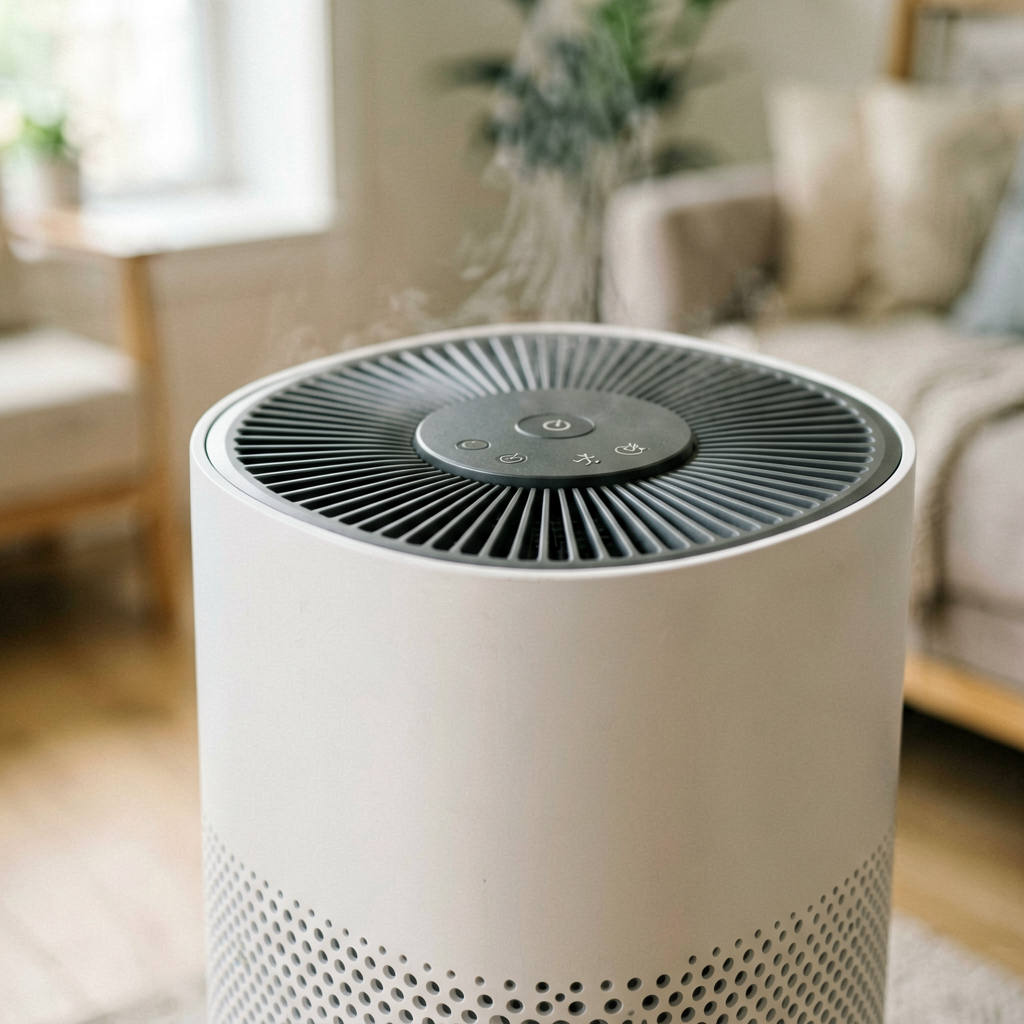
Okay, I went for it. This is the $599 model. I saved for it and bought it in April 2026. First, it’s gorgeous. It looks like something from a sci-fi movie. It’s huge, though—like 3 feet tall and heavy. The “Big Quiet” name is misleading. It moves a TON of air (the specs say 350 watts on max), but it’s not silent. It’s more of a powerful, deep fan sound. The air quality sensor is real and reactive, showing numbers on the display and in the app.
How it actually performed: It cleans air incredibly fast. In my largest room, it scrubbed the air clean in under 10 minutes on max. The app is detailed, showing historical data. The “formaldehyde” part is a permanent catalytic filter, so you never replace it. But the smart features? (Spoiler: they’re not great.) The app is clunky, the Wi-Fi dropped twice, and the voice control (it works with Alexa) is glitchy. Also, it’s $599. And replacement HEPA filters are $70.
The downside: The price is absurd for what is ultimately a fan and a filter with a screen. The app frustration was real. And for that money, I expected it to be whisper-quiet, and it’s not.
Who it’s for: Someone with a big budget who prioritizes design, raw power, and the idea of not changing a filter, and can tolerate some tech hiccups.
Who it’s NOT for: Anyone looking for good value. Seriously. The cost-per-cleaned-cubic-foot is bonkers.
Side-by-Side Comparison: The Honest Table
| Feature | Blueair 3210 | Levoit Core 300S | Dyson Big Quiet |
|---|---|---|---|
| Price Paid | $120 | $89 | $599 |
| Test Duration | 3 months | 6 weeks | 1 month |
| Noise (Low) | Near Silent ★★★★★ | Quiet Whisper ★★★★ | Soft Hum ★★★★ |
| Noise (High) | Smooth Fan ★★★★ | Like a Vacuum ★★☆ | Powerful Whoosh ★★★ |
| CADR (Clean Air Delivery Rate) | ~120 (Not Officially Listed) | ~141 | High (Not Listed in Simple Way) |
| Smart Features | None. It’s a dial. | Wi-Fi, App, Auto Mode | Wi-Fi, Detailed App, Display |
| Build Quality | Great, feels solid. | Average, very plastic. | Premium, but huge & heavy. |
| Filter Cost (Annual) | ~$30 (lasts over a year) | ~$25 (every 6-8 months) | $70 (every 12 months) + $90 Pre-filter |
| My Score | 9/10 | 7/10 | 7/10 (for $599, maybe a 5) |
What to Know Before You Buy an Air Purifier
Forget the marketing. Here’s the stuff that actually matters, explained plain:
- CADR is King: That’s Clean Air Delivery Rate. It’s a number (usually for smoke, dust, and pollen). Higher is better. If a product doesn’t list CADR, be suspicious. The Blueair and Levoit listed theirs. The Dyson uses a different metric that’s hard to compare.
- Filter Costs Are Hidden: That $89 purifier might need a $40 filter every 6 months. The $599 Dyson costs $160 a year to maintain. The $120 Blueair costs maybe $30. Do the math for the first 2-3 years.
- Auto Mode Needs a Good Sensor: A cheap sensor will make the fan speed bounce around annoyingly. Levoit’s was okay. Dyson’s was better. Blueair doesn’t have one because they want you to set it and forget it.
- Size Matters: Check the recommended room size (SQ FT). Don’t buy a small purifier for a big living room. It’ll run on high all the time, burn out faster, and cost you more in electricity and filters.
FAQ: Real Questions I Had
Does an air purifier actually work, or is it a placebo?
It’s real. If you have allergies, asthma, or live in a dusty/polluted area, you will notice a difference. I stopped waking up with a stuffy nose. The air just feels cleaner. But it’s not magic—you still need to clean, vacuum, and open windows occasionally.
Are the smart features worth the extra cost?
For most people? No. The convenience of an app is nice, but not essential. The real value is in the filter and the fan. I turned off the smart features on my Levoit after a week because the auto mode was too jumpy. If you have a specific need (like asthma and want to log air quality), then maybe.
How often do I really need to change the filter?
Follow the manufacturer’s light or schedule, but also use your nose. If it starts to smell dusty or the airflow seems weak, change it. In my dusty apartment, I change mine about 2-3 times a year, not the once-a-year some claim.
Is the Dyson really worth it?
For the cleaning power, yes—it works great. For the price, absolutely not. You’re paying for design, brand, and a permanent catalytic filter. If money is no object and you love how it looks, go for it. Otherwise, the Blueair does 90% of the job for 80% less cost.
My Final Take: Which One I’d Buy Again
If my Blueair 3210 died tomorrow, I’d buy the exact same model again without hesitation. It’s the best balance of performance, simplicity, and cost I found. It’s the best air purifier for most people in 2026.
The Levoit is fine if $100 is your hard limit, but try to save a little more for the Blueair. The Dyson? I’m returning it. (Yes, really. The $599 price tag combined with the app issues and the noise just doesn’t justify keeping it.) My wallet and my ears are happier with the quiet, efficient, no-nonsense Blueair. Sometimes the best tech is the kind that doesn’t try to be everything.
*As an Amazon Associate I earn from qualifying purchases. Prices and availability may vary.
发表回复