30-Minute One-Pan Salmon Soup
A Complete Guide to Speed, Flavor, and Technique
This one-pan salmon soup is designed for the home cook who demands restaurant-quality results on a weeknight. It leverages the profound flavor of properly seared salmon, the sweet depth of a quick-reduction broth, and the tender finish of wilted greens, all cooked in a single vessel for maximum flavor integration and minimal cleanup. This recipe is ideal for a skill level ready to learn key techniques: achieving a perfect sear, building layers of flavor without complex steps, and timing delicate proteins perfectly. The result is a soup that is both light and deeply satisfying, packed with protein and nutrients. Expect a total active cooking time of under 30 minutes, with a finished dish that is far greater than the sum of its parts.
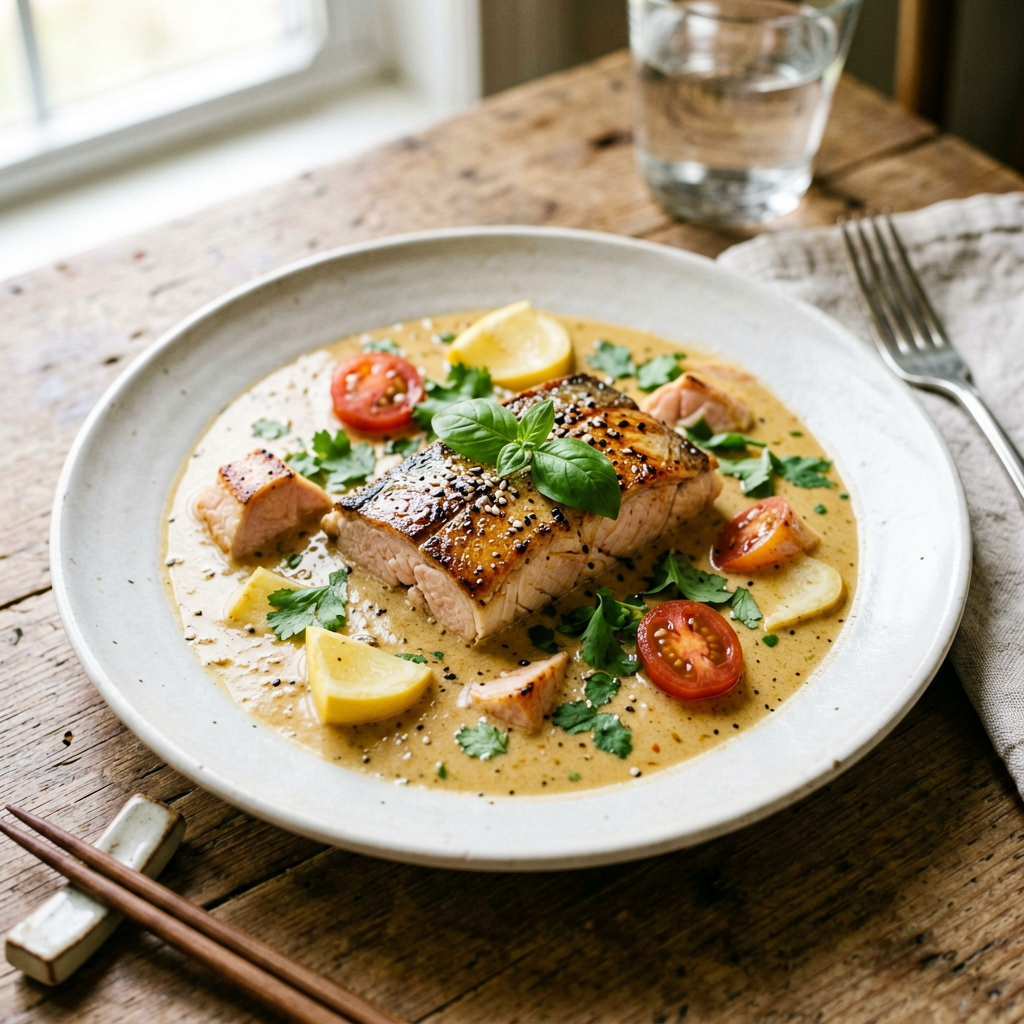
What You’ll Need
Ingredients (Serves 2)
- Salmon fillets: 2 (6-ounce / 170g) fillets, skin-on and pin bones removed. Skin-on is crucial for rendering fat and building a flavorful base. Pat skin completely dry.
- Extra-virgin olive oil: 3 tablespoons, divided.
- Yellow onion: 1 small (about 5 ounces / 140g), finely diced.
- Garlic: 3 cloves, thinly sliced.
- Fennel bulb: 1 small (about 7 ounces / 200g), cored and thinly sliced. Reserve fronds for garnish.
- Dry white wine: ½ cup (120ml). Sauvignon Blanc or Pinot Grigio works well.
- Low-sodium chicken or vegetable broth: 2 ½ cups (600ml). Good quality broth is key to the soup’s foundation.
- Cherry tomatoes: 1 cup (150g), halved.
- Baby spinach or kale: 2 cups (60g), packed. Kale will require 1-2 extra minutes to wilt.
- Fresh dill: 2 tablespoons, chopped, plus extra fronds for garnish.
- Lemon: 1, zested and juiced (about 2 tablespoons juice).
- Kosher salt and freshly ground black pepper.
Equipment
- A large (12-inch / 30cm) oven-safe stainless steel or cast-iron skillet. A non-stick pan can be used but will not develop the same deep-colored fond (browned bits) on the bottom.
- An instant-read thermometer (recommended for perfect salmon).
- A fine-mesh strainer (optional, for a crystal-clear broth).
Prep Work
1. Salmon: 15 minutes before cooking, remove the salmon from the refrigerator. This tempers the fish, ensuring even cooking. Pat both sides, especially the skin, with paper towels until completely dry. Dry skin is the single most important factor for achieving a crisp, golden-brown crust. Season both sides generously with 1 teaspoon kosher salt and ½ teaspoon black pepper.
2. Vegetables: Have all your vegetables prepped and ready (mise en place). Finely dice the onion, slice the garlic and fennel, halve the tomatoes, and wash the greens.
3. Broth & Wine: Measure out the broth and wine. Have them at the ready by the stove.
In my experience, the 15 minutes of salmon tempering is non-negotiable. Cold fish hitting a hot pan leads to uneven cooking—a tough outer layer and a raw center. Organizing your prepped ingredients is what makes the 30-minute timeline achievable.
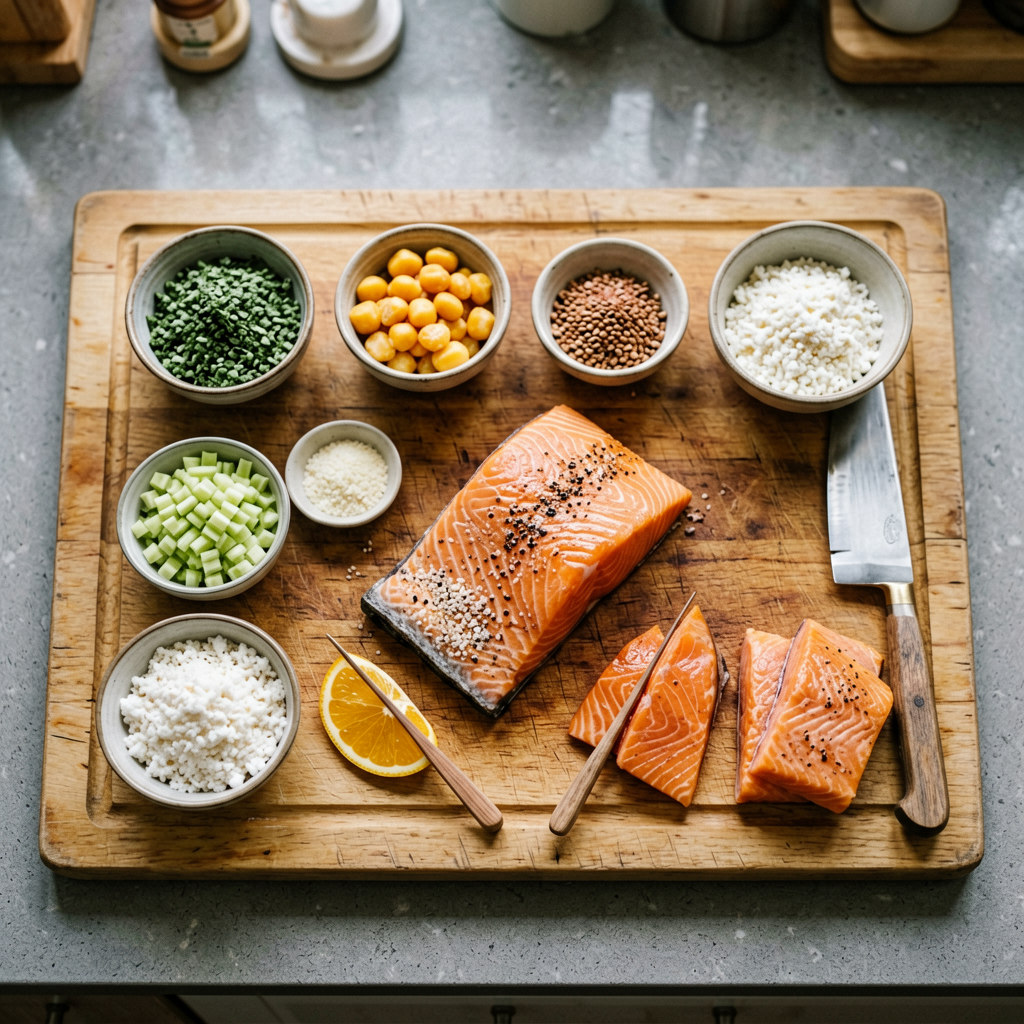
Cooking Instructions
- SEAR THE SALMON (7 minutes): Place your skillet over medium-high heat (approximately 375°F / 190°C surface temperature). Add 1.5 tablespoons of olive oil. When the oil shimmers and is just about to smoke, carefully lay the salmon fillets skin-side down. Press gently with a spatula for the first 30 seconds to ensure full contact with the pan and prevent curling.
- What to watch for: You should hear a steady, aggressive sizzle. After 3-4 minutes, the skin should release easily from the pan and appear deeply golden and crisp. Look for a dark golden-brown color creeping up the sides of the fillet.
- Why it matters: This fond (the browned bits) is pure flavor. The rendered salmon fat will also flavor the entire soup base.
- Flip and finish: Reduce heat to medium. Flip the fillets and cook for another 2-3 minutes on the flesh side, just to lightly sear. The center should still be very rare. Transfer the salmon to a plate. It will finish cooking later in the soup.
- BUILD THE AROMATIC BASE (5 minutes): In the same pan, reduce heat to medium. There should be a tablespoon or so of rendered salmon fat. Add the remaining 1.5 tablespoons of olive oil, then add the diced onion and sliced fennel. Sauté, stirring occasionally, for 4-5 minutes until softened and starting to caramelize. Add the sliced garlic and cook for 1 more minute until fragrant, being careful not to burn it.
- Visual cue: The onions and fennel should become translucent and take on a light golden hue. The fond from the salmon will loosen as the vegetables release moisture.
- DEGLAZE AND REDUCE (3 minutes): Pour in the white wine. Increase heat to medium-high. Scrape the bottom of the pan vigorously with a wooden spoon to dissolve all the flavorful browned bits. Let the wine boil and reduce by about half, which should take 2-3 minutes.
- Why it matters: Reducing the wine cooks off the harsh alcohol taste and concentrates its fruity acidity, which will brighten the entire soup.
- SIMMER THE BROTH (10 minutes): Add the chicken broth and halved cherry tomatoes. Increase heat to bring the soup to a boil, then reduce to a steady simmer. Cook for 10 minutes to allow the flavors to meld and the tomatoes to soften slightly. Taste the broth and season with ¼ to ½ teaspoon of kosher salt, depending on your broth’s saltiness.
- FINISH THE SOUP (3 minutes): Nestle the seared salmon fillets, along with any accumulated juices from the plate, back into the simmering soup. The salmon will now poach gently. Add the spinach or kale, pressing it down into the liquid. Simmer for 2-3 minutes until the greens are just wilted and the salmon reaches an internal temperature of 125°F / 52°C for medium (it will continue to cook). The fish should be opaque on the outside but still slightly translucent in the very center. It will flake easily with a fork but not be dry.
- Critical visual cue: For medium doneness, the salmon should change from a deep translucent orange to a more opaque, coral-pink color. Overcooked salmon will turn pale and chalky.
- FINAL TOUCHES (Off-Heat): Remove the pan from the heat. Stir in the chopped fresh dill, lemon zest, and lemon juice. The acid and herbs are added at the end to preserve their fresh, bright flavors.
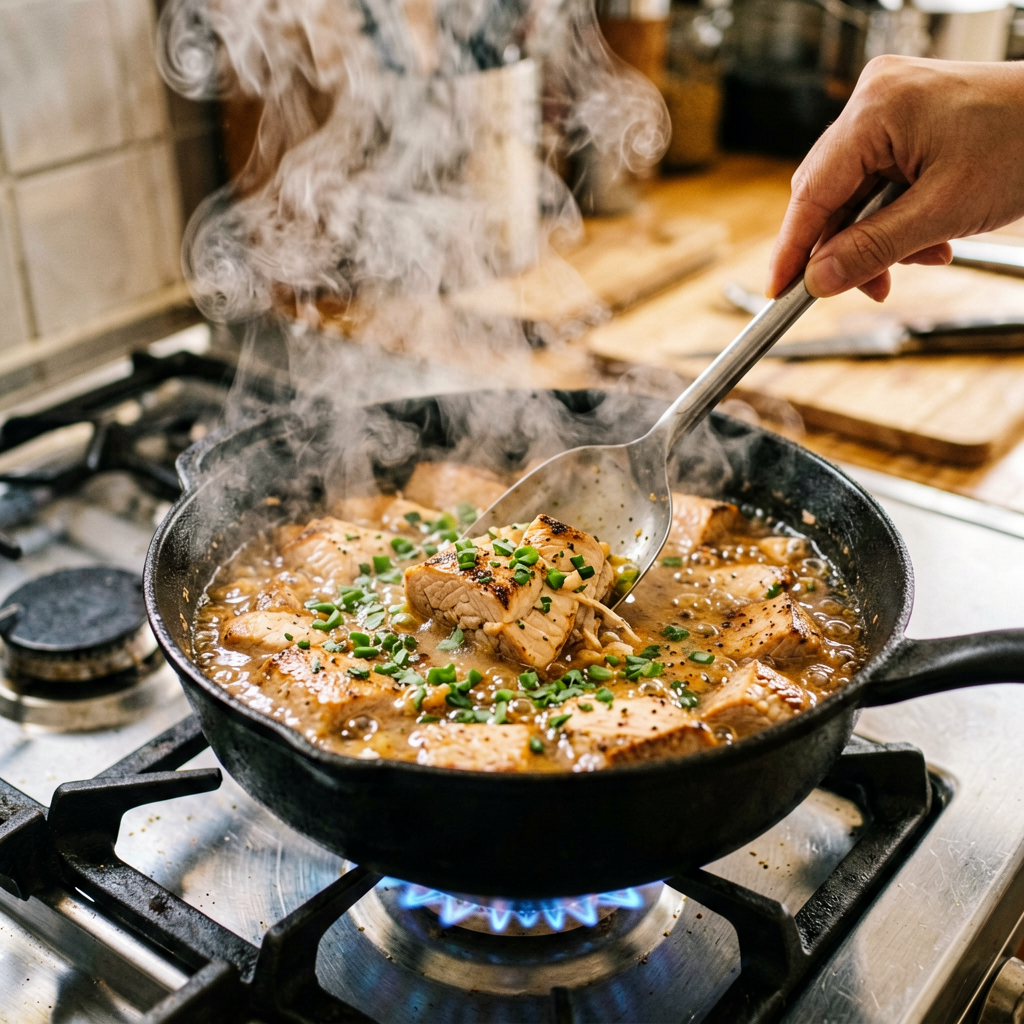
Pro Tips
- The Sear is Everything: Don’t rush step 1. A proper sear creates the flavor backbone of the entire dish. If your pan isn’t hot enough, the salmon will steam, not sear, and you’ll lose that rich, savory base.
- Broth Quality & Substitutions: Use a good quality broth; it’s 70% of the soup. For a richer, creamier finish without cream, use 1 cup of broth and 1 cup of unsweetened almond milk. Add it in step 4 and simmer gently—do not boil after adding.
- Make-Ahead Strategy: You can prep all vegetables (dice onion, slice fennel/garlic) and store them in airtight containers for up to 2 days. Do not sear the salmon ahead, as it is best cooked fresh. The soup base (steps 1-4) can be made a day in advance, cooled, and reheated before adding the salmon to poach.
Serving Suggestions
Ladle the soup into warm bowls, ensuring each serving gets a whole salmon fillet. Garnish with the reserved fennel fronds and an extra sprinkle of dill. A final crack of black pepper is always welcome. This soup is a complete meal on its own, but for a larger group, serve with crusty sourdough bread or garlic-rubbed crostini for dipping into the rich broth. A simple side salad with a lemon vinaigrette also pairs beautifully.
Portion Guidance: This recipe serves 2 as a generous main course or 4 as an appetizer portion.
Frequently Asked Questions
1. Can I use frozen salmon?
Yes, but thaw it completely in the refrigerator overnight first. Patting it extremely dry is even more critical with previously frozen fish to avoid excess moisture in the pan. Do not rush the thaw at room temperature, as it can compromise texture.
2. How do I know when the salmon is perfectly done?
The most reliable method is an instant-read thermometer. For a medium, tender center, pull the salmon at 125°F / 52°C. It will carryover to about 130°F / 54°C as it rests in the hot soup. Visually, the flesh should be opaque on the edges but still slightly translucent in the very center. It should flake gently when pressed.
3. Can I prep this entirely ahead for a dinner party?
You can do all the prep work (chopping, measuring) and even complete steps 1-4 (sear salmon, make broth base). Cool the broth base and refrigerate. When ready to serve, reheat the broth to a simmer, then add the raw, pre-seasoned salmon fillets and poach them fresh for 5-7 minutes. This ensures the salmon is perfectly cooked for your guests.
4. What if my salmon skin sticks to the pan?
This is almost always due to one of two things: the pan or oil wasn’t hot enough, or the skin wasn’t completely dry. Let it cook undisturbed for a full 3 minutes. It will release naturally when the crust is fully formed. If it’s resisting, give it another 30-60 seconds.
🛒 Recommended Products
*As an Amazon Associate I earn from qualifying purchases.
*As an Amazon Associate I earn from qualifying purchases.*>
发表回复