Easy Asian Beef Skillet
Prep Time: 15 minutes | Cook Time: 12 minutes | Serves: 4
Introduction
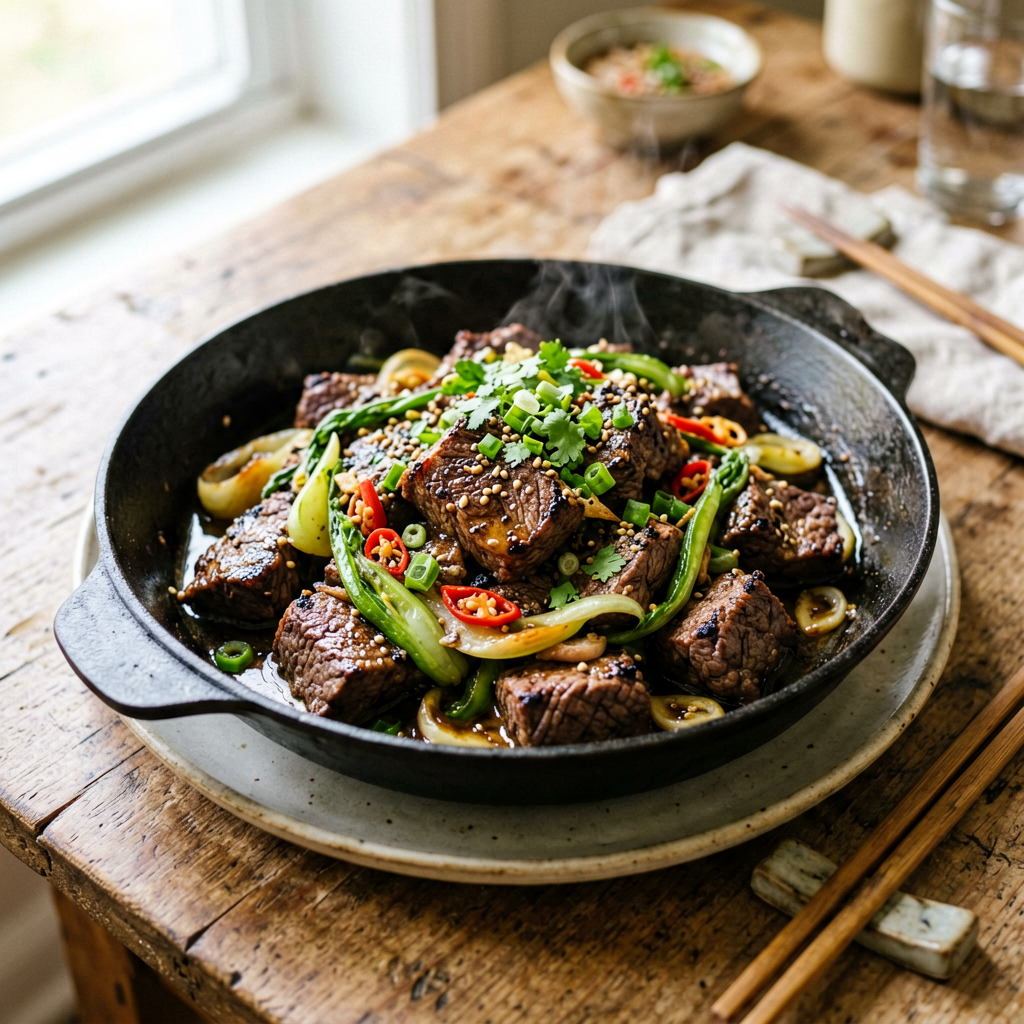
This is a weeknight workhorse of a recipe. It delivers the savory, umami-rich flavors you associate with restaurant stir-fries, but is designed for a single skillet and minimal cleanup. The technique relies on high heat and proper sequencing—searing the beef first for a caramelized crust, then cooking the vegetables in the flavorful fond left behind. This isn’t a “throw everything in the pan” dish; the order of operations is key to avoiding soggy vegetables and overcooked meat. It’s a perfect meal for beginner to intermediate home cooks looking to master quick, high-heat skillet cooking. The result is a balanced plate with tender beef, crisp-tender vegetables, and a glossy, clinging sauce.
What You’ll Need
Ingredients
- For the Beef & Marinade:
- 1.5 pounds (680g) flank steak, sliced against the grain into 1/4-inch thick strips (see Prep Notes)
- 2 tablespoons (30ml) low-sodium soy sauce
- 1 tablespoon (15ml) oyster sauce
- 1 teaspoon (5ml) sesame oil
- 1 tablespoon (8g) cornstarch
- 1/2 teaspoon freshly ground black pepper
- For the Sauce:
- 1/4 cup (60ml) low-sodium soy sauce
- 3 tablespoons (45ml) water or low-sodium beef broth
- 2 tablespoons (25g) brown sugar
- 1 tablespoon (15ml) rice vinegar
- 1 teaspoon (5ml) toasted sesame oil
- 1 tablespoon (8g) cornstarch
- For the Skillet:
- 2 tablespoons (30ml) neutral, high-smoke-point oil (e.g., avocado, grapeseed, or vegetable oil)
- 1 medium head of broccoli, cut into bite-sized florets (about 3 cups)
- 1 large bell pepper (any color), sliced into thin strips
- 1 medium carrot, julienned or thinly sliced on a diagonal
- 3 cloves garlic, minced
- 1 tablespoon (15g) fresh ginger, grated
- 1/2 cup (75g) frozen peas, thawed
- Serving: Cooked jasmine rice and sesame seeds for garnish
Equipment Needed
- 12-inch (30cm) heavy-bottomed skillet or wok (a large surface area is critical for proper searing, not steaming)
- Instant-read thermometer (highly recommended for perfect doneness)
- Cutting board and sharp knife
- Mixing bowls (2 small, 1 medium)
- Tongs or a long-handled spatula
Prep Work (Mise en Place)
Proper preparation is 90% of the work here. Have everything measured, cut, and within arm’s reach before you turn on the heat. The cooking process moves very fast.
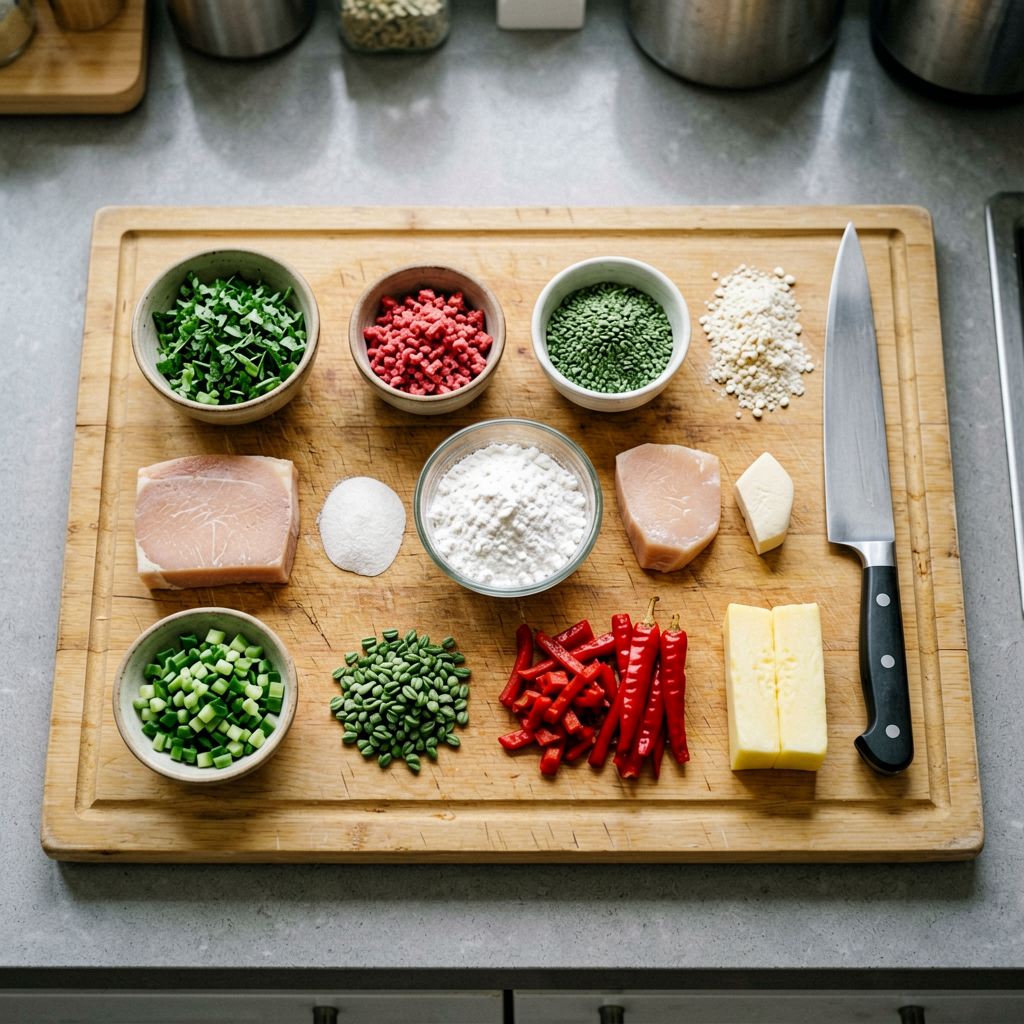
- Prep the Beef: Critical Step: Partially freeze your flank steak for 20-30 minutes before slicing. This firms it up, allowing you to cut very thin, uniform slices against the grain. Cutting against the grain (perpendicular to the muscle fibers) shortens them, ensuring tender bites. Toss the sliced beef with the marinade ingredients (2 tbsp soy sauce, 1 tbsp oyster sauce, 1 tsp sesame oil, 1 tbsp cornstarch, 1/2 tsp pepper) in a bowl. Let it sit while you prep vegetables.
- Prep the Sauce: In a separate small bowl, whisk together all sauce ingredients (1/4 cup soy sauce, 3 tbsp water, 2 tbsp brown sugar, 1 tbsp rice vinegar, 1 tsp sesame oil, 1 tbsp cornstarch). Set aside. Whisk again right before using.
- Prep the Vegetables: Cut all vegetables and have them grouped. Place garlic and ginger together, as they will go in simultaneously. Have peas ready in a small dish.
- Temperature: Ensure your beef is not ice-cold from the fridge when it hits the pan. Taking the chill off slightly helps it sear more evenly. The vegetables should be at room temperature.
Cooking Instructions
Step 1: Sear the Beef
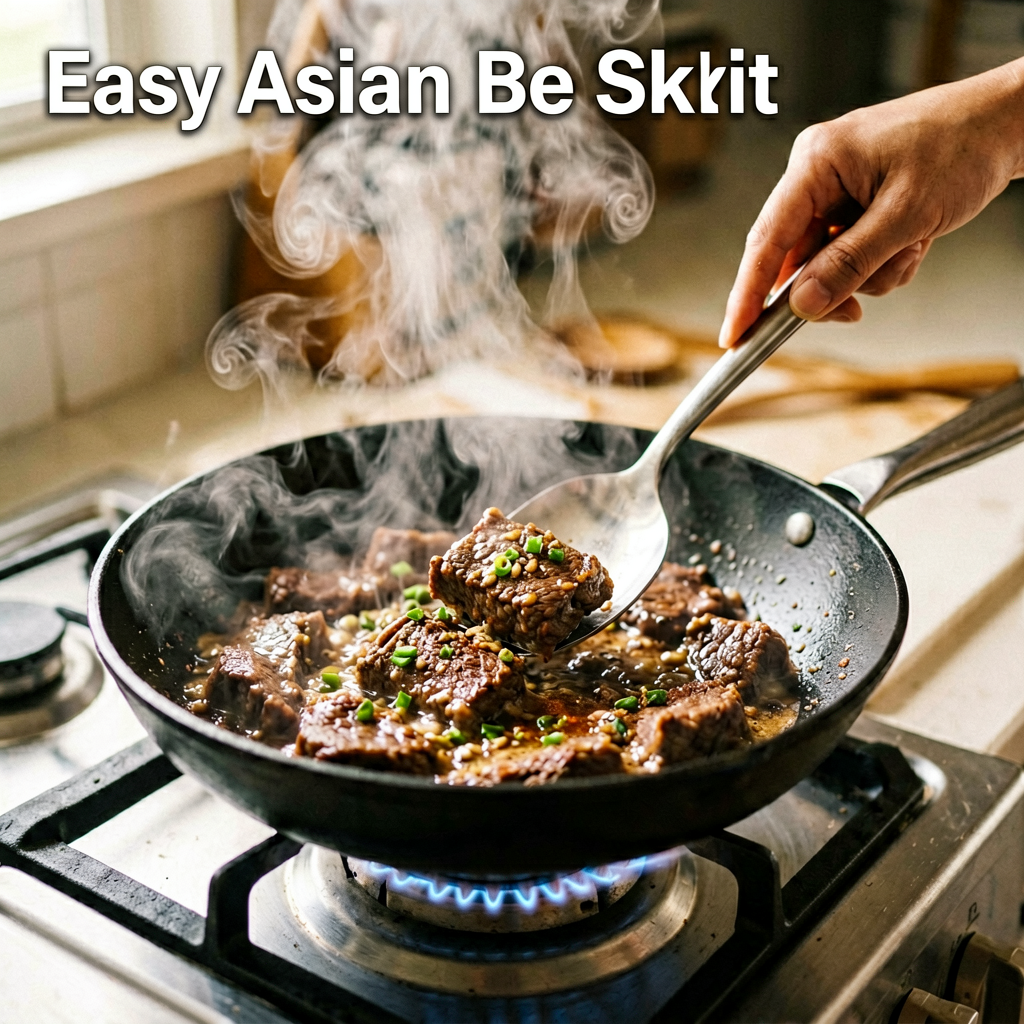
- Place your 12-inch skillet over high heat. Allow it to heat for 2 full minutes. It should be very hot—a drop of water should sizzle and evaporate instantly.
- Add 1 tablespoon of the neutral oil. Swirl to coat. The oil should shimmer but not smoke.
- Add the marinated beef to the pan in a single, uncrowded layer. Work in two batches if necessary. Overcrowding drops the pan temperature, causing the beef to steam instead of sear.
- Let the beef cook undisturbed for 90 seconds to 2 minutes. You should hear a loud, aggressive sizzle. Look for a deep brown, caramelized crust to form on the underside.
- Flip the pieces with tongs and sear the other side for another 1 to 1.5 minutes. The beef should be about 80% cooked. Transfer the beef and any accumulated juices to a clean plate.
Step 2: Cook the Vegetables
- Reduce heat to medium-high. Add the remaining 1 tablespoon of oil to the same skillet (do not wipe it out—the browned bits, or fond, are flavor gold).
- Add the carrots and bell peppers. Stir-fry for 2 minutes until they begin to soften slightly but retain a crisp bite.
- Add the broccoli florets and 2 tablespoons of water. Immediately cover the skillet with a lid or large baking sheet. Let the broccoli steam for 2 minutes. This technique perfectly cooks the broccoli while keeping it bright green and crisp-tender.
- Remove the lid. The water should have evaporated. Push the vegetables to the sides of the pan, creating a space in the center. Add the minced garlic and grated ginger to the center. Toast them for 30 seconds until fragrant—do not let them burn.
- Stir the garlic and ginger into the vegetables. Add the thawed peas and stir for 30 seconds to warm through.
Step 3: Combine and Finish
- Give your sauce a final, vigorous whisk (cornstarch settles) and pour it into the skillet over the vegetables. It will bubble and thicken almost immediately, within 30-45 seconds.
- Add the seared beef and any juices from the plate back to the skillet. Toss everything together gently but thoroughly, coating the beef and vegetables in the glossy sauce. Cook for 1 minute to allow the flavors to meld and ensure the beef is heated through.
- Critical Step: Check for Doneness: The sauce should be thick enough to coat the back of a spoon. The beef should reach an internal temperature of 145°F (63°C) for medium (slightly pink) or 160°F (71°C) for well-done. The vegetables should be vibrant and crisp-tender.
- Immediately remove from heat. Let it rest for 3 minutes in the skillet—this allows the sauce to set slightly and the juices in the beef to redistribute.
Pro Tips
- On Searing Beef: In my experience, the single biggest mistake home cooks make is stirring the beef constantly. Leaving it alone in a screaming-hot pan is the only way to achieve that restaurant-quality sear. Listen for the sizzle; it’s your audio cue that the temperature is right.
- Ingredient Substitutions: This recipe is highly adaptable. Beef: Sirloin steak or boneless beef short ribs work well. Vegetables: Swap in bok choy (add leaves at the very end), snow peas, mushrooms, or baby corn. Sauce: For a sweeter profile, add 1 tablespoon of pineapple juice. For heat, add 1-2 teaspoons of sriracha or chili garlic sauce to the sauce mixture.
- Make-Ahead Strategy: The sauce can be mixed and refrigerated for up to 3 days. The vegetables can be prepped and stored airtight in the fridge for 2 days. I do not recommend marinating the beef for more than 30 minutes, as the soy sauce can start to alter the texture of the meat’s surface.
Serving Suggestions
Spoon the skillet directly over hot, steamed jasmine rice to let the sauce soak in. This makes for 4 generous portions. Garnish with a sprinkle of toasted sesame seeds and thinly sliced scallions for a fresh, oniony bite. A side of quick-pickled cucumbers adds a wonderful contrast.
FAQ
1. Can I use frozen broccoli?
Yes, but do not thaw it first. Add it directly from the freezer to the skillet with the water in Step 9. You may need to increase the steaming time to 3-4 minutes. The texture may be slightly softer than fresh.
2. How do I know when the beef is perfectly done without overcooking?
An instant-read thermometer is your best tool. Pull the beef off the heat the moment it reaches your target temperature (145°F / 63°C for medium). Remember, it will continue to cook from residual heat for several degrees as it rests in the sauce.
3. Can I prep this ahead for a faster weeknight meal?
Absolutely. Prep all vegetables and store in an airtight container. Mix the sauce and store separately. You can even slice and marinate the beef up to 4 hours in advance; keep it refrigerated. When ready to cook, the actual hands-on time is under 12 minutes.
4. My sauce is too thin. What happened?
This usually means the cornstarch in the sauce didn’t activate properly. Ensure you whisk the sauce thoroughly just before pouring it into the hot pan—it must hit a boiling liquid to thicken. If it’s still thin, let it simmer for an additional 30-60 seconds, or mix 1 teaspoon of cornstarch with 1 tablespoon of cold water and stir it into the bubbling sauce.
🛒 Recommended Products
*As an Amazon Associate I earn from qualifying purchases.
*As an Amazon Associate I earn from qualifying purchases.*
发表回复