Keto-Friendly Salmon Stir Fry with Creamy Garlic Sauce: A Quick, Restaurant-Quality Dinner
Mastering a weeknight dinner that is both keto-compliant and restaurant-quality is about technique, not complexity. This salmon stir fry delivers on all fronts: crispy-skinned salmon fillets, tender vegetables, and a luscious, low-carb garlic cream sauce that comes together in under 30 minutes. This recipe is designed for the home cook who wants professional results without the fuss. The key is in the high-heat stir fry for the vegetables, separate searing for the salmon to achieve perfect texture, and building a sauce that emulsifies beautifully. We’ll focus on the how and why of each step, from the temperature of your pan to the final garnish. It’s an easy recipe that yields impressive, homemade results perfect for a quick dinner.
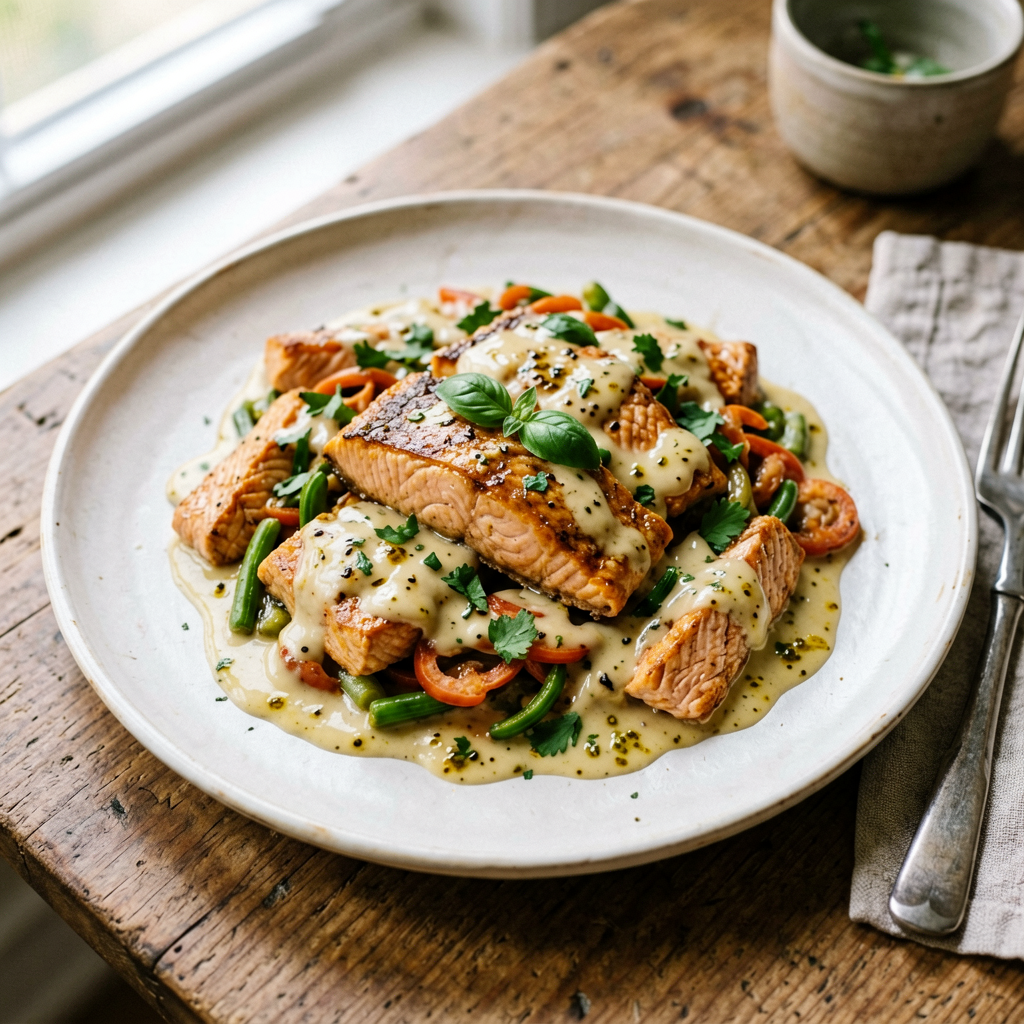
What You’ll Need
Ingredients
- Salmon Fillets: 2, 6-oz each (170g), skin-on. Skin-on fillets render fat for crispiness and hold together better during stir-frying.
- Avocado Oil: 3 tablespoons, divided. High smoke point is essential for searing.
- Broccoli: 1 medium head, cut into small, uniform florets (about 4 cups). Uniform size ensures even cooking.
- Red Bell Pepper: 1 medium, sliced into thin strips.
- Mushrooms: 8 oz (225g), shiitake or cremini, sliced.
- Garlic: 4 large cloves, minced. Using fresh, not jarred, is non-negotiable for sauce flavor.
- Ginger: 1 tablespoon, freshly grated.
- Heavy Cream: ½ cup (120ml). Full-fat for proper keto macros and sauce stability.
- Chicken or Vegetable Broth: ¼ cup (60ml). Low-sodium to control saltiness.
- Dijon Mustard: 1 tablespoon. Acts as an emulsifier and adds depth.
- Apple Cider Vinegar: 1 teaspoon. Brightens the sauce.
- Salt and Black Pepper: To taste.
- Optional Garnish: 1 tablespoon sliced scallions, fresh dill, or toasted sesame seeds.
Equipment
- 12-inch Cast Iron Skillet or Carbon Steel Wok (a large, heavy skillet is crucial for heat retention).
- Small saucepan.
- Instant-read thermometer (highly recommended for salmon doneness).
- Sharp chef’s knife and cutting board.
- Mixing bowls.
Prep Work (Mise en Place)
Proper prep is the foundation of a successful stir fry. Have everything cut, measured, and within reach before you turn on the stove.
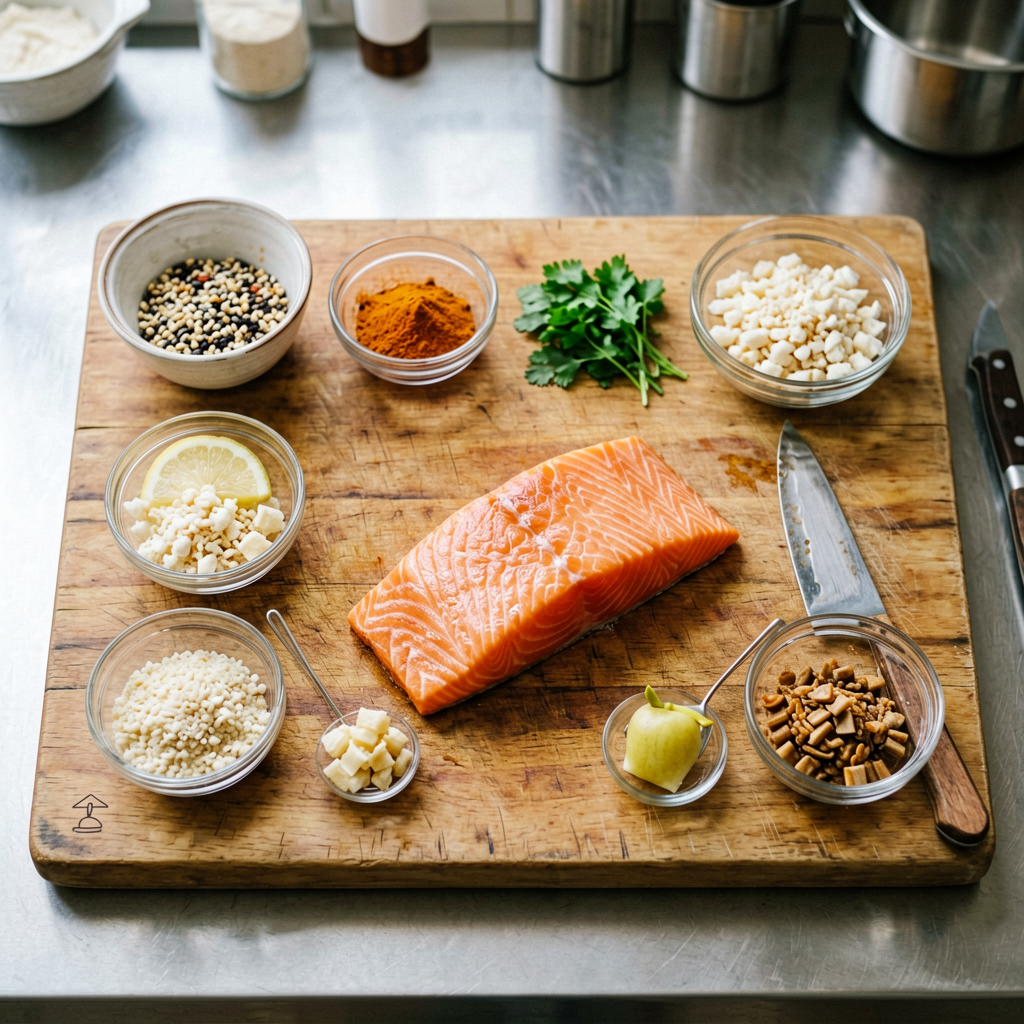
- Salmon: Pat fillets completely dry with paper towels. This is the most important step for achieving crispy skin. Season both sides generously with salt and pepper. Let them rest at room temperature for 10-15 minutes while you prep vegetables. This takes the chill off for more even cooking.
- Vegetables: Cut broccoli into small florets. Slice bell pepper into thin strips (julienne). Slice mushrooms about ¼-inch thick. Mince garlic and grate ginger. Keep garlic and ginger separate from the vegetables.
- Sauce: In a small bowl, whisk together the heavy cream, broth, Dijon mustard, and apple cider vinegar. Set aside. This pre-mixed sauce prevents scrambling during cooking.
Cooking Instructions
Step 1: Sear the Salmon (The Most Critical Stage)
Heat a 12-inch cast iron skillet over medium-high heat for 2 minutes until very hot. Add 2 tablespoons of avocado oil. Carefully lay the salmon fillets skin-side down. You should hear a strong, immediate sizzle.
- Why: Starting skin-side down in a hot, dry pan renders the fat and creates a crispy, golden-brown crust.
- Timing & Cues: Press gently with a spatula for the first 30 seconds to ensure full contact. Cook for 4 minutes undisturbed. The skin will release naturally from the pan when ready. You’ll see the color change from opaque pink to cooked white creeping up the sides. Flip and cook for 1-2 minutes more on the flesh side. For perfect doneness, use an instant-read thermometer: the internal temperature should reach 125°F / 52°C for medium-rare (it will carry over to 130°F). Transfer salmon to a plate, skin-side up to keep it crisp, and tent loosely with foil.
Step 2: Stir Fry the Vegetables
Wipe out the skillet if any salmon skin remains. Return to high heat. Add the remaining 1 tablespoon of avocado oil.
- Why: High heat ensures vegetables sear and caramelize rather than steam, preserving their crunch and keto-friendly texture.
- Timing & Cues: Add broccoli and bell peppers first. Stir-fry for 3-4 minutes, tossing frequently, until you see light char marks and hear a loud crackling sound. Add mushrooms and stir-fry for another 2 minutes until they release their moisture and begin to brown. Finally, add the minced garlic and grated ginger, stirring constantly for 30-45 seconds until fragrant. Be careful not to burn the garlic.
Step 3: Build the Sauce & Combine
Reduce heat to medium. Pour the pre-mixed sauce into the skillet with the vegetables.
- Why: Adding the sauce to the hot pan with the vegetables allows it to bubble, thicken quickly, and coat everything evenly.
- Timing & Cues: Stir constantly as the sauce comes to a simmer. It will thicken within 1-2 minutes to a creamy, coat-the-back-of-a-spoon consistency. Taste and adjust seasoning with salt and pepper. If the sauce is too thick, add a splash more broth. Too thin, let it simmer 30 seconds longer.
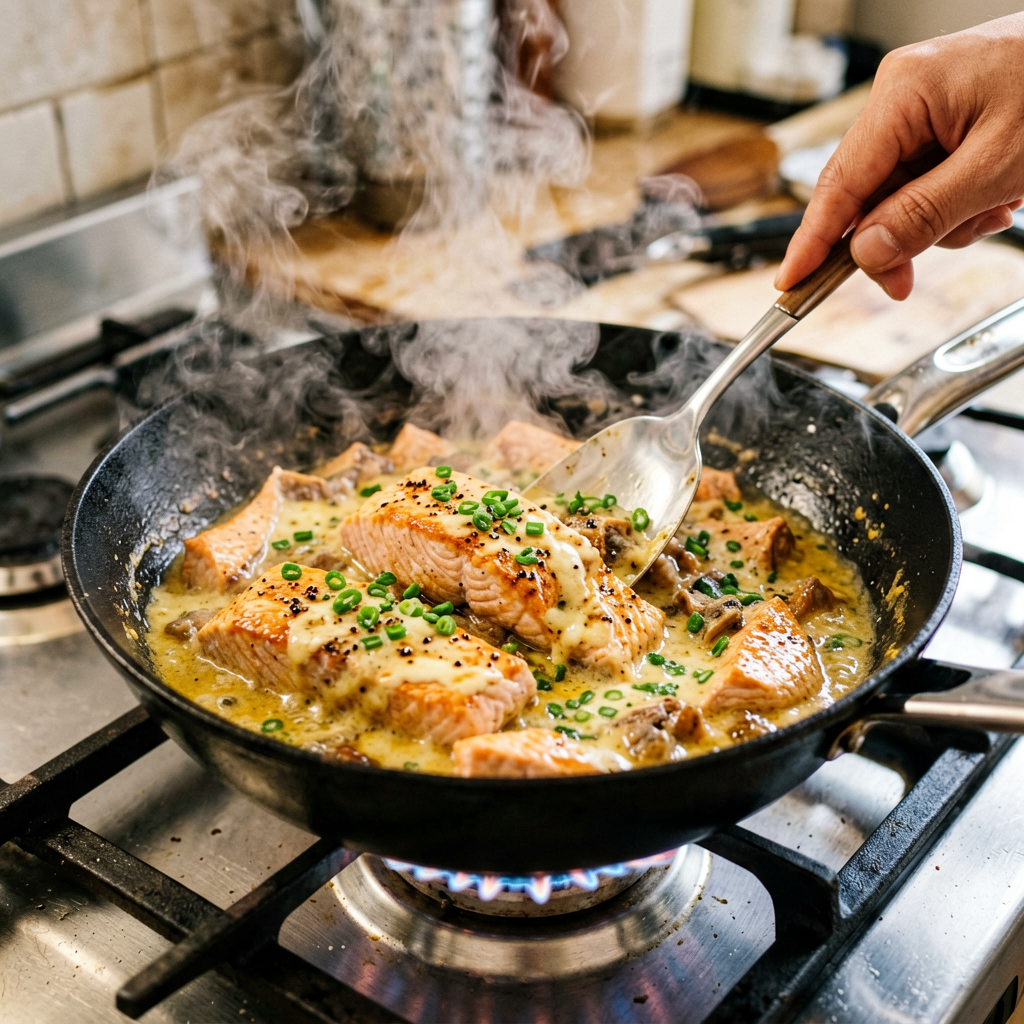
- Final Assembly: Return the salmon fillets to the pan, nestling them into the vegetables and sauce. Spoon some sauce over the top. Let everything warm together for 60 seconds. Do not overcook the salmon.
Pro Tips
- The Crispy Skin Secret: Ensure your salmon skin is bone-dry before seasoning and that the pan is properly preheated. I find that letting the salmon sit, skin-side down, for a full 4 minutes without moving it creates a shatteringly crisp skin that holds up under the sauce.
- Sauce Variations: For a richer sauce, add 2 tablespoons of softened cream cheese along with the heavy cream. For a hint of heat, add ½ teaspoon of red pepper flakes with the garlic.
- Make-Ahead & Substitutions: You can pre-cut all vegetables (except garlic) up to a day ahead. The sauce base can be mixed and refrigerated. For a different protein, thick-cut chicken breast or shrimp work well (adjust cooking time accordingly).
Serving Suggestions
This dish is a complete meal, but to round it out keto-style, consider these pairings:
- Bed of Greens: Serve over a bed of fresh arugula or cauliflower rice to soak up the extra sauce.
- Creamy Side: A side of mashed avocado or a simple green salad with olive oil dressing complements the richness.
- Portion Guidance: This recipe serves 2 as a main course. One salmon fillet per person is standard, with an equal portion of the sauced vegetables.
FAQ
Can I use frozen salmon?
Yes, but with a crucial step. Thaw salmon fillets completely in the refrigerator overnight. Before cooking, you must pat them extremely dry with paper towels, even more so than with fresh. Residual ice crystals will create steam and prevent the skin from crisping. Season just before searing.
How do I know when the salmon is done?
The most reliable method is an instant-read thermometer inserted into the thickest part. Pull the salmon off the heat at 125°F / 52°C for medium-rare; it will rise 5-10°F as it rests. If you don’t have a thermometer, gently press the fillet with a spatula. It should feel firm but still have a slight give. The flesh should also just begin to flake when nudged.
Can I prep this ahead of time?
You can and should prep all ingredients ahead (the “mise en place”). However, the actual cooking is a quick, high-heat process best done just before serving for optimal texture. The salmon will lose its crispiness if it sits. The vegetables are best fresh and crunchy.
*As an Amazon Associate I earn from qualifying purchases.*
发表回复