Introduction
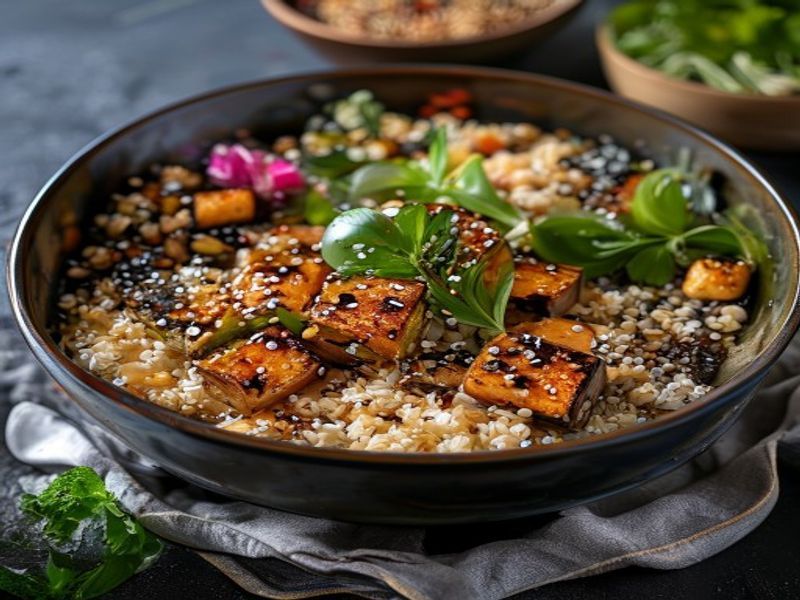
This 15-minute skillet miso-ginger tofu with toasted sesame quinoa bowls delivers restaurant-level depth with streamlined technique. The recipe works because it layers umami-rich white miso and sharp ginger into a fast-reducing glaze that clings to properly dried tofu, while the quinoa is toasted beforehand for nutty complexity. Designed for intermediate home cooks, it teaches controlled high-heat searing, emulsion-based glazing, and rapid grain bowl assembly. The result is a high-protein, plant-forward meal that holds its texture through storage, making it ideal for quick healthy lunch ideas and vegetarian meal prep bowls. Every component is timed to finish simultaneously, eliminating guesswork and maximizing efficiency within a 15-minute skillet meals framework.
What You’ll Need
Ingredients:
- 14 oz (397g) extra-firm tofu, drained
- 2 tablespoons (30ml) neutral high-smoke-point oil (grapeseed or avocado)
- 1.5 tablespoons (22g) white miso paste
- 2 tablespoons (30ml) low-sodium soy sauce
- 1 tablespoon (15ml) rice vinegar
- 1 tablespoon (12g) packed light brown sugar
- 1 teaspoon (5g) finely grated fresh ginger
- 2 cloves (6g) garlic, minced
- 1/2 cup (90g) uncooked white quinoa
- 1 cup (240ml) filtered water
- 1 tablespoon (8g) white sesame seeds, plus 1 teaspoon for garnish
- 2 scallions (30g), thinly sliced on the bias
Ingredient Selection Notes: Use white miso for balanced salinity without the heavy fermentation bitterness of red miso. Select uncooked quinoa to control hydration and avoid the sogginess that ruins plant-based meal prep. Fresh ginger is mandatory; powdered ginger will not emulsify properly in the glaze.
Equipment Needed:
- 12-inch heavy-bottomed carbon steel or nonstick skillet [Check Price on Amazon]
- Tofu press or 2 sheet pans with a 4-pound weight
- Fine mesh strainer
- Stainless steel microplane grater
- Digital instant-read thermometer
- 2-quart saucepan with tight-fitting lid
Prep Work
Pressing tofu is non-negotiable for structural integrity. Remove the 14 oz block from its packaging and drain. Wrap in 2 layers of heavy paper towels, place between two rigid cutting boards, and weigh down with a 4-pound cast iron skillet or canned goods for exactly 15 minutes. This expels 30-40% of internal water, creating a porous surface that absorbs the miso ginger tofu recipe glaze efficiently. While the tofu presses, rinse the 1/2 cup quinoa thoroughly under cold running water in a fine mesh strainer until the runoff runs completely clear. This removes the natural saponin coating that causes bitterness. Keep the rinsed quinoa chilled until ready to cook.
Whisk the glaze ingredients (miso, soy sauce, rice vinegar, brown sugar, ginger, garlic) in a small bowl until fully emulsified. The mixture will be thick and slightly lumpy initially; continuous whisking for 30 seconds creates a smooth, pourable consistency. Prep the scallions and measure the sesame seeds. All components can be prepped 24 hours ahead and stored separately in airtight containers at 40°F / 4°C. The pressed tofu should be kept refrigerated until 10 minutes before cooking to reach optimal room temperature for even searing.
Cooking Instructions
Step 1: Toast and Cook the Quinoa
Place a 2-quart saucepan over medium heat (300°F / 150°C). Add the rinsed quinoa and 1 tablespoon sesame seeds. Dry-toast for 3-4 minutes, stirring constantly with a wooden spoon. Listen for a faint popping sound and watch for a pale golden color. Add 1 cup water, increase heat to high until the liquid reaches a rolling boil (212°F / 100°C), then immediately reduce to low (200°F / 93°C), cover tightly, and simmer for exactly 12 minutes. Remove from heat and let rest covered for 5 minutes. Uncover and fluff with a fork. The grains should be tender with a slight bite, not mushy. If the center remains chalky, add 1 tablespoon hot water, cover, and steam for 2 additional minutes.
Step 2: Sear the Tofu
While the quinoa rests, cut the pressed tofu into 1-inch (2.5 cm) cubes. Pat completely dry with fresh paper towels—any surface moisture will cause violent oil splatter and steam the crust instead of browning it. Heat a 12-inch heavy-bottomed skillet over medium-high heat (400°F / 205°C). Add 2 tablespoons oil and swirl to coat. Wait until the oil shimmers and just begins to ripple (approximately 1 minute). Carefully add tofu in a single layer, ensuring pieces do not touch. Sear undisturbed for exactly 4 minutes per side. You will hear a steady, aggressive sizzle. Do not move the tofu prematurely; wait until the underside releases naturally from the pan. A proper crust will form a uniform deep golden brown. Flip and repeat for the second side (another 4 minutes). Remove to a paper-towel-lined plate.
Step 3: Build the Glaze and Finish
Reduce skillet heat to medium (325°F / 163°C). Pour in the prepared miso-ginger mixture. It will immediately bubble and reduce. Whisk continuously for 45-60 seconds until the glaze thickens to a syrupy consistency that coats the back of a spoon. Common mistake: overheating miso past 300°F / 149°C causes it to turn bitter and separate. Keep the heat controlled. Return the seared tofu to the skillet. Toss gently with silicone-tipped tongs for exactly 30 seconds to coat evenly without breaking the crust. Remove from heat immediately.
Pro Tips
- Crispness Control: In my experience, the biggest mistake home cooks make is skipping the starch barrier. I find that dusting the dried tofu cubes with 1 teaspoon of cornstarch before searing creates a micro-crust that locks in moisture while maximizing surface area for the glaze to adhere. This technique is standard in professional Asian-inspired tofu bowls kitchens but often skipped at home.
- Miso Management: Never boil miso directly in the pan. High heat destroys its delicate lactic acid notes. Always reduce the glaze to a simmer before reintroducing the tofu.
- Substitutions: Tamari works seamlessly for gluten-free diets. If white miso is unavailable, yellow miso can substitute at a 1:1 ratio, but reduce added salt by 25% due to its higher fermentation depth.
- Make-Ahead Strategy: Cook the quinoa and press the tofu 2 days in advance. Store quinoa in a shallow container and tofu submerged in cold water in the fridge. Drain and pat dry before cooking to maintain structural integrity.
Serving Suggestions
Assemble each quick grain bowl assembly with 1/2 cup (80g) toasted sesame quinoa as the base, followed by 4-5 glazed tofu cubes (approximately 3.5 oz / 100g per serving). Top with 1 tablespoon (10g) sliced scallions and a light sprinkle of toasted sesame seeds. This dish pairs exceptionally well with quick-pickled cucumbers (rice vinegar, salt, and sugar for 10 minutes) or a sharp, acid-forward slaw to cut through the rich umami. For portion guidance, one serving delivers roughly 18g of complete protein, making it an excellent high protein lunch ideas option without requiring supplemental sides. Scale linearly for meal prep: 2 servings use 1.5x ingredients due to pan surface area constraints.
FAQ
Can I use frozen tofu? Yes, but it requires a different technique. Freeze the entire block for 24 hours, then thaw completely and press. The ice crystals rupture the cell walls, creating a spongy, chewier texture that absorbs the glaze aggressively. Adjust searing time by adding 2 minutes per side to drive out excess moisture released during thawing.
How do I know when it’s done? Tofu is pre-cooked during manufacturing, so doneness refers to texture and temperature. The exterior should reach a crisp, golden-brown state, and the internal temperature should register at least 140°F / 60°C on an instant-read thermometer. The quinoa is complete when the germ ring separates and the grains offer slight resistance when bitten, not a chalky or gritty center.
Can I prep this ahead for work? Absolutely. This recipe excels as an easy work lunch recipe and nutritious weeknight lunches solution. Store components separately: quinoa in one airtight container, glazed tofu in another. Keep refrigerated at 38°F / 3°C for up to 4 days. Reheat the quinoa with 1 tablespoon water to rehydrate, and serve the tofu cold or at room temperature to preserve the glaze’s texture. Microwaving will soften the crust, which is acceptable but alters the intended contrast.
*As an Amazon Associate I earn from qualifying purchases.
发表回复