Introduction
This 20-Minute Cast-Iron Sweet Potato & Egg Breakfast Hash delivers a precise balance of caramelized starch, aromatic spice, and rich protein without sacrificing technique for speed. The recipe relies on the superior heat retention of seasoned iron to drive moisture out of diced sweet potatoes quickly, creating a crisp exterior while preserving a tender interior. By controlling pan temperature and utilizing strategic steaming, you bypass the typical 40-minute bake time required for root vegetables. This sweet potato and egg recipe is engineered for intermediate home cooks ready to master skillet control, timing, and heat management. It functions equally well as a quick healthy brunch centerpiece or a structured vegetarian meal prep component. The smoked paprika seasoning provides depth without overwhelming the natural sugars, while a precise maple glaze balances the savory profile. Follow the steps below to execute consistent, restaurant-quality results every time.
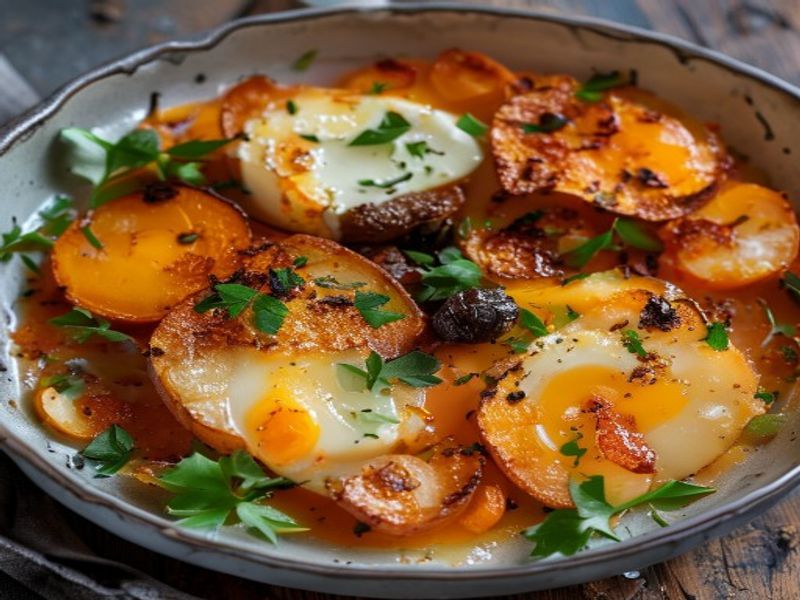
What You’ll Need
Ingredients:
- 1.0 pound (450 grams) sweet potatoes, firm and unblemished
- 2 tablespoons (30 ml) avocado oil or refined olive oil (high smoke point required)
- 0.5 medium yellow onion (approximately 75 grams), finely diced
- 0.5 medium red bell pepper (approximately 65 grams), diced to match potato size
- 4 large eggs, cold from refrigerator
- 1.5 teaspoons (3 grams) smoked paprika (preferably Spanish pimentón de la Vera)
- 1 tablespoon (15 ml) pure maple syrup (Grade A, amber)
- 0.5 teaspoon (3 grams) fine sea salt, divided
- 0.25 teaspoon (0.5 grams) freshly cracked black pepper
- 1 tablespoon (4 grams) fresh chives, finely sliced for garnish
Ingredient Selection Notes: Choose sweet potatoes with uniform diameters for even dicing. Cold eggs maintain structural integrity when cracked into hot wells. Use pure maple syrup only; pancake syrup contains invert sugar and corn syrup that will burn at high heat.
Equipment: 12-inch cast iron skillet (pre-seasoned), 10-inch chef’s knife, 12-inch cutting board, heatproof silicone spatula, instant-read thermometer, 1-cup glass measuring cup, small mixing bowl. For consistent results, I recommend investing in a Lodge 12-Inch Cast Iron Skillet [Check Price on Amazon with pre-seasoned surfaces that respond accurately to temperature adjustments.
Prep Work
Proper mise en place dictates the success of this cast iron breakfast hash. Sweet potatoes must be peeled and diced into uniform 0.5-inch (1.25 cm) cubes. Irregular sizing causes uneven cooking, leaving some pieces raw while others burn. Immediately submerge diced potatoes in cold water for 3 minutes to draw out surface starch, which prevents gummy textures and promotes crispness. Drain thoroughly in a fine-mesh strainer and pat completely dry with paper towels. Moisture is the enemy of the Maillard reaction. Dice the onion and red bell pepper to identical 0.5-inch dimensions. Whisk together 1 teaspoon smoked paprika, 0.25 teaspoon salt, and 0.25 teaspoon black pepper in a small bowl. Keep maple syrup measured and ready. Leave eggs refrigerated until the exact moment you crack them; room-temperature eggs spread too rapidly and thin out in hot oil. This prep sequence takes 8 minutes and can be completed 24 hours in advance. Store dried potato cubes submerged in fresh water in the refrigerator to prevent oxidation.
Cooking Instructions
- Heat the Skillet: Place the 12-inch cast iron skillet on a gas or electric burner set to medium-high. Heat for 3 minutes until the metal reaches approximately 375°F / 190°C. Add 2 tablespoons avocado oil and swirl to coat. The oil should shimmer immediately but must not smoke. If smoke appears, remove pan from heat for 15 seconds to reset.
- Sear the Potatoes: Add dried sweet potato cubes in a single, uncrowded layer. You may need to cook in two batches if your stovetop lacks power. Do not stir. Allow to sear undisturbed for 4 minutes until a deep golden crust forms on the contact side. Flip with a spatula, revealing a crisp, caramelized exterior. Cook for an additional 3 minutes.
- Steam-Through Technique: Reduce heat to medium. Pour 1 tablespoon (15 ml) water around the pan edges and immediately cover with a tight-fitting lid. Steam for exactly 2 minutes. This internal heat penetrates the dense starch core without overcooking the exterior. Remove lid. Listen for a sharp sizzle as remaining moisture evaporates. If potatoes still feel firm when pierced with a fork, add 1 more tablespoon water and cover for 1 additional minute.
- Add Aromatics & Season: Push potatoes to the outer edges. Add diced onion and bell pepper to the center. Sauté for 2.5 minutes until translucent and softened. Return potatoes to center. Sprinkle reserved smoked paprika seasoning evenly over the mixture. Toss continuously for 1 minute until spices bloom and release their essential oils. Avoid burning; paprika turns bitter above 400°F / 204°C. Drizzle 1 tablespoon maple syrup over the hash and toss to coat evenly. The syrup will caramelize slightly and create a glossy sheen.
- Cook the Eggs: Reduce heat to medium-low (approximately 300°F / 150°C surface temp). Create four distinct wells using the back of a spoon. Crack one cold egg into each well. Season lightly with 0.25 teaspoon remaining salt. Cover skillet immediately. Cook for 3 to 4 minutes. Watch for visual transformation: egg whites will turn opaque and firm at the edges while yolks remain glossy and slightly jiggly. For food safety, whites should reach 145°F / 63°C while yolks stay around 140°F / 60°C. Remove from heat immediately to prevent carryover cooking from firming the yolks.
- Rest & Plate: Allow the skillet to rest off the burner for 1 minute. Garnish with 1 tablespoon fresh chives. Transfer directly from pan to plates to preserve heat and texture.
Pro Tips
In my experience, the most common failure point with easy skillet recipes is pan overcrowding. When ingredients touch, steam becomes trapped, resulting in boiled rather than seared vegetables. Always maintain a 0.25-inch gap between potato cubes during initial searing. I find that pre-seasoning the cast iron with a thin polymerized oil layer before heating prevents sticking without compromising the crust. If your stove runs hot, use an infrared thermometer to verify surface temperature before adding oil. For substitutions, replace eggs with 0.5 cup (120 ml) crumbled firm tofu tossed with turmeric and black salt for a vegan variation. Swap maple syrup with balsamic glaze for a more acidic, savory-forward profile. The hash base holds exceptionally well for vegetarian meal prep: store cooled potatoes, onions, and peppers in an airtight container for up to 4 days. Reheat in a dry skillet over medium heat, then add fresh eggs during the final 4 minutes.
Serving Suggestions
This dish functions as a complete high protein breakfast when served with 2 whole eggs per person, delivering approximately 14 grams of complete protein alongside complex carbohydrates and healthy fats. For balanced savory breakfast bowls, accompany the hash with 2 ounces (56 grams) sliced avocado and a handful of bitter arugula dressed with 1 teaspoon lemon juice and a pinch of flaky salt. The acidity cuts through the richness and cleanses the palate. If scaling for weekend guests, double the recipe and use two 12-inch skillets rather than overcrowding one pan. Portion guidance: 1.5 cups hash plus 2 eggs per adult serves as a substantial main course, while 0.75 cups hash plus 1 egg works as a side for brunch buffets. Serve immediately on warmed ceramic plates to maintain optimal temperature for 20 minute morning meals.
FAQ
Can I use frozen sweet potatoes?
Frozen sweet potatoes contain excessive cellular water released during thawing. Adding them directly to a hot skillet drops the pan temperature below 300°F / 149°C and guarantees a soggy, steamed texture rather than a crisp sear. If you must use frozen, thaw completely, press out moisture with paper towels, and increase initial searing time by 3 minutes. Fresh, raw potatoes consistently deliver superior texture and caramelization.
How do I know when the hash is done?
Visual and tactile cues confirm doneness. The potatoes should exhibit a uniform mahogany crust with no pale, translucent centers. When pierced with a fork, they should offer slight resistance before sliding through cleanly, indicating the starch has fully gelatinized. The onions must be completely translucent with softened edges. Overcooking results in dry, crumbly potatoes and burnt paprika residue on the pan bottom.
Can I prep this dish completely ahead?
You can fully prepare and cook the vegetable base 3 days in advance. Cool rapidly on a sheet pan, refrigerate in shallow containers, and reheat in a dry skillet over medium heat until internal temperature reaches 165°F / 74°C. Eggs must be cooked fresh. Reheated eggs develop rubbery whites and chalky yolks due to protein over-coagulation. For true 20 minute morning meals, execute the vegetable prep the night before, then finish the skillet sequence in the morning.
What if my eggs overcook while covered?
Residual heat in thick cast iron continues cooking food after burner removal. If whites set too quickly, pull the skillet off the heat the moment edges turn opaque. Remove the lid immediately and use a damp paper towel to blot excess steam. In my experience, lowering the flame 30 seconds earlier than you think necessary prevents rubbery textures. Always err on the side of slightly undercooked, as carryover heat will finish the job during the 1-minute resting phase.
*As an Amazon Associate I earn from qualifying purchases.
发表回复