Introduction
This instant pot beef with spicy and fresh herbs recipe delivers restaurant-quality tenderness in under an hour. By leveraging high-pressure cooking, tough collagen breaks down efficiently while preserving the bright, aromatic qualities of fresh herbs. The result is a deeply savory, family friendly dish that balances heat with herbal freshness without requiring hours of simmering. Designed for intermediate home cooks, this easy recipe focuses on proper layering of flavors and precise pressure timing to prevent overcooking. You will learn how to build a flavorful fond, manage spice levels, and finish with a bright herb infusion that elevates the entire bowl. Whether you need a reliable weeknight dinner or a make-ahead option for busy schedules, this homemade approach guarantees consistent, fork-tender results every time.
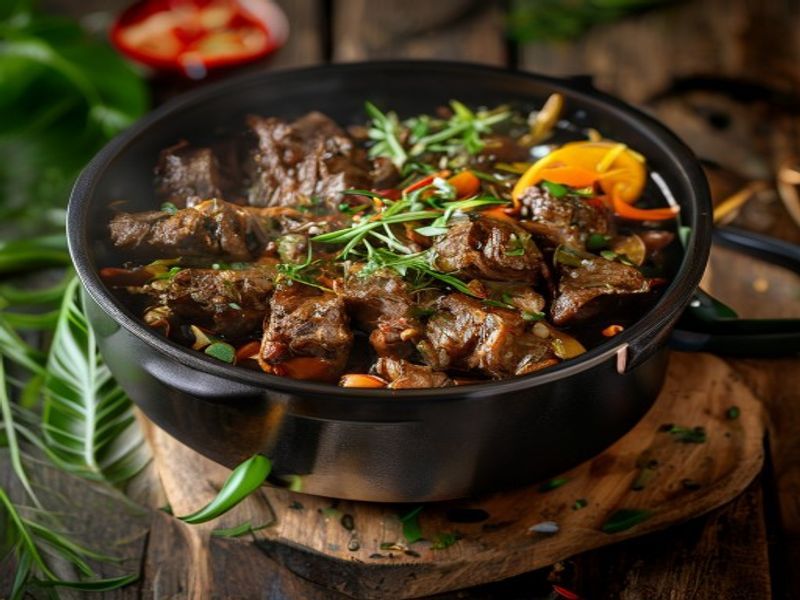
What You’ll Need
Ingredients
- 2 pounds (900g) beef chuck roast: Cut into 1.5-inch cubes. Chuck contains ideal intramuscular fat and connective tissue that melts efficiently under pressure.
- 2 tablespoons (30ml) neutral high-smoke-point oil: Avocado or canola oil works best for high-heat searing.
- 1 large yellow onion (200g): Diced to 1/4-inch pieces for even softening without turning mushy.
- 4 cloves (20g) garlic: Finely minced to maximize surface area and prevent burning.
- 1 tablespoon (8g) fresh ginger: Grated on a microplane for immediate flavor extraction.
- 2 tablespoons (30ml) soy sauce: Low-sodium preferred for controlled seasoning.
- 1.5 cups (360ml) beef broth: Use low-sodium to prevent over-reduction during pressure cooking.
- 2 tablespoons (30g) gochujang or chili paste: Provides layered, fermented heat rather than sharp capsaicin burn.
- 1 tablespoon (15ml) rice vinegar: Balances richness with mild acidity.
- 1/4 cup (10g) fresh cilantro, finely chopped: Adds grassy brightness.
- 1/4 cup (6g) fresh mint, finely chopped: Delivers cooling contrast to the spice.
- Kosher salt and freshly cracked black pepper: To taste, approximately 1.5 teaspoons total.
Equipment
- 6-quart Instant Pot or electric pressure cooker [Check Price on Amazon
- 12-inch heavy-bottomed stainless steel skillet: For precise heat control during pre-searing (if your model lacks a strong sauté function).
- Instant-read digital thermometer [Check Price on Amazon: Essential for verifying collagen breakdown temperatures.
- Silicone-tipped tongs and flat-edged wooden spoon: For safe flipping and thorough deglazing.
- Microplane grater and 8-inch chef’s knife: For uniform aromatics prep.
Prep Work
Proper mise en place is non-negotiable for pressure cooking. You cannot pause the cycle once the lid locks, so every component must be measured, prepped, and within arm’s reach. Begin by patting the beef cubes completely dry with paper towels. Moisture creates steam instead of Maillard browning, resulting in boiled meat rather than a developed crust. Season the beef evenly with 1 teaspoon kosher salt and 1/2 teaspoon black pepper. Let it sit at room temperature for exactly 20 minutes to equalize internal temperature, which promotes uniform searing.
Dice the onion to a consistent 1/4-inch size to ensure it softens evenly during the sauté phase. Mince the garlic and grate the ginger separately, keeping them in small prep bowls to add sequentially and prevent scorching. Chop the cilantro and mint, but store them loosely covered in the refrigerator at 35°F (2°C) until the final step. Fresh herbs oxidize quickly and lose volatile oils when exposed to ambient heat for too long.
Timing Note: You can cube, season, and refrigerate the beef up to 24 hours in advance. The aromatics can be prepped and stored in airtight containers for 12 hours. Do not combine liquids or herbs until you are ready to cook, as premature mixing causes the herbs to bruise and the salt to draw out moisture prematurely.
Cooking Instructions
- Heat the Instant Pot insert: Press the “Sauté” function and set it to “High.” Allow the inner pot to reach approximately 400°F (205°C), which takes 3-4 minutes. Add 2 tablespoons of neutral oil and swirl to coat. Wait until the oil shimmers and flows like water, indicating it has reached the correct temperature for searing.
- Sear the beef in batches: Using tongs, place half of the beef cubes in a single layer. Do not crowd the pot; overcrowding drops the temperature below 300°F (150°C) and steams the meat. Sear undisturbed for exactly 3 minutes until a deep mahogany crust forms on the bottom. Flip each piece and sear the opposite side for 2 minutes. Transfer to a plate. Repeat with the remaining beef. In my experience, rushing this step is the number one reason home cooks end up with gray, flavorless meat. The fond left behind is pure flavor.
- Deglaze and build the aromatic base: With the pot still on “Sauté,” add the diced onion. Cook for 2 minutes, stirring with a flat-edged wooden spoon to scrape up the browned bits. The onions should turn translucent at the edges but not brown completely. Add the minced garlic and grated ginger, cooking for exactly 30 seconds until fragrant. Do not exceed this time, as garlic burns rapidly above 350°F (175°C) and turns bitter.
- Combine liquids and season: Pour in the beef broth, soy sauce, rice vinegar, and chili paste. Stir vigorously to dissolve the paste and scrape every bit of fond from the bottom. This step is critical: any stuck-on residue will trigger the “Burn” warning during pressure cooking. Return the seared beef and any accumulated juices to the pot.
- Pressure cook: Secure the lid, set the valve to “Sealing,” and press “Manual” or “Pressure Cook” on High for 35 minutes. Natural pressure release for exactly 10 minutes, then carefully switch the valve to “Venting” to release remaining steam. Total cook time from start to finish will be approximately 55 minutes.
- Check doneness and reduce (if needed): Open the lid and insert a fork into a beef cube. The meat should yield with zero resistance and an internal temperature of at least 195°F (90°C) for complete collagen breakdown. If the sauce appears thin, press “Sauté” and simmer for 4-5 minutes, stirring constantly, until it coats the back of a spoon.
- Finish with herbs: Turn off the heat immediately. Fold in the chopped cilantro and mint. The residual heat at roughly 200°F (93°C) will wilt the herbs gently without destroying their fresh, volatile compounds. Stir once, cover loosely for 2 minutes, and serve.
Pro Tips
- Layer your spice strategically: Gochujang provides fermented depth, but for adjustable heat, add 1/2 teaspoon of crushed red pepper flakes during the sauté phase. I find that building heat in layers prevents the sharp, one-dimensional burn that overwhelms the palate.
- Substitute smartly: If chuck roast is unavailable, use beef short ribs cut into 1.5-inch pieces. Avoid lean cuts like sirloin or round, as they lack sufficient collagen and will dry out under pressure. For a milder profile, replace gochujang with sweet paprika and 1 teaspoon of brown sugar.
- Make-ahead optimization: This dish actually improves overnight. Cool completely, transfer to an airtight container, and refrigerate at 38°F (3°C) for up to 4 days. Reheat gently on the stovetop over medium-low heat, adding 2 tablespoons of water to restore the sauce’s emulsion. The herbs should always be added fresh upon reheating to maintain brightness.
Serving Suggestions
Portion this easy recipe at 6-8 ounces of meat per person, plus 1/2 cup of sauce. The rich, spicy profile demands a neutral, starchy base to balance the heat. Serve over 1.5 cups of jasmine rice per serving, or pair with 8 ounces of buttered egg noodles for a heartier family-friendly meal. For vegetable accompaniments, quickly blanch 2 cups of baby bok choy or snap peas in boiling water for 90 seconds, then drain and toss with a pinch of salt. The crisp-tender texture contrasts beautifully with the tender beef. Garnish each bowl with an extra teaspoon of chopped fresh herbs and a thin slice of fresh jalapeño for visual contrast and an extra kick.
FAQ
- Can I use frozen beef cubes? Yes, but you must increase the pressure cooking time by 5-7 minutes and add 1/4 cup of extra broth. However, I strongly advise against it. Frozen meat drops the pot’s temperature drastically, preventing a proper sear and resulting in a boiled texture rather than a caramelized crust.
- How do I know when it’s done? Visual and tactile cues are more reliable than time alone. The beef should shred effortlessly when pressed with a fork, and the internal temperature must read at least 195°F (90°C) on an instant-read thermometer. If it still feels fibrous or requires chewing, seal the lid and cook for an additional 5 minutes at high pressure.
- Can I prep this ahead and freeze it? Absolutely. Freeze the cooked beef and sauce (without fresh herbs) in airtight freezer bags or rigid containers at 0°F (-18°C) for up to 3 months. Thaw overnight in the refrigerator at 38°F (3°C), then reheat as directed. Always stir in fresh herbs after reheating to preserve their flavor and color.
- My Instant Pot showed a “Burn” warning. What happened? This occurs when thickened sauce or undissolved paste sticks to the bottom during pressure cooking. Always deglaze thoroughly with broth and scrape the bottom completely before sealing. Using the trivet and a pot-in-pot method is an alternative, but it will alter the sauce’s reduction profile.
*As an Amazon Associate I earn from qualifying purchases.
发表回复