Introduction
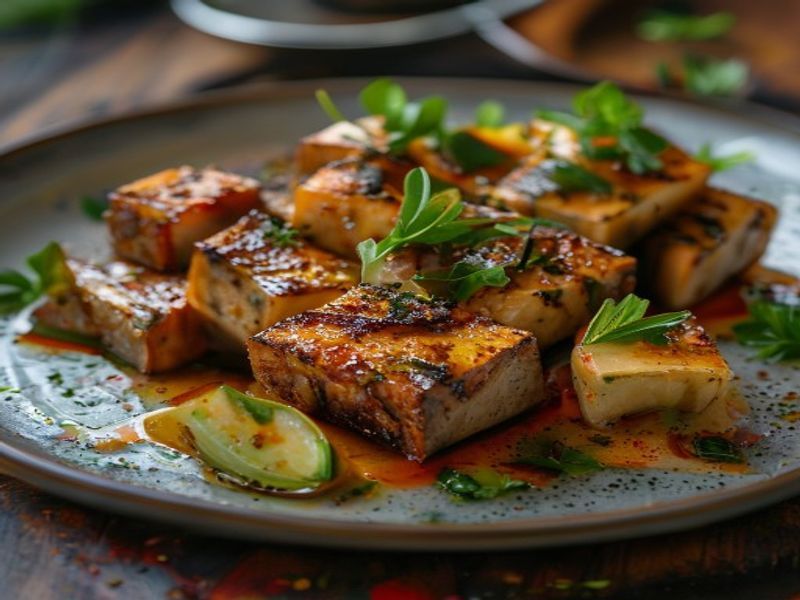
This 15-minute mexican tofu roast delivers restaurant-quality texture and layered spice profiles through a precise combination of high-heat searing and a rapid convection-style roast. The technique bypasses lengthy baking cycles by leveraging direct pan contact to establish a structural crust, then finishes in a high-temperature environment to drive off residual moisture and concentrate flavors. Designed for intermediate home cooks but entirely accessible to beginners, this easy recipe relies on controlled timing rather than complex knife work or hard-to-source ingredients. By managing surface moisture, maintaining consistent pan temperature, and applying a balanced dry-to-wet seasoning sequence, you achieve a quick dinner that holds its shape, slices cleanly, and absorbs Mexican aromatics without turning mushy. The result is a homemade plant-based centerpiece with a firm, chewy interior and deeply caramelized edges, ready in exactly fifteen minutes from skillet to plate.
What You’ll Need
- Tofu: 1 block (14 ounces / 397 grams) extra-firm or super-firm tofu. Select blocks labeled “extra-firm” with dense, uniform curds; avoid silken or soft varieties as they lack structural integrity for high-heat roasting.
- Neutral Oil: 2 tablespoons avocado or grapeseed oil. These oils have high smoke points (520°F / 271°C), preventing bitter breakdown during searing.
- Spice Blend: 1.5 teaspoons ground cumin, 1 teaspoon smoked paprika, 1 teaspoon chili powder, 0.5 teaspoon dried Mexican oregano, 0.5 teaspoon garlic powder, 0.5 teaspoon onion powder, 0.25 teaspoon fine sea salt, 0.125 teaspoon black pepper.
- Liquid Seasoning: 1.5 tablespoons low-sodium soy sauce or tamari, 1 tablespoon fresh lime juice, 1 teaspoon agave nectar or maple syrup.
- Crust Booster (Optional): 1 tablespoon cornstarch. Creates a micro-crisp exterior without altering flavor.
Equipment Needed
- 12-inch heavy-bottomed skillet (cast iron or carbon steel recommended for heat retention) [Check Price on Amazon]
- Half-sheet baking pan (18 x 13 inches) with wire cooling rack
- Instant-read digital thermometer [Check Price on Amazon]
- Sharp 8-inch chef’s knife and flexible spatula
- Clean kitchen towels or paper towels for moisture extraction
Prep Work
Proper moisture management is the foundation of this quick dinner. Drain the tofu and wrap it tightly in two layers of dry kitchen towels. Place a heavy skillet or cutting board on top and press for 5 minutes. This compressed pressing forces out trapped water, creating microscopic channels for seasoning penetration and preventing steam pockets during cooking. Remove the towels, trim 0.25 inch off each of the four long edges to expose fresh, porous curd structure, and slice the block into 6 equal pieces measuring approximately 0.75 inches thick. Let the cut pieces rest at room temperature for 5 minutes while you preheat the oven to 425°F / 220°C. Temperature equilibrium ensures even cooking and prevents the exterior from scorching before the interior reaches the target temperature.
In a small bowl, whisk together the dry spice blend, soy sauce, lime juice, agave, and cornstarch until it forms a smooth, thick paste. The cornstarch hydrates instantly and will activate at 300°F / 149°C to form a glass-like crust. Brush exactly 1 teaspoon of the paste onto all six sides of each tofu slab. Reserve 1.5 tablespoons of the mixture for the finishing glaze. You can press, slice, and coat the tofu up to 2 hours ahead; store covered in the refrigerator at 38°F / 3°C. Bring back to room temperature for 10 minutes before cooking to restore optimal thermal conductivity.
Cooking Instructions
- Establish Pan Temperature: Place your 12-inch cast iron skillet over medium-high heat. Heat for exactly 3 minutes until the surface reaches 400°F / 205°C. Add 1 tablespoon of oil and swirl to coat. The oil should thin out immediately and shimmer without smoking. If it smokes, reduce heat to medium and wait 30 seconds for stabilization. Why it matters: Proper preheating triggers instant Maillard browning upon contact, sealing the surface and preventing sticking.
- Sear the Tofu: Lay 4 tofu slabs into the pan using tongs, leaving at least 0.5 inches of space between pieces. Do not move them for exactly 3 minutes. Listen for a steady, aggressive sizzle that gradually softens to a low hiss as surface moisture evaporates. Flip using a thin spatula. The seared side should display a uniform mahogany-brown crust with visible caramelized spice particles. Sear the second side for 3 minutes undisturbed. Transfer the first batch to the wire rack set over the half-sheet pan. Repeat with the remaining 2 slabs and the final 1 tablespoon of oil. Common mistake: Flipping too early tears the forming crust, causing the tofu to release liquid and steam instead of roast.
- Quick Roast Phase: Place the sheet pan with the wire rack into the preheated oven at 425°F / 220°C. Roast for exactly 6 minutes. The circulating hot air rapidly dehydrates the exterior while gently heating the core. Watch for slight shrinkage at the edges and a subtle tightening of the surface texture. Insert an instant-read thermometer into the center of the thickest piece; it should read 155°F / 68°C. If below, return for 1 additional minute. Why it matters: Oven roasting completes the internal cook without subjecting the crust to direct flame, preserving structural integrity.
- Glaze and Finish: Remove the pan from the oven. Using a silicone basting brush, apply the reserved 1.5 tablespoons of seasoning mixture to the top surface of each slab. Return to the oven, positioned 6 inches from the broiler element set to high. Broil for exactly 90 seconds. Watch closely for the glaze to bubble, tighten, and develop faint amber blistering. Remove immediately. Let rest on the rack for 2 minutes to allow residual heat to redistribute and the crust to set. Visual cue: The edges should pull away slightly from the center, and the surface should sound faintly crisp when tapped with a fork.
Pro Tips
- Moisture Control is Non-Negotiable: In my experience, skipping the press step is the primary reason tofu steams instead of developing a proper crust. I find that a quick towel-and-weight method removes enough surface water for reliable browning while preserving the interior’s tender bite.
- Substitution Protocol: Super-firm tofu can replace extra-firm, but reduce pressing time to 3 minutes. For a soy-free version, substitute tamari with coconut aminos (1:1 ratio) and add 0.125 teaspoon of salt to maintain osmotic balance. Cornstarch can be swapped with potato starch for an equally crisp finish.
- Make-Ahead Execution: You can fully press, slice, and dry-brine the tofu with the spice paste up to 24 hours in advance. Store in an airtight container at 36°F / 2°C. The extended contact time actually improves flavor penetration and reduces surface moisture further, yielding an even faster sear when you’re ready to cook.
Serving Suggestions
This homemade quick dinner pairs optimally with starches and acids that balance the earthy cumin and smoky paprika. Serve two slabs per adult portion alongside 0.75 cups of cilantro-lime rice, 0.5 cups of charred corn kernels, and 0.5 cups of black beans simmered with a pinch of cumin. A 2-ounce dollop of avocado crema (1 ripe avocado blended with 3 tablespoons sour cream, 1 tablespoon lime juice, and salt to taste) provides necessary fat to carry the spice compounds. For texture contrast, top with 0.25 cup of quick-pickled red onions. The dish holds well for meal prep; portion into airtight containers and refrigerate within 2 hours of cooking.
FAQ
Can I use frozen tofu for this recipe?
Yes, but it fundamentally alters the texture. Freezing expands the water crystals within the curds, creating a spongy, highly porous structure. Thaw completely at 40°F / 4°C for 12 hours, then press for 8 minutes. The result will be chewier and more absorbent, requiring a 1-minute reduction in the quick roast phase to prevent overdrying.
How do I know when it’s done?
Visual and tactile cues are more reliable than time alone. The exterior should be uniformly golden-brown to deep amber with a dry, matte finish. When pressed gently with a spatula, the center should yield slightly but rebound immediately without feeling mushy. The internal temperature should reach 155°F / 68°C, and a sharp knife inserted into the middle should glide through with minimal resistance.
Can I prep this ahead of time for a weeknight?
Absolutely. Press, slice, and apply the dry spice paste up to 24 hours in advance. Store uncovered on a wire rack over a baking sheet in the refrigerator. This dry-brining phase draws out additional moisture and concentrates flavor. When ready to cook, simply sear and roast as directed. Do not apply the liquid glaze until the final 90 seconds of cooking, as the sugar content will burn if held too long.
*As an Amazon Associate I earn from qualifying purchases.
发表回复