Introduction
This 25-minute sheet-pan miso glazed salmon & roasted veggie prep bowl delivers restaurant-quality results through controlled thermal application and precise ingredient management. The combination of white miso paste, rice vinegar, and pure maple syrup creates a deeply savory, caramelized glaze that binds perfectly to the natural lipids in salmon, making this one of the most reliable omega-3 rich recipes for consistent weekly execution. Designed for intermediate home cooks, the method prioritizes strategic oven temperature control and spatial arrangement to prevent steaming while maximizing Maillard browning. You will execute a true sheet pan meal prep that yields four complete, high protein batch cooking portions ready for healthy make-ahead lunches or quick seafood dinners. The technique relies on exact timing and moisture control, ensuring your salmon remains structurally intact while the roasted vegetable bowls develop concentrated flavor without collapsing into mush. This is a foundational framework for easy weeknight dinner ideas that scale effortlessly without sacrificing texture or food safety.
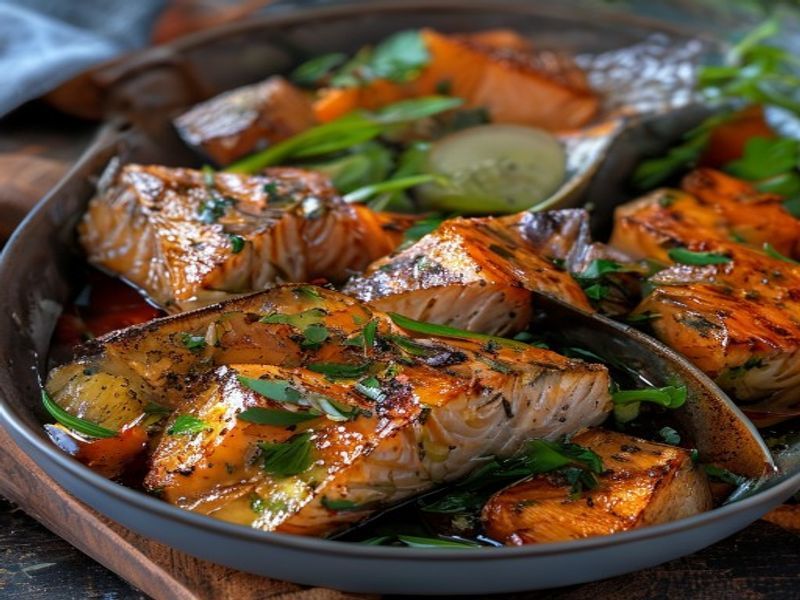
What You’ll Need
Ingredients
- 4 salmon fillets, 6 ounces (170g) each, center-cut, skin-on (salmon fillets: 6oz each, skin-on for crispiness and structural integrity during transport)
- 3 tablespoons (45g) white miso paste (shiro miso), verified 100% rice-based for gluten free meal prep compliance
- 2 tablespoons (30ml) unseasoned rice vinegar
- 1.5 tablespoons (22ml) pure maple syrup
- 1 tablespoon (15ml) high-heat neutral oil (avocado or refined grapeseed)
- 1 pound (450g) fresh asparagus, woody ends trimmed
- 1.5 cups (180g) cherry tomatoes, washed and dried
- 2 large carrots (approx 10 oz/280g), peeled
- 2 tablespoons (30ml) toasted sesame oil
- 1/2 teaspoon (3g) kosher salt, divided
- 1/4 teaspoon (1g) freshly cracked black pepper
- 1 tablespoon (8g) toasted sesame seeds, for garnish
Equipment
- 18×13-inch heavy-gauge aluminum sheet pan (half-sheet)
- Silicone baking mat or unbleached parchment paper
- 12-inch chef’s knife and cutting board
- 1-quart stainless steel mixing bowl
- Silicone pastry brush
- Instant-read digital thermometer [Check Price on Amazon]
- Paper towels for moisture control
Prep Work
Proper mise en place prevents thermal shock and ensures uniform heat transfer during the roasting phase. Remove salmon from refrigeration exactly 15 minutes before cooking to bring the core temperature to approximately 60°F / 15°C. Pat every fillet completely dry with paper towels on all surfaces; residual moisture will dilute the miso matrix and create steam pockets that prevent proper caramelization. In a 1-quart mixing bowl, whisk the white miso paste, rice vinegar, maple syrup, and neutral oil until the mixture achieves a glossy, homogenous consistency. Any undissolved granules will scorch at high temperatures. Trim asparagus by bending one spear near the base until it snaps naturally at the fibrous junction. Align the remaining spears, square the cut ends, and slice into 2-inch segments to match the roasting profile of the carrots. Cut carrots into uniform 1/2-inch thick batons; consistent geometry is critical for synchronized doneness. Toss the carrots and asparagus in toasted sesame oil, 1/4 teaspoon kosher salt, and black pepper. This prep sequence requires exactly 8 minutes of active knife work. You can whisk the miso glaze up to 48 hours in advance and store it in an airtight container at 38°F / 3°C. Keep vegetables separated from the fish until the moment of assembly to prevent cross-contamination and enzymatic breakdown.
Cooking Instructions
- Preheat your oven to 425°F / 218°C with the rack positioned in the exact center. Allow the oven to stabilize for a full 15 minutes after reaching temperature. An under-heated chamber will steam the vegetables instead of driving off surface moisture for proper roasting.
- Arrange the oiled carrots and asparagus on one half of the sheet pan, ensuring zero overlap. Leave a 1-inch border along all edges for unimpeded air circulation. Scatter the dried cherry tomatoes into the natural gaps between the thicker vegetable pieces. Do not season the tomatoes at this stage; they will release moisture and dilute the pan environment.
- Roast the vegetables for exactly 10 minutes. Monitor for the asparagus to transition from dull green to vibrant emerald, and the carrot edges to soften slightly while retaining structural resistance. The tomato skins will just begin to wrinkle and blister at the 10-minute mark.
- While the vegetables roast, brush the miso glaze evenly across the top and lateral sides of each salmon fillet. Avoid coating the skin side entirely; the glaze will caramelize into the pan and compromise release. The glaze layer should be approximately 1/8-inch thick for optimal browning without burning.
- Remove the pan from the oven using dry oven mitts. Shift the roasted vegetables toward the edges to create a clean, unobstructed zone on the opposite half. Place the salmon fillets skin-side down, maintaining exactly 1 inch of spacing between each piece. Brush any remaining glaze over the exposed flesh.
- Return the pan to the oven for exactly 8-10 minutes. The glaze will rapidly bubble, reduce, and darken to a deep amber color. Watch closely at the 8-minute mark; the proteins will tighten visibly, and the lateral edges will turn opaque white. An instant-read thermometer inserted horizontally into the thickest portion should read 125°F / 52°C for a medium finish. The flesh will separate cleanly when gently pressed with a fork, indicating proper collagen denaturation.
- Remove from heat and transfer the pan to a heat-safe surface. Allow the salmon to rest undisturbed for exactly 4 minutes before portioning. Carryover thermal energy will raise the internal temperature by approximately 5°F / 3°C, safely reaching the 145°F / 63°C standard while preserving intracellular moisture. Sprinkle toasted sesame seeds over the fillets immediately after resting.
Common Mistake to Avoid: Using thin, warped baking sheets or overcrowding the pan creates a localized humidity dome. This traps evaporative moisture, resulting in pale glaze, soggy vegetable texture, and uneven protein coagulation. Always use a heavy-gauge pan and maintain spacing.
Pro Tips
- Glaze Viscosity Control: I find that commercial white miso varies significantly in moisture content depending on aging time. If your paste feels dense or grainy, whisk in exactly 1 teaspoon of warm water before application. This prevents tearing the delicate protein surface and ensures a smooth, even thermal barrier during caramelization.
- Vegetable Substitutions That Actually Work: Swap carrots for 1 pound of peeled sweet potato cubes, but increase the initial roasting time by 5 minutes. Avoid high-moisture produce like zucchini, bell peppers, or eggplant, as they release excessive cellular water and collapse the glaze matrix.
- Make-Ahead Storage Protocol: Cool all components completely within 2 hours of removal from the oven. Store salmon and roasted vegetables in separate airtight glass containers for up to 4 days at 40°F / 4°C. Reheat vegetables at 350°F / 175°C for 8 minutes to restore surface crispness, while salmon can be served chilled or gently warmed at 50% microwave power for 45 seconds to preserve lipid integrity.
- Acid Balance Adjustment: In my experience, miso pastes from different manufacturers exhibit varying sodium and fermentation profiles. Always taste your glaze before brushing. If it registers overly sharp, add 1/2 teaspoon of neutral oil to round the acidity and improve browning behavior.
Serving Suggestions
Each portion delivers exactly 6 ounces of salmon and 1.5 cups of roasted vegetables, providing 32 grams of complete protein alongside complex carbohydrates and dietary fiber. Serve over 1/2 cup cooked quinoa, short-grain brown rice, or a bed of massaged kale for a nutritionally complete bowl. The deep umami profile of the miso pairs exceptionally well with quick-pickled cucumbers, shaved radish, or a light application of chili crisp for thermal contrast. For optimal meal prep efficiency, layer grains at the bottom of 4-cup capacity containers, add vegetables, then place salmon on the surface to prevent moisture migration and maintain textural separation during refrigeration.
FAQ
Can I use frozen salmon for this miso salmon recipe?
Yes, provided it is fully thawed and meticulously dried. Thaw vacuum-sealed fillets in the refrigerator for 18-24 hours, then remove packaging and pat vigorously with paper towels on all surfaces. Frozen fish retains interstitial water that will cause the miso glaze to slide off and generate excessive steam, preventing proper caramelization and yielding a boiled texture.
How do I know when it’s done?
Rely on combined thermal and visual indicators rather than time alone. The flesh transitions from translucent pink to opaque, and the surface proteins will visibly contract. Insert an instant-read thermometer into the thickest section; pull the pan at 125°F / 52°C. Residual heat will safely complete the cooking process during the 4-minute rest period, preventing overcooking and dry muscle fibers.
Can I prep this ahead and bake later?
Do not assemble raw components more than 2 hours before cooking. The salt in the miso and the acetic acid in the vinegar will begin to denature the salmon proteins prematurely, resulting in a mushy, cured texture rather than clean roasting. Keep the glaze, vegetables, and fish separated until you are ready to execute the final 25-minute cooking sequence.
*As an Amazon Associate I earn from qualifying purchases.
发表回复